Nurse Heroes Brings Distinctive Voices Together for “Smile”
A group of established singers shares “Smile” in this performance connected with Nurse Heroes. The presentation brings several vocal identities into one arrangement, allowing a familiar standard to become the common material for a collaborative musical appearance.
Nurse Heroes’ official concert page identifies a performance of “Smile” featuring its choir with Andrea Bocelli, Céline Dion, Gloria Estefan, Stevie Wonder and others. The page provides a direct organizational source for the collaboration’s purpose and participants.
The concert series also lists David Foster, Katharine McPhee Foster and Josh Groban among its performers. Keeping that broader lineup in view avoids reducing a large ensemble presentation to only the names visible in a shortened caption.
The song provides a shared framework for those different voices. A recognizable melody allows the arrangement to move between performers while maintaining continuity. The listener can hear individual vocal character without losing the sense of one musical presentation.
That relationship is a central feature of ensemble singing. A performer can bring a distinct tone to a passage, then make room for another contribution. The arrangement needs to connect those moments rather than treating them as unrelated appearances.
Watch the performance
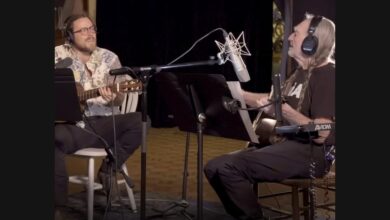
Piano offers a clear foundation for the musical sequence. It can establish harmony, support a singer and provide continuity through a transition. The instrument’s role helps hold together a presentation involving several featured voices.
The benefit context gives the collaboration another dimension. Nurse Heroes describes its concert series as supporting attention to nursing and the shortage of nurses. The performance belongs to that organizational effort rather than an unexplained gathering of singers.
That purpose can be understood without treating music as a substitute for practical support. The concert creates a public occasion around the organization’s work. The song supplies an accessible point of connection for audiences approaching the event through its performers.
The range of vocal styles makes the recording useful for attentive listening. A listener can notice differences in phrasing, tone and emphasis as the presentation moves between contributions. Familiar repertoire provides a stable reference for hearing those changes.
The ensemble format also changes the scale of the song. Material often heard through one featured voice becomes a shared presentation. That change encourages the audience to consider how separate performers can contribute to a common musical direction.
The choir’s involvement broadens the arrangement further. Collective singing brings another texture beside the featured artists, allowing the performance to include both individual identities and a larger group sound. Those roles support the collaborative frame.
The official event page identifies the series’ production separately from its performers. That distinction is useful because appearing in a song and producing an entire concert are different responsibilities. The collaboration can be described clearly without assigning unsupported production credits.
The performance also invites comparison with other readings of “Smile.” A standard can remain recognizable through different singers and arrangements. Hearing another version can reveal which musical features carry across settings and which belong to an individual presentation.
For audiences following one of the featured artists, the video offers a way into a wider ensemble. The familiar name may introduce the clip, but the shared song gives the listener reasons to follow the other contributions as well.
The organizational source supplies a clear context for that exploration. It identifies the concert series, its featured artists and the “Smile” presentation, allowing the audience to connect the musical recording with the initiative that brought the participants together.
Nurse Heroes’ “Smile” joins distinctive voices around a recognizable song and a documented public purpose. The performance’s substance lies in its shared arrangement, connecting featured singers, piano and choir within a musical presentation larger than any one participant.
More videos to explore
Andrea Bocelli and Céline Dion perform “The Prayer” at Central Park in a separate official duet.
Another upload of the Nurse Heroes “Smile” performance offers an additional view of the event’s ensemble.
Further reading: Performance background and source.