Lady Gaga Revisits “Won’t You Be My Neighbor?” in a Studio Film
Lady Gaga records a new interpretation of ‘Won’t You Be My Neighbor?’ for Rocket’s advertising project. The official video takes viewers into the recording setting, connecting the familiar Fred Rogers song with the musicians preparing this version for the campaign.
Gaga’s official upload presents the recording segment in January 2026. Its description identifies Shangri-La Studios and collaborators Alex Smith and Benjamin Rice. These credits establish the project’s production context without turning the footage into an unrelated concert appearance.
The video is a look at the recording process, not an uninterrupted presentation of the complete finished song. That distinction matters when discussing its pacing and images: the sequence follows the studio work and the way the project is introduced.
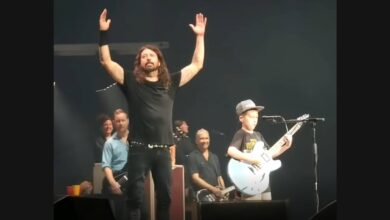
The source photograph captures Gaga within that recording context. Alongside the video, it becomes a reference to a specific musical project rather than evidence of a live stage performance. The setting helps explain why the camera attends to both singer and studio activity.
The official recording segment below is the main video for this article. It shows the project through behind-the-scenes footage, while the companion Rocket commercial provides a separate view of how the music appears within the finished advertising presentation.
Watch the recording segment
The song’s familiar melody provides a starting point for the new interpretation. Changes in vocal delivery and accompaniment can give that material a different texture while allowing the listener to recognise the composition beneath the arrangement’s production choices.
A studio setting makes those choices part of a collaborative process. The singer’s phrasing works alongside the accompaniment and the recording environment. The credited musicians and production setting identify the project without requiring guesses about discussions that are absent from the video.
Gaga’s voice remains a clear focus of the segment. The footage connects singing with the physical space in which it is recorded, allowing the viewer to consider the performance as part of a production rather than solely as a finished soundtrack.
The original song carries an association with Fred Rogers through its authorship and familiar title. This project uses that existing musical material in a new commercial context. Describing the connection does not require attributing a single emotional response to all listeners.
The campaign context also sets limits on what the video represents. It is music prepared for an advertisement, with footage assembled to introduce that work. It should not be confused with an independent live concert recording or a complete documentary about the session.
The studio images can show a gesture, a vocal phrase or an interaction within the work. They cannot establish everything that happened during production. The official credits provide a firmer reference for naming the setting and collaborators than assumptions based on a brief visual moment.
The relationship between the recording segment and the commercial is useful to follow. One introduces the musicians and session; the other places the music within the campaign’s finished images. Each video has a different purpose even when both belong to the same project.
Rocket’s official commercial is the first companion video. It gives the advertising presentation its own place in the article, allowing viewers to see the result of the project after watching the studio footage that serves as the main recording.
The additional television spot is another presentation of the campaign material. It is not a separate concert performance. Keeping its advertising context clear helps avoid treating several related uploads as evidence of several unrelated musical appearances.
The most useful comparison concerns how the song moves between preparation and presentation. The studio segment draws attention to recording, while the commercial uses the music within a broader visual sequence. Those different roles explain why both sources are included.
Gaga’s recording footage offers a focused look at this interpretation of ‘Won’t You Be My Neighbor?’. The official segment and companion commercial together identify the musicians, studio context and campaign presentation through which the new version reaches viewers.
More videos to explore
For a companion recording, Rocket presents “Won’t You Be My Neighbor? | Lady Gaga Original.” This separate video offers another setting for comparison, with its own performers, arrangement and occasion.
For a companion recording, The King Gaga presents “Lady Gaga – Won’t You Be My Neighbor? (ROCKET TV SPOT).” This separate video offers another setting for comparison, with its own performers, arrangement and occasion.
Further reading: Performance background and source.