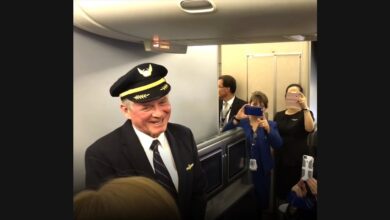
Four Voices Bring “Under the Boardwalk” Into a Plane Cabin
Four singers seated inside a delayed plane create a small vocal ensemble where passengers would normally be waiting in silence. Port City Sound’s “Under the Boardwalk” gives that cabin a musical focus, connecting a recognizable tune with the close sound of barbershop harmony.
Flight attendant Kari Mann’s original upload supplies the immediate context. She explains that maintenance delayed the flight after boarding and that conversation with passengers revealed a barbershop quartet, leading her to ask the group to sing for the people waiting onboard.
The video preserves the performance from close range. The singers remain among the seats rather than moving onto a formal stage, making the encounter feel immediate. Their voices reach the people around them within the same confined space seen by the camera.
“Under the Boardwalk” gives the quartet a recognizable tune to share. Its familiar melodic direction makes the performance approachable, allowing the passengers to follow the song while hearing the particular sound created by four voices working together within the cabin.
The harmony is the arrangement’s main resource. Different vocal roles provide depth around the melody, giving the group a fuller sound without a band accompaniment. The recording makes that construction audible through the relationship between the lead line and supporting parts.
Watch the performance
The bass provides a grounding color beneath the tune. Its lower register helps the other voices find a place within the harmony, giving the arrangement a foundation that remains identifiable even in the informal setting and background atmosphere of the plane cabin.
The higher supporting part adds another dimension to the blend. A voice above the melody changes the sound’s width, while the middle contributions complete the shared texture. The quartet’s character comes from the relationship between those roles rather than identical singing from every participant.
The cabin setting also changes the relationship with the audience. Listeners are already near the performers, and the song does not require an entrance or a concert introduction to become engaging. The music emerges from a conversation and an ordinary shared waiting situation onboard.
Mann’s description notes that passengers began recording. That response becomes visible in the scene, showing people turning toward the unexpected activity.
The singing gives the delay a different immediate focus without changing the practical situation. The passengers still occupy their seats, but they now have a shared song to hear.
The familiar melody provides continuity through the harmony’s movement. Listeners can follow the song even when attention shifts toward a supporting part, making the arrangement easy to appreciate without knowing formal vocal terminology or the names of the musical roles carried by the four singers.
The performance shows how little staging a vocal group needs to establish its musical identity. Seats and cabin surroundings remain visible, but the harmony supplies a clear focus. The close setting allows a shared sound to emerge without a formal concert arrangement around it.
On another listen, follow the lowest voice beneath a lead phrase. Its movement helps explain how the quartet stays grounded, showing the practical relationship between supporting harmony and the melody that remains the most immediately recognizable part of the familiar song for the nearby listeners.
Then watch the passengers as they respond to the singing. The camera preserves attention shifting within the cabin, making the musical encounter visible as well as audible.
The original upload connects the recording with the person who requested and filmed the singing. That direct context gives the clip a clear source, keeping the circumstances of the appearance linked to the musical event seen and heard inside the cabin.
Port City Sound’s plane performance turns “Under the Boardwalk” into a close, welcoming vocal encounter. The four-part arrangement supplies the music, while the cabin and passengers give it a particular setting, preserving a small shared event within an otherwise ordinary flight delay.
More videos to explore
For a companion recording, Barbershop Harmony Society presents “Port City Sound.” This separate video offers another setting for comparison, with its own performers, arrangement and occasion.
For a companion recording, Barbershop Harmony Society presents “Port City Sound – (I’m Afraid) The Masquerade is Over.” This separate video offers another setting for comparison, with its own performers, arrangement and occasion.
Further reading: Performance background and source.