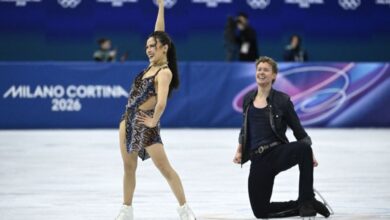
Sam West and Ellen Taylor Make Fast Blues Feel Effortless on the Dance Floor
Sam West and Ellen Taylor make a fast blues dance look relaxed without losing any of its precision. Their routine combines quick footwork, compact turns, and an easy connection, giving the performance a sense of play that remains visible throughout.
Bruce Gleason’s recording is titled “Grand Nationals 2017 Champion Swing 1st place winners.” The clip preserves the pair’s performance in a dance-floor setting where the surrounding spectators can follow their movement from close range.
The partnership is the first thing to notice. The dancers remain responsive to one another while keeping their individual movements clear. A hand connection becomes a means of communication, allowing changes of direction to feel coordinated rather than forced.
The footwork supplies much of the routine’s energy. Quick steps appear underneath an upper body that stays comparatively composed. That contrast makes the dance look smooth even when the lower-body rhythm is busy and exacting.
The blues accompaniment gives the pair a strong pulse to work with. They can acknowledge the beat directly or play around it through small accents. The performance feels musical because the steps participate in the recording’s character.
Watch the performance
Their changes of position help the routine remain varied. A turn or a shift in the partnership creates a new visual shape, but the connection remains continuous. The viewer can follow the dance as one unfolding conversation.
The room itself adds to that impression. Spectators stand or sit near the floor, creating a shared social setting around the performance. The dance feels like something happening among people rather than behind a distant theatrical boundary.
That closeness makes small details rewarding. A quick adjustment of the feet or a relaxed expression can be noticed without a camera zoom. The routine’s personality reaches the audience through ordinary movements as well as its more conspicuous passages.
The pair’s timing is especially important during transitions. Moving quickly is only part of the challenge. Each dancer must know where the shared phrase is heading, allowing the next movement to arrive with the music instead of after it.
The apparent lightness comes from that agreement. When partners are working toward the same musical point, a change can look spontaneous while remaining controlled. The viewer sees the ease; the coordination underneath it supplies the dependable structure.
West and Taylor also keep the routine expressive. Their faces and posture suggest enjoyment, which helps the audience connect with the dance beyond its technical details. The performance communicates pleasure through the same movements that display skill.
The music’s short accents give opportunities for variation. A dancer can mark a sound with a small step or a change of weight rather than a large gesture. Those choices help a compact dance remain visually lively.
On another viewing, watch the feet alone for a few phrases. The movement is more intricate than the relaxed upper-body presentation initially suggests. That separation between activity and composure is a major part of the routine’s appeal.
Then follow the connection between the partners. Changes of distance and direction require continual adjustments, even when they look easy. The handhold is part of a wider relationship involving timing, balance, and awareness of the available space.
The recording offers an inviting reminder that dance communicates through confidence and partnership as well as speed. A technically demanding passage becomes more engaging when it retains a clear relationship to the music and to the person sharing the floor.
West and Taylor leave a performance full of rhythm and character. The quick steps provide excitement, while the shared ease gives them continuity. Together, those qualities turn a competition routine into a dance that remains enjoyable simply to watch.
More videos to explore
The 1999 US Open recording of Ellen Taylor and Sam West provides an earlier view of their partnership. Compare its phrasing and footwork with the later Grand Nationals performance.
Charlie Womble and Jackie McGee’s Carolina shag clip offers another example of close partner communication and precise footwork. It makes a useful companion for watching how dancers keep a busy rhythm looking relaxed.
Further reading: Performance background and source.