The White Wigs Were Only the First Clue in the Chili Peppers’ Rick Rubin Tribute
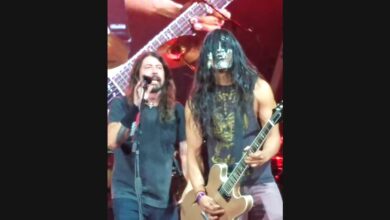
The close camera angle on Anthony Kiedis gave one viewer a moment of panic. Was that really his hair? A second viewer took in the beards and wigs across the stage and called the group “Red Hot Chili Santas.” The two reactions make more sense when you watch how much information each camera angle lets through.
On November 14, 2026, the Red Hot Chili Peppers played “Give It Away” at the Rock & Roll Hall of Fame ceremony at the Peacock Theater in Los Angeles. Rick Rubin received the Musical Excellence Award that night. When the Chili Peppers appeared, his familiar white hair and beard had been copied four times.
The costume catches the eye before the song’s relationship to Rubin comes into focus. He produced Blood Sugar Sex Magik, the 1991 album on which “Give It Away” appeared. The band had an immediate way to put his work back in the room, in the sound of an arrangement they have been playing for decades.
The arrangement also helps identify the people beneath the wigs. Flea’s bass has a rhythm of its own. Chad Smith gives that rhythm a place to land. Kiedis keeps pushing the vocal forward in short bursts. Once those parts lock in, even an unfamiliar face at the microphone is easy to place.
Look behind the front line and the costume idea reaches all the way to the kit. Rubin’s face is on the bass drum. A photograph that includes the players and the drum makes the conceit visible at a glance, while a close shot of Kiedis leaves just enough room for somebody to be fooled.
The live recording gives the visual gag time to become a performance. Look for the first clear view of the whole group, then listen to what the players are doing while the crowd takes in the costumes.
What the original video adds
The 1991 music video has its own sense of how a band can look when it plays this song. The monochrome photography and body paint put more emphasis on movement and shape. It is a useful comparison with the bright wigs at Rock Hall. The groove gives both sets of images their timing.
The original came from a record Rubin produced, which is part of what makes the newer performance such a compact tribute. The band could put his picture on the drum and recreate his look, then let the guitar, bass and drums fill in why they were there.
How the wide shot completes the joke
Rock Hall’s official Facebook clip brought the visual premise forward. In the discussion under it, the first viewer was looking at an individual singer. The viewer who saw a group of Santas was taking in all four musicians at once. Both recognized enough of the band to see why the disguises were funny.
A different audience upload drew a question about whether it was 1991 again. The song keeps offering people that cue. For a few bars, the audience in Los Angeles and the people watching on their phones could hear where the tribute had started, decades before the white wigs.