The Familiar Riff Hides the Work: A Listener Looks Closely at Layla Clark’s Percussion Part
“People who don’t play percussion have no clue how hard it is what she’s doing.” A viewer’s response to Layla Clark asks the audience to look past the familiarity of “Thunderstruck” and notice the work producing it.
The next sentence shares the recognition: “Whole marching band absolutely killed it and she rocked.” The listener’s praise moves from the player nearest the camera to the ensemble around her.
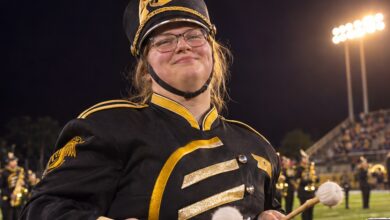
That is a useful way to watch the recording. The AC/DC opening is easy for many listeners to identify, but the familiar tune does not make the movements automatic. The camera gives each return through the pattern a visible route across the bars.
Recognizing the notes is different from producing them
The audience can know where a phrase is heading without thinking about how to play it. Clark’s mallets make the intervening actions unusually clear: prepare a strike, meet the target, move toward another note and keep the line connected.
The repeated opening allows a viewer to follow that process over time. A brief flourish could pass before the eyes settle. Here the familiar figure returns, giving another opportunity to hear the spacing and notice the movement that maintains it.
The listener’s comment is an expression of admiration rather than a formal technical assessment. Its strongest invitation is to pay closer attention. Someone who has never played percussion can still watch the relationship between the visible strikes and the continuing pulse.
The live “Thunderstruck” performance by 2CELLOS provides a comparison with a different physical vocabulary. Strings and bows change the way the notes are produced while the tune remains recognizable. The comparison encourages observation rather than a competition to declare one instrument universally more difficult.
A second viewing is useful because familiarity can lead the ear to supply a phrase before the eyes have followed it. Slowing the viewer’s attention, rather than the recording itself, allows the physical sequence to become clearer. The point is not to stop enjoying the song but to notice more of the playing that makes this version enjoyable.
The second sentence matters as much as the first
The viewer finishes by recognizing the band because the musical result depends on more than the exposed opening. Clark establishes the figure in the foreground; the Jaguars make the sound larger when the arrangement brings them in.
The band’s separate halftime recording at Chartiers Valley supplies the wider frame. The channel identifies it as October 17, 2025. It shows another school occasion, allowing more of the students and the program to appear than in the circulating close-up.
After that field view, the original recording has two scales to follow. There is the precise work of the hands near the camera, and there is the ensemble waiting to make that work part of a fuller arrangement. The opening and the entrance belong together.
Listening for the entrance also gives the repetition a purpose. The figure creates expectation while it continues. The arrival around it rewards the audience for remaining with the passage instead of leaving once they have identified the song.
The comment’s respect is grounded in that visible and audible relationship. Follow the mallets once, then hear the musicians around them. The recording offers both an individual task worth noticing and a school-band performance worth applauding.