Andrea Bocelli and Brian May Join Voices for “Who Wants to Live Forever”
Andrea Bocelli and Brian May give “Who Wants to Live Forever” a duet built around contrasting musical identities. The Queen song becomes a meeting place for a tenor’s sustained phrasing and a rock musician’s voice and guitar presence.
Bocelli’s official recording identifies the appearance as a 2024 performance at Teatro del Silenzio. That source provides the setting and date, placing the duet within a concert context rather than the changing relative dates of later social posts.
The melody gives the partnership a common direction. Each performer can approach a phrase differently while remaining connected to the same tune, allowing listeners to hear both individual character and the continuity of the song through the shared arrangement.
Bocelli’s tone changes the immediate scale of the vocal line. Sustained notes give the melody a broad, resonant presence, drawing attention to its shape and the way a phrase develops across the supporting accompaniment beneath the singer.
May brings another expressive vocabulary to the performance. His vocal delivery and guitar connect the arrangement with Queen’s musical identity, giving the duet a recognizable link to the song while leaving room for Bocelli’s different sound to become central.
Watch the performance
The backing supports the ballad’s expansive character. Its harmonic setting gives the voices room to grow, while quieter passages establish space before fuller arrivals. The arrangement benefits from contrast rather than requiring every moment to carry the same musical weight.
The duet’s interest lies partly in how the voices meet. A shared passage does not require their tones to become identical. The combination makes their differences audible inside a common phrase, giving the melody another texture beyond either solo contribution.
Guitar phrasing provides a further connection between the vocal passages. An instrumental line can preserve the song’s expressive direction when the words pause, making those spaces part of the arrangement’s movement instead of treating them as gaps between sung sections.
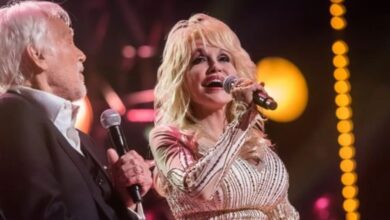
The concert setting gives the performance a clear visual scale. The musicians share a stage, and the recording lets viewers see how their individual roles fit within the wider presentation. The duet’s musical relationship becomes visible alongside its contrasting sounds.
The song’s measured pace leaves room for small differences in phrasing. An entry can feel more direct or more suspended depending on its placement, allowing the performers to shape the same melody through distinct choices within a shared musical framework.
The stronger arrivals gain effect from the restraint around them. A ballad needs room to build before its fuller moments can register as changes, and the arrangement gives the voices a path from more concentrated passages toward a broader collective sound.
The performance also demonstrates the usefulness of familiar repertoire in a crossover partnership. The song provides an established identity that listeners can follow, making it easier to appreciate what each performer adds without losing the composition’s underlying direction.
On another listen, follow the guitar between vocal phrases. Its tone and movement help maintain continuity, giving the instrument an expressive responsibility separate from the singers while keeping all three elements connected through the song’s melodic and harmonic shape.
Then listen to a shared vocal arrival as a combination of different colors. The duet’s character comes from that relationship rather than from perfect sameness, with the performers preserving their recognizable sounds while finding a common place within the arrangement.
The ending gathers those musical roles into a clear destination. Voice, guitar and accompaniment need to arrive together for the ballad to feel complete, allowing the concert’s larger scale to settle into a focused final musical statement from the partnership.
Bocelli and May’s “Who Wants to Live Forever” makes a familiar Queen song a convincing shared performance. The composition supplies continuity, while the contrasting voices and expressive guitar reveal how different musical backgrounds can meet within one sustained interpretation.
More videos to explore
Bocelli and Josh Groban’s official “We Will Meet Once Again” performance offers another vocal partnership. Compare its blend with the contrasting colors of the Queen duet.
Queen’s official “Bohemian Rhapsody” video provides another view of the band’s dramatic musical language. Its changing textures form a useful companion to the ballad’s more sustained approach.
Further reading: Performance background and source.