How U2 Made Room for Dolly Parton’s Voice at a Stadium Halftime Show
The clearest image from U2’s Thanksgiving Eve halftime show was a person who was physically absent. At SoFi Stadium, Dolly Parton appeared on the screens while her recorded voice came through on “Torn.” Bono sang with her from the stage. The picture was enormous, but the sound U2 left at the center of it was the sound of a duet.
U2 played during the NFL’s inaugural Thanksgiving Eve game on November 25, 2026, in Inglewood, California. The Los Angeles Rams were hosting the Green Bay Packers. The game gave the band a short window in the middle of a much larger broadcast, and that made every change in music and staging count.
“Torn” closes Carnaval de Luz, and U2 has described Parton’s contribution as her final recorded vocal. The recording was already a meeting of two singers. At halftime, the show had to give an audience a way to see and hear both of them in a form that belonged to a stadium. The screen made that relationship visible without asking the video to explain the history of the song.
U2 opened the set with “Sunday Bloody Sunday.” By the time the sound moved into “Torn,” the audience already had a sense of how much force the live setup could produce. The smaller sound of the duet became easier to hear because the band had established that contrast in advance. Bono’s role kept a living performer in the picture while much of the focus stayed with Parton’s recording.
A large stage image can draw the eye away from the way a song is being sung. Here the relationship was direct. The voice you heard belonged to the person the screens made visible. When Bono’s voice came up alongside that recording, the live part of the tribute was easy to understand even from a distance.
The official halftime clip is worth watching once for the screen and once for the balance of the voices. The first pass gives you the scale of the production. The second gives you a better sense of how it preserves the quieter relationship at the center of the song. Both are part of the same brief piece of performance.
Watch the performance
Then U2 moved into “Where the Streets Have No Name.” The first notes of The Edge’s recognizable guitar figure changed the way the audience experienced the room. A vocal moment built around one recorded voice gave way to a sound many people knew from years of listening to the band. The transition made the size of the stadium useful on both sides of the change.
The band closed with “Pride (In the Name of Love).” Placing “Torn” between its opening and those final songs let the tribute carry into a part of the set with a different job. The relationship between the two sounds is one reason that a short broadcast performance rewards a replay.
A halftime show can move from one image to the next faster than a viewer can think about any of them. The image of Parton holds up because it accompanies something concrete listeners can hear. The most revealing part of this tribute happens when the screen has done its work and the shape of the duet is clear enough to stand on its own.
Two more versions
The official lyric video gives the studio recording more time and makes it easier to focus on the way Parton and Bono phrase their lines. The halftime performance transfers that interaction into a stadium and gives the viewer a physical sense of how a live singer can share the space with a recording.
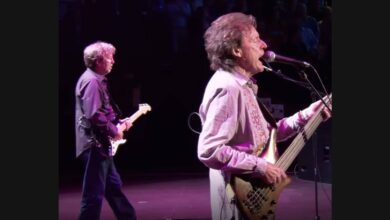
At Slane Castle, the opening of “Where the Streets Have No Name” gets the space of a full concert performance. The Edge’s repeating guitar figure gradually opens it up. Hearing that entrance by itself helps explain why the same song gave the SoFi audience somewhere to go after the intimate sound of “Torn.”