What Layla Clark’s Small Practice Instrument Has to Do With the Jaguars’ Big Entrance
The Jaguars’ halftime video begins with the result of a lot of preparation. Layla Clark’s mallets seem to know where they are going as the AC/DC pattern starts, and the part stays settled while the rest of the show gets under way. One viewer said the clip was what practice hours sound like when they pay off. Clark’s account of working on the line at home gives that compliment a more concrete place to begin.
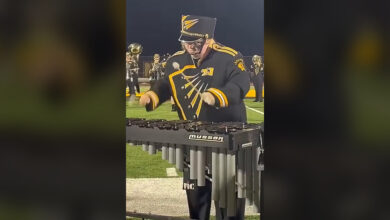
She told CBS Pittsburgh she had practiced on a small glockenspiel at home. The image is a useful contrast to the one the video made familiar. A compact instrument puts the notes close together and gives a player a smaller surface to aim for. The marimba on the field gives the figure a different sound and a different physical layout. A practiced pattern can carry between the two instruments even when the reach has to change.
There is another contrast in scale. At home, a player can pay close attention to one corner of a phrase and hear whether a note arrived late. At halftime, the line is part of a much larger arrangement. Other musicians are holding a place in the music, and an audience is taking in the whole field. The challenge is keeping the work learned at close quarters clear enough to hold its shape in that bigger sound.
The figure keeps returning to a pitch that acts as a reference point. That gives a musician a way to check how evenly the phrase comes around again. Learning the pitches is only part of getting it ready. The change from the end of one repeat to the beginning of the next has to happen without a hesitation that a listener can hear. The rhythm starts to feel natural when each pass leads into another on time.
There are plenty of ways to practice a repeating figure. A player could concentrate on a small change of direction, work slowly until a reach is comfortable or listen back to a run to hear a stray accent. Clark’s interviews establish that she practiced the material and that it took time to learn. The specific methods vary from musician to musician. The reliable evidence in the clip is how steady the finished line sounds from one repeat to the next.
The practice has a physical result you can see. Clark’s hands take the paths they need between the bars and spend little time searching for the next target. What looks quick on the first watch feels purposeful on a second. That is part of the appeal for listeners who know the guitar recording. They can recognize the tune immediately, then pay attention to what the player has done to make it work on a different set of instruments.
The next stage of preparation happens together
Five mallet percussionists played the opening, according to Clark’s account of the performance. A part someone can play alone has to fit with other people’s timing. Each musician contributes an attack that needs to register as part of the same line. An ensemble learns where the notes should land and how strongly to play them, giving a passage people have worked on individually a shared sound.
That is a different kind of practice from finding the notes on a small glockenspiel. In a section, a musician has to hear what others are doing while keeping a part steady. A passage can feel familiar under the hands and still take work to fit into the overall balance. The video gives the ear a way to hear the result. The repeated figure sounds clear enough to offer the rest of the band a place to enter.
Recording a performance can help reveal things a musician might miss when playing. It is possible to feel comfortable with a physical movement and later hear an accent that pulls attention in the wrong direction. A listener on playback may also notice how several players’ attacks land together. Even without access to the rehearsals, an audience can use the field clip to pay attention to that consistency rather than merely count how fast the notes go by.
Hear the distance between the practice room and the stands
The football field adds distractions and gives the musicians fewer chances to correct anything once it has gone by. The band is following a show, and the first figure has to do its job even as players elsewhere prepare to come in. A part that is well enough learned can leave a musician room to listen to what the ensemble is doing. The successful result sounds less like a private exercise and more like a public entrance.
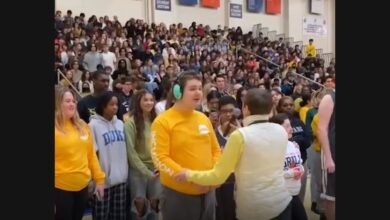
The wider Jaguars video makes that change easier to appreciate. It brings back the size of the field and the number of people responsible for moving the performance forward. Return to the close-up and notice how little of that activity has to be visible for the riff to hold your attention. Clark’s playing is a way into the performance. The effect it helps produce belongs to the band that learned how to build around it.
The story of the little glockenspiel offers a way to picture something the crowd could never see. The part existed at a more modest scale while a student was learning to find her way through it. On the field, the figure had to sound familiar enough for AC/DC listeners and clear enough for the Jaguars. The next time you hear the entrance, pay attention to how the pulse keeps going while the performance changes size.
The comment’s point holds without a count of the hours. A small passage learned well enough to repeat in public can make a whole group’s entrance feel inevitable. That is a long distance for a line to travel from a small instrument at home. The clip happens to let an audience hear where it ended up.