“My Forearms Ache”: Layla Clark’s “Thunderstruck” Makes the Work Visible
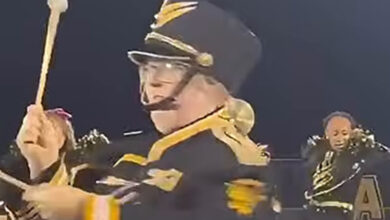
“That make my forearms ache just looking at it…” Joe Macek wrote after watching Layla Clark play “Thunderstruck” with the Thomas Jefferson High School Jaguar Marching Band. The reaction, posted beneath a shared video on X, puts the physical side of the performance into a few words.
The familiar AC/DC riff is the first thing to recognize. The close-up then gives the viewer something else to follow: two mallets moving across the bars while the opening pattern keeps returning. What can pass as a familiar line on a recording becomes a sequence of visible, repeated actions.
Clark remains the focus of the camera, with the Jaguars behind her and the instrument across the foreground. The perspective connects the sound to her movements. A viewer can begin by enjoying the song, then find themselves watching the route from one strike to the next.
Why the close-up makes the playing feel different
The comment about aching forearms is a listener’s vivid reaction to that view. It captures how a performance can make an audience aware of effort without stopping the music to explain it. The repeated motion is there to watch while the riff continues.
On mallet percussion, the pattern also has a visible geography. Each note requires a return to a particular place on the instrument. The mallets travel, strike and rebound, and those movements must keep connecting with the musical pulse around them.
There is more to watch than speed alone. Listen to how the repeating line establishes a reference for the audience, then follow the change when the ensemble expands the sound. The opening is doing a job inside an arrangement, preparing a musical entrance rather than simply displaying fast hands.
A separate upload by rain4tree carries the performance in a longer landscape presentation. Hearing that recording beside the original gives the viewer another opportunity to follow the passage through to the band’s contribution, with the camera’s attention still resting on the featured player.
A featured player inside a much larger sound
It is easy for a close camera position to make a band performance feel like an individual event. The surrounding musicians matter even when the frame favors one person. Their parts broaden what the opening can become, and the featured line gives the audience a way into that shared sound.
Macek’s response works because it begins with an ordinary physical image. You do not have to identify every instrument or describe the arrangement in technical language to understand the feeling of watching a movement continue with that much concentration.
KDKA Radio has also shared a separate, short performance of “Thunderstruck” by Clark. The station describes the widely circulating field video as a recording from the previous year and distinguishes its own clip as a newer performance. It offers another look at the player and the recognizable figure that brought so much attention.
That additional view is useful alongside the full field recording: the audience can hear the same musical idea in another setting, then return to the band entrance in the original. The riff remains familiar, but the movement and the surrounding ensemble give each recording its own point of interest.
The forearms comment leaves the listener with a simple reason to replay the performance. Follow the mallets this time. A song many people know by its opening guitar figure has become an invitation to watch the work that makes another kind of instrument carry it.