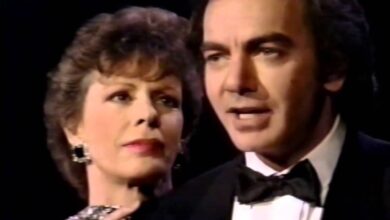
LeAnn Rimes And The Gay Men’s Chorus Of Los Angeles Deliver A Powerful, Soul-Stirring Performance Of “The Rose”
LeAnn Rimes’ performance of “The Rose” with the Gay Men’s Chorus of Los Angeles has lasted because it feels bigger than a guest spot and more intimate than a spectacle at the same time. The moment carries the emotional clarity of a hymn, the theatrical sweep of a major concert finale, and the tenderness of a personal tribute all in one. Rimes steps into a song that already had deep emotional history and sings it with a kind of calm conviction that lets the words breathe. Backed by the enormous, cathedral-like force of the chorus, she turns a familiar ballad into something that feels communal, mournful, and uplifting all at once. It is not just pretty. It feels purposeful.
Part of what makes the performance so memorable is the song itself. “The Rose,” written by Amanda McBroom and made famous by Bette Midler, has always been one of those rare ballads that sounds simple until someone truly commits to it. On paper, it is elegant and restrained. In the right hands, it becomes enormous. The lyric works because it speaks in universal images rather than trendy language, and that gives every new interpretation room to reveal something different. In Rimes’ version, the song becomes less about polished sentiment and more about endurance. The words feel lived in. They sound like they belong to people who have known love, pain, rejection, hope, and survival in equal measure.
The setting adds another crucial layer. Putting that song beside the Gay Men’s Chorus of Los Angeles changes its emotional temperature immediately. A piece that can sometimes be delivered as a solo spotlight suddenly becomes a collective statement. The chorus does not merely support Rimes from behind. It expands the song’s moral and emotional reach. Their presence transforms the performance from individual expression into something shared, as though the song is being carried by many lives at once. That is what gives it such unusual power. The arrangement is not trying to overwhelm the listener with sheer volume. It is trying to create scale through unity, and it succeeds beautifully.
Rimes herself sounds especially effective here because she avoids oversinging. That is one of the smartest things about the performance. She had more than enough vocal ability to push the song into grand diva territory, but she resists that temptation. Instead, she lets the feeling accumulate naturally. Her phrasing remains controlled, her tone stays open and expressive, and the emotional lift comes from trust rather than force. That restraint makes the big moments land harder. When the choir blooms behind her, it does not feel like a cue for drama. It feels like the song opening up. The result is a version that carries strength without sacrificing tenderness, which is much harder to pull off than it sounds.
The performance also resonated because of what it symbolized. Over time, many viewers came to see it not simply as a strong vocal collaboration, but as a deeply felt expression of solidarity, grief, dignity, and compassion. That interpretation is a huge part of its afterlife. Songs survive when they attach themselves to emotions people need help articulating, and this version clearly did that for a great many listeners. The comments and memories surrounding it have long reflected that response. People did not just admire the singing. They felt seen by it. That difference matters. Admiration creates applause. Recognition creates loyalty, and this performance has inspired the kind of loyalty that keeps it circulating years later.
Another reason it holds up so well is that it never feels trapped in one genre. Rimes comes from country, the chorus brings choral grandeur, the song itself lives comfortably in pop and adult contemporary tradition, and the entire presentation has something almost spiritual about it. Those elements could easily have clashed. Instead, they lock together in a way that broadens the song’s emotional territory. It is polished without feeling sterile. It is reverent without feeling stiff. It is emotional without becoming manipulative. That balance is rare, and it helps explain why the performance keeps reaching people who may not ordinarily seek out country music, choir performances, or classic ballads in the first place.
There is also something striking about the visual feel of the performance. Rimes is not presented like an untouchable star descending into a special event for a dramatic cameo. She seems present inside the moment, listening as much as singing, giving the impression that she understands the emotional scale of what the song and the chorus together can communicate. The choir, meanwhile, gives the scene architectural weight. Their voices rise around the lyric the way light fills a cathedral, which is exactly why the performance has that “took us to church” quality people keep describing. It does not rely on religious imagery in any narrow sense. It earns that reaction through atmosphere, sincerity, and emotional release.
By the time the song reaches its final stretch, the performance has moved far beyond novelty. At that point it no longer matters whether a viewer arrived because they loved LeAnn Rimes, because they loved “The Rose,” or because they were drawn in by the chorus. The version wins on its own terms. It builds patiently, trusts the lyric, and lets the emotional force come from accumulation rather than gimmick. That is what makes it different from so many viral music moments. It is not remembered because it was flashy or unexpected. It is remembered because it was deeply felt and beautifully shaped, and because its feeling still comes through even years after the first viewing.
Going back to the original Bette Midler recording is essential because it reminds listeners just how durable the song’s foundation really is. Midler’s version remains one of the great ballad performances of its era, and its emotional directness helped establish the song as a modern standard. There is a cinematic sadness in the original that has never left it, and every successful cover has had to decide whether to lean into that sadness, soften it, or reframe it. What Rimes and the Gay Men’s Chorus do so effectively is preserve the song’s ache while adding a broader sense of healing. That is not a small adjustment. It changes the emotional destination of the performance without betraying the soul of the original.
A later live Bette Midler performance offers another revealing comparison because it shows how the song grows when carried by experience. Midler’s live interpretations often bring a deeper, more weathered emotional texture, and that quality helps underline what makes “The Rose” such an enduring composition. It can handle softness, theatricality, age, grief, and triumph without breaking its shape. That elasticity is one reason the Rimes collaboration works so well. The song is strong enough to welcome another interpretive world into it. When a song can move from intimate ballad to live standard to choir-supported statement and still feel true to itself, that is usually a sign of unusually powerful writing.
Westlife’s version provides yet another useful contrast because it shows how the same song can become more polished and pop-leaning without losing its melodic appeal. Their recording presents “The Rose” with smooth, accessible emotionality, emphasizing comfort and familiarity. That is a valid route, but it also highlights why the Rimes and chorus version stands apart. Their take feels less like a carefully packaged cover and more like a lived event. The emotion is not only in the arrangement or the melody. It is in the sense of occasion, the collective sound, and the moral weight the performance seems to carry. That added dimension is what gives it staying power beyond simple prettiness.
Even Conway Twitty’s country interpretation is worth thinking about because it reveals how adaptable the song is across very different vocal traditions. Twitty brings warmth and familiar country intimacy, proving again that “The Rose” belongs to singers who understand emotional plainness rather than ornament for its own sake. That same lesson applies to Rimes. For all her technical gifts, the collaboration works because she sings from the center of the lyric instead of decorating it to death. The choir then widens that center until it feels inclusive and almost ceremonial. In that sense, the performance becomes a bridge between traditions: country feeling, choral gravity, classic-pop songwriting, and a public statement of empathy woven together into one memorable piece.
What finally makes this version endure is that it feels generous. Some performances ask the audience to admire them. This one seems to invite the audience in. It leaves room for grief, comfort, memory, and even quiet hope. That is why people continue to return to it and why the view count kept climbing over the years. They are not just revisiting a good vocal. They are revisiting a feeling. In a media culture crowded with louder, faster, and more disposable moments, this performance kept its place because it offered something steadier and more nourishing.
LeAnn Rimes has had plenty of powerful vocal moments across her career, but this one occupies a special corner of her legacy because it shows what happens when skill, humility, and emotional purpose line up at exactly the right time. She sounds like a singer who understands that the song is bigger than her, yet is still fully capable of carrying it. That combination gives the performance both authority and grace. It is never about proving she can sing. Everyone already knew that. It is about proving that a familiar song can still open hearts when treated with sincerity, intelligence, and respect.
The Gay Men’s Chorus of Los Angeles is just as central to that achievement. Their role is not decorative. They are the emotional architecture of the performance. Without them, the song might still have been lovely. With them, it becomes expansive. Their sound makes the lyric feel like it belongs to a community rather than a single narrator, and that communal dimension is exactly what turns the piece into something unforgettable. Great collaborations do not merely combine talents. They change the meaning of the material. This one absolutely does.
In the end, this performance lasts because it transforms a beloved standard into something that feels both timeless and newly urgent. It honors the song’s history without becoming trapped inside nostalgia. It gives LeAnn Rimes a chance to sing with warmth and restraint, and it gives the Gay Men’s Chorus of Los Angeles a platform to turn harmony into testimony. Together they create a version of “The Rose” that feels like comfort after loss, dignity after struggle, and beauty without pretense. That is why it still moves people. Not because it is famous, and not because it went viral, but because it sounds like compassion made audible.