Comedy’s Quiet Earthquake: How Young Tim Conway Walked Onscreen And Changed Everything
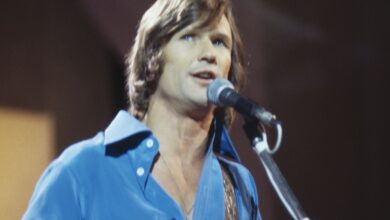
A grainy clip of a very young Tim Conway has a funny way of stopping people mid-scroll. It’s not the kind of “look at this old footage” nostalgia that fades after ten seconds. It’s the kind that makes you lean in and think, wait—how is he already that good? Long before the name became shorthand for a certain brand of quiet, unstoppable comedy, you can see the blueprint: the calm face, the patient pauses, the subtle little choices that feel almost invisible until the room is falling apart around him. The more you watch, the more you realize the magic isn’t in the punchline. It’s in the confidence to let the moment breathe, like he already understood that laughter is a wave you don’t force—you time it.
To understand why that early appearance hits so hard, you have to start in Cleveland, where Conway’s comedy wasn’t born in a glamorous writers’ room. It was shaped in local television, the kind of place where you learn fast or you disappear. In the late 1950s, he worked at a Cleveland NBC affiliate and teamed up with Ernie Anderson, a local TV personality whose cult following would later grow even larger through voiceover work. Together, they learned how to build a bit from almost nothing—an expression, a misunderstanding, an awkward beat that stretches just long enough to become hilarious. It’s a training ground that rewards instincts over polish, and it helped Conway develop the one skill he’d become famous for: the ability to do less and somehow get more.
The old clip feels like the moment that local talent crosses into national light. Conway’s path to that stage ran through New York, and it had a bit of show-business fate in it. Rose Marie, known to audiences from The Dick Van Dyke Show, spotted him and helped him land an audition for The Steve Allen Show, a place that could turn “promising” into “must-watch” quickly. He didn’t arrive as a loud personality trying to dominate the camera. He arrived as a puzzle piece: the guy who could stand there, barely react, and make everyone else look even funnier by contrast. That’s a rare skill in variety TV, where the temptation is always to go bigger, faster, louder. Conway’s presence suggested something smarter: let the chaos happen around you, and the laughter will land harder.
Behind the scenes, the early story has one of those small details that feels like a punchline the universe wrote. Steve Allen reportedly advised him to change his name from Tom to Tim to avoid confusion with another actor, and the switch stuck. It’s a tiny thing, but it also fits Conway’s entire career: a modest adjustment that ends up shaping the marquee. He wasn’t trying to be a brand. He was trying to work. And when you watch that early footage, what you’re really seeing is a working comic—someone already thinking about rhythm, about how long a glance should last, about how to keep an audience slightly ahead of the joke while still surprising them.
The fun part of revisiting those early moments is realizing how modern his style still feels. Today, audiences love comedians who can weaponize awkwardness and silence, who understand that a pause can be funnier than a paragraph. Conway was doing that decades before it became fashionable. In that early on-camera moment, his face doesn’t “announce” the joke. It refuses to. The humor blooms because the scene needs him to react—and he simply won’t give it what it wants. That refusal creates tension, and tension creates laughter. He didn’t mug for the camera. He didn’t chase approval. He acted like the camera was lucky to catch him, not the other way around.
Then came the role that made America feel like it knew him: Ensign Charles Parker on McHale’s Navy. The character’s appeal was simple and durable—sweet-natured, eager, and often hilariously out of his depth—yet Conway played him with such sincerity that the joke never felt cruel. Parker wasn’t a punchline. He was a human being trying his best, and that made the comedy warmer, funnier, and strangely comforting. The show gave Conway a national platform and, more importantly, a living laboratory for his timing. Week after week, he refined the art of being the calm center inside a ridiculous storm—an approach that would later become his signature in sketch comedy, where a single stare could send co-stars into helpless laughter.
If you want to pinpoint what made Conway special, it wasn’t just that he was funny. It was that he understood the ecosystem of funny. He knew how to elevate the scene, how to give someone else the laugh while still controlling the room. That’s why he became such a feared and beloved presence among other performers. Comedy people talk about “breaking” on set like it’s an accident, but with Conway it often felt inevitable. He had a way of sneaking the absurd into a scene at precisely the wrong time—the perfect time—so the person next to him would crumble. And he didn’t need a big line to do it. Sometimes he only needed a look, a slight shift, a pause that stretched one beat longer than the script could handle.
That instinct became legendary on The Carol Burnett Show, where Conway’s chemistry with the cast turned sketches into controlled disasters—in the best way. After guest-starring for years, he became a regular cast member in 1975, stepping into a show already known for precision comedy and somehow making it feel even more alive. What changed wasn’t the talent level; it was the unpredictability. Conway brought danger. Not mean-spirited danger, but the kind that makes the audience sit up because anything could happen. He could take a well-written sketch and, with one unexpected choice, transform it into something that felt like lightning—something you couldn’t replicate even if you tried.
The “event” people talk about with Conway is often not a single performance, but a pattern: the moment he quietly takes control without seeming to do anything at all. That’s why these early clips feel like treasure. They show the skill before the legend swallowed it. You can watch a young Conway already practicing the thing he’d later perfect: the gentle sabotage of predictability. The scene starts on rails, then his timing nudges it off course, and suddenly everyone’s reacting honestly—because the scripted path is gone. Those are the moments audiences remember for decades, because they don’t feel manufactured. They feel discovered in real time.
There’s also something deeply satisfying about seeing how his early years shaped his later characters. The Oldest Man, for example, is a masterclass in physical restraint, and it doesn’t work unless you trust the audience to follow you. Conway’s slow shuffle, his commitment to taking forever, is funny because it defies television logic—TV wants speed, and he makes time crawl. That courage comes from somewhere. It comes from having learned, early, that viewers aren’t as impatient as executives think. If the choice is specific and confident, people will lean in. Watching his earliest appearances, you can see that confidence forming, like a musician learning they can hold a note longer than anyone expects and still keep the room.
Another reason the story still resonates is how human he remained while becoming iconic. A lot of comedians build a persona that becomes a wall. Conway’s persona was more like an open door. Even at his funniest, there was an approachable warmth—a sense that the comedy wasn’t about humiliating anyone, but about revealing how ridiculous life already is. That warmth helped him last across eras, from classic network sitcoms to later guest spots and voice work. He didn’t belong to one generation of TV. He belonged to the broader tradition of performers who understand that audiences don’t just want jokes; they want relief, a feeling that someone sees the absurdity and can turn it into joy.
What makes the early footage feel so special, though, is that it captures the moment before the myth hardens. Later, everyone knows Tim Conway is a genius, so you watch expecting greatness. Early Conway doesn’t arrive with that aura—he earns it in front of you. You see a young performer testing the edges of what TV comedy will allow, building his own rules quietly, almost politely. There’s a purity to it. It’s comedy without the pressure of legacy, comedy as craft. The laugh doesn’t come from recognition. It comes from surprise. And surprise, when it’s clean and well-timed, never gets old.
It also helps that the world we’re living in now has a renewed appreciation for subtlety. After years of loud content, quick edits, and nonstop stimulation, Conway’s style feels like a reset button. He proves you can command attention by lowering your volume. You can dominate a scene by refusing to chase it. And you can be the funniest person in the room without ever looking like you’re trying. That’s why people share these clips like they’re passing along a secret. They’re not just saying, “Look how funny this is.” They’re saying, “Look at what comedy can be when someone trusts timing more than noise.”
The final twist in the story is that Conway’s legacy doesn’t just live in reruns—it lives in the behavior of comedians who came after him. You can see echoes of his deadpan patience and gentle disruption across modern sketch and improv, in performers who understand that the best laughs often arrive when you don’t signal them. Conway didn’t just make people laugh; he taught them how laughter works. That’s why, decades later, a simple old clip can still feel electric. It’s not only nostalgia. It’s evidence. Proof that a calm face, a perfectly chosen pause, and the courage to do less can leave the loudest mark of all.