After an inspiring return to the ice, the figure-skating standout is heading back to the Olympics — calmer, more grounded, and more content than she’s ever been. To her, that feeling of peace matters more now than any medal, headline, or ranking.
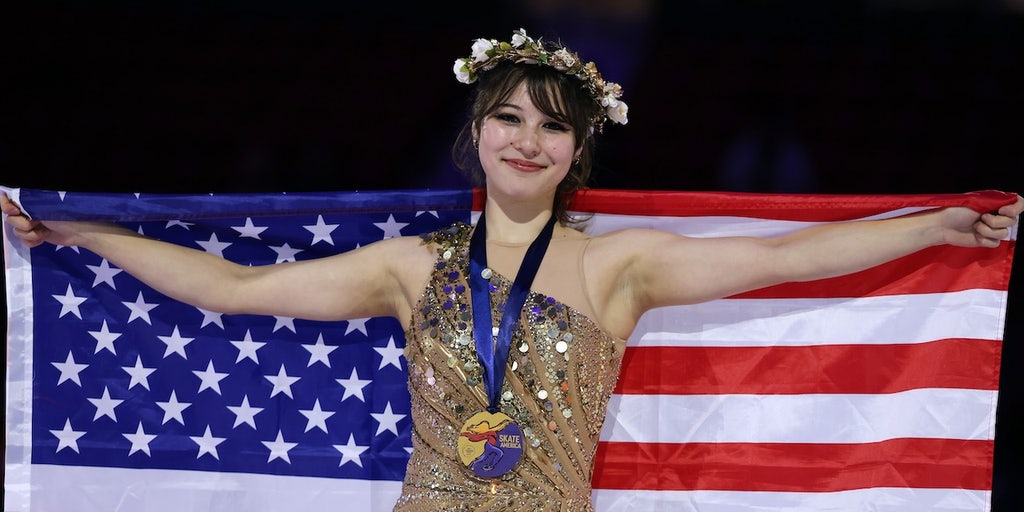
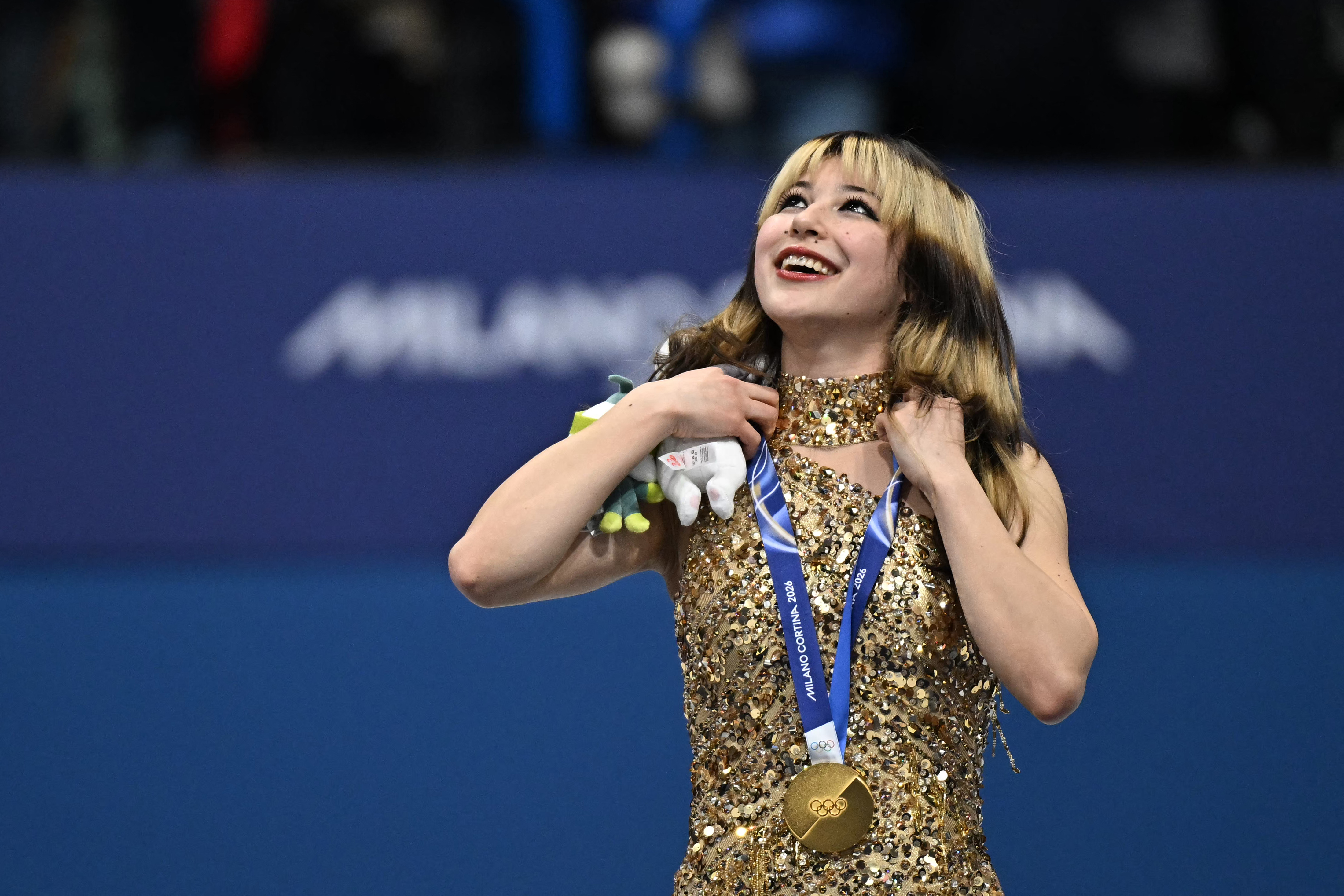
On Feb. 19, 2026, Alysa Liu won gold in the women’s figure skating event at the 2026 Olympic Games. At 20 years old, she became the first American woman in 24 years to stand atop the podium in the discipline. Sitting in third after the short program, Liu then delivered a free skate that lit up the arena and pulled the crowd to its feet, earning a season-best 150.20 and finishing with 226.79 points overall. “I literally can’t process this,” she said as she walked through the tunnel of Milano Ice Skating Arena after the win.
Liu had only been back in full-time training for roughly nine months when she stepped onto the ice at last year’s World Figure Skating Championships in Boston and produced what many view as the signature performance of her career. The comeback felt even bigger because three years earlier she had stunned fans by retiring at just 16, walking away after a run that already included historic milestones — becoming the youngest U.S. women’s national champion at 13, taking bronze at the 2022 World Championships, and finishing sixth at the Beijing Olympics. But behind the résumé, she was drained, emotionally worn down, and ready to reclaim the life she felt had been swallowed by endless days inside rinks.
For two years, she barely went near the sport. She threw herself into college, tried mountain climbing, and soaked up ordinary teenage moments with friends — the kind of normal life she’d hardly experienced. She felt good, even like she was finally breathing again, until a ski trip with a friend unexpectedly stirred something she hadn’t felt in a long time: the urge to be back on the ice. If she returned, she decided, it would be different. She would do it on her own terms, taking control of everything — her costumes, her music, her routines, her training plan, her diet — all of it.
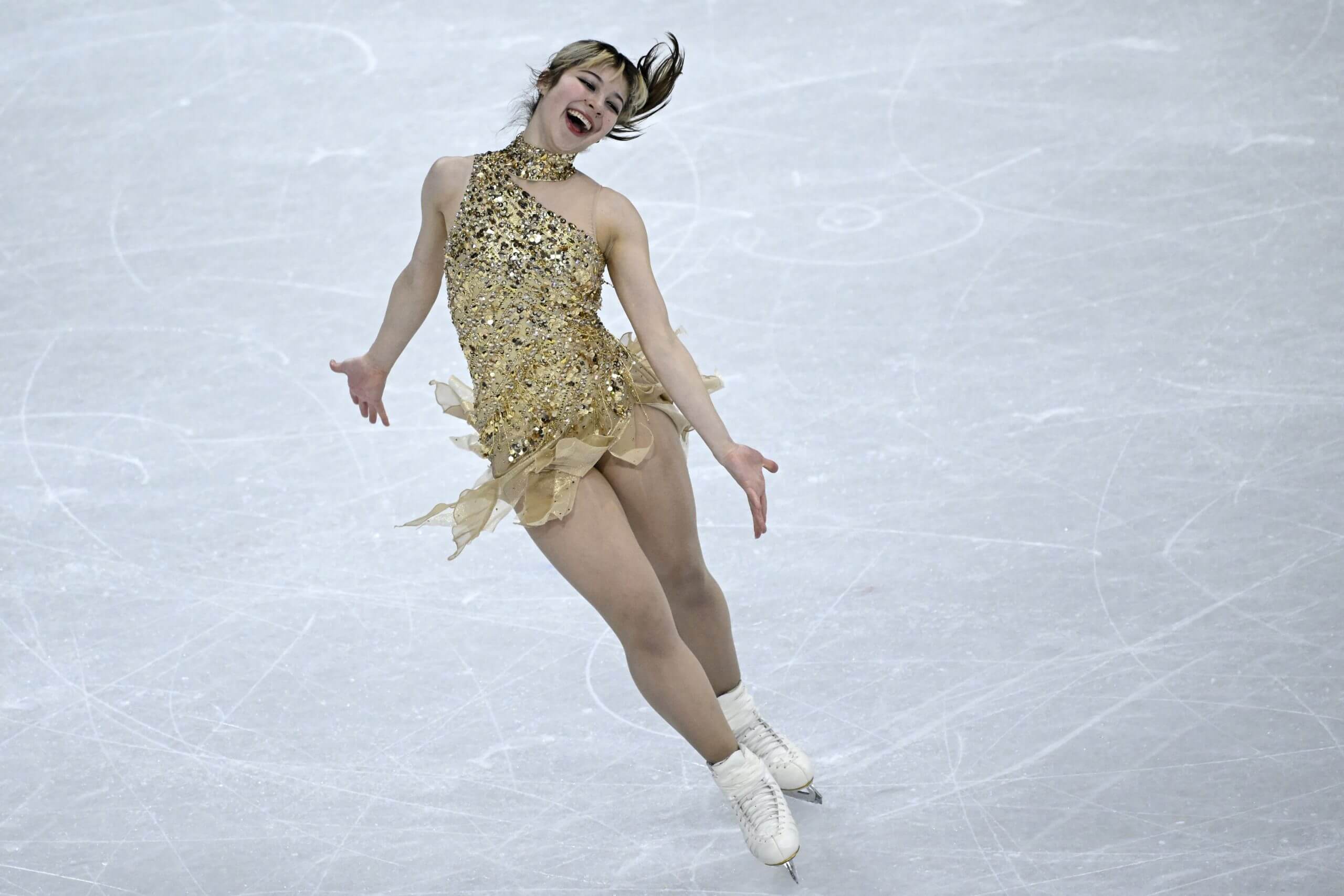
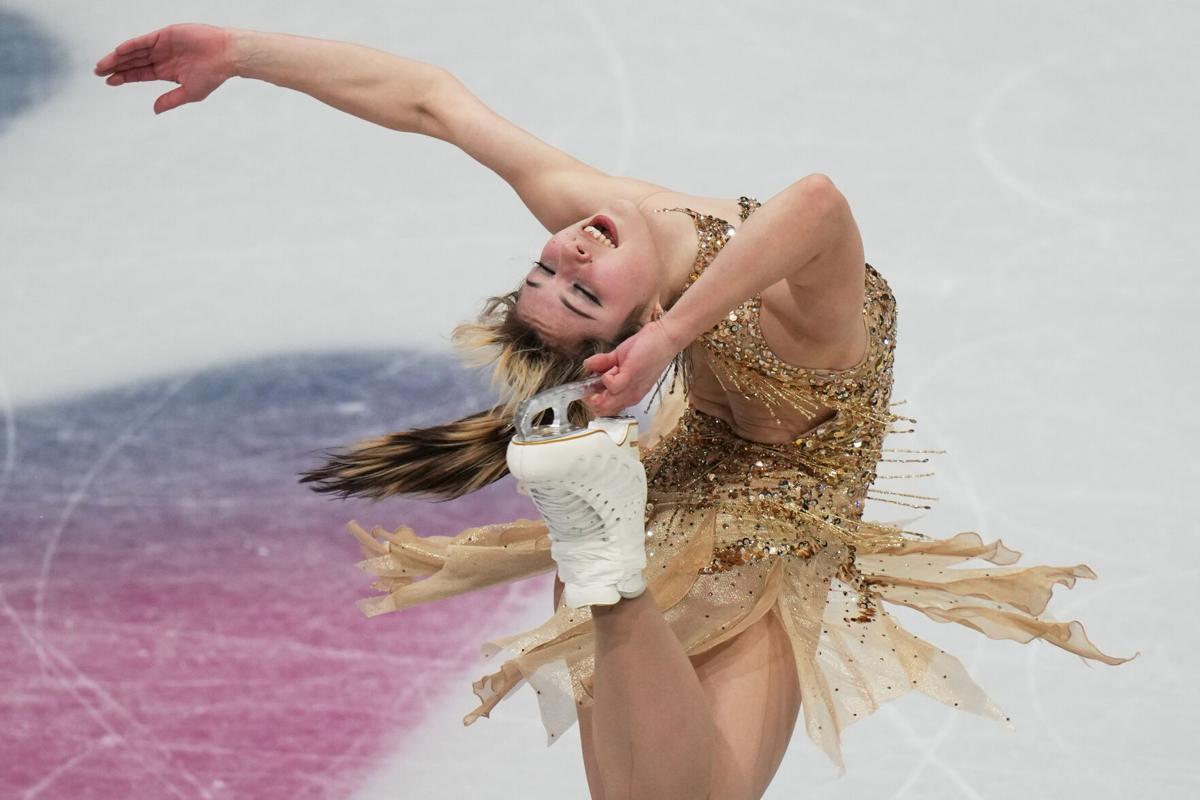
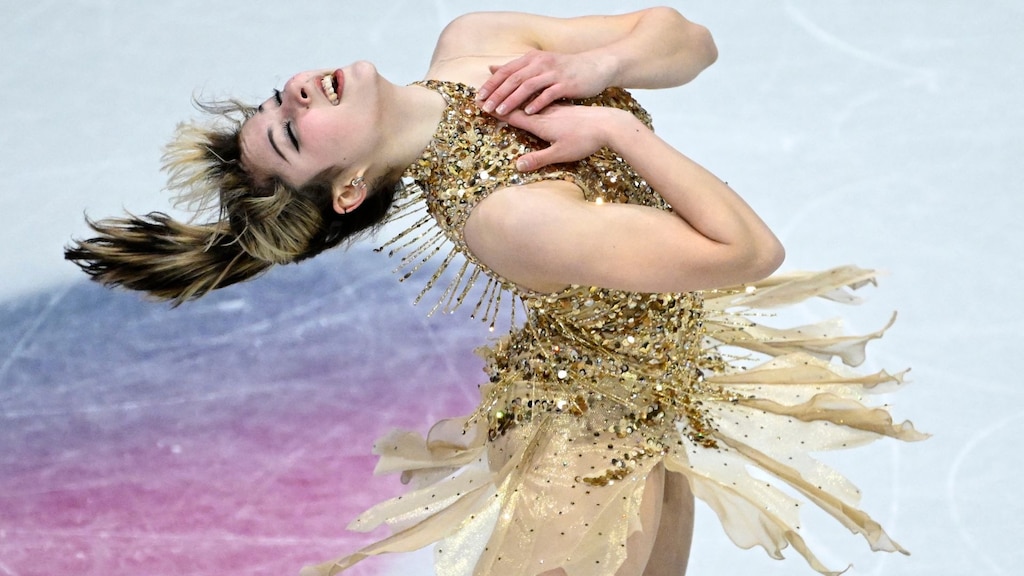
Liu restarted serious training in the summer of 2024, and by the following March she was in Boston again — 19 years old, wrapped in a glittering gold dress, and giving off more punk energy than traditional ice-princess polish. With her smiley piercing and zebra-striped hair, she stood quietly at center ice and waited for the music to hit. Skating to Donna Summer’s “MacArthur Park,” she opened with a clean triple flip, stacked difficult combinations, ripped through rapid spins, and threaded complex footwork into a program that carried her to the world title. The last time an American woman had won worlds, Liu hadn’t even turned one.
“The happiest I felt was after my ending pose, when everyone stood up and started roaring,” Liu says. “I was like, ‘Oh hell yeah!’ But it wasn’t the winning part that made me feel good — it was the actual program I skated. It was my favorite run-through I’ve ever done. The energy was insane. People were cheering, clapping, dancing. I’d do anything to skate that program again and feel all of that one more time.”
Watching Liu in this new era, you still notice the obvious things — how natural she looks, how smoothly she makes hard jumps appear routine, how she carries speed without panic. But what hits even harder now is the expression on her face: she looks genuinely happy out there. There’s a calm, almost serene quality to her skating, as if the pressure that once weighed her down has finally loosened its grip. She performs in packed arenas, yet it can feel like she’s alone in her own world — not skating to prove anything, but skating because she wants to.
In late October, roughly seven months after that world-title high, Liu was in New York City for press appearances before entering a tighter training stretch ahead of the U.S. National Championships — the event that would decide whether she’d make the Olympic team for the Milan-Cortina Games. She later locked in her place in January by finishing second at nationals, heading to the Olympics alongside Amber Glenn and Isabeau Levito. Thanks in part to viral TikTok moments, the trio picked up a nickname that stuck: the “Blade Angels.”
When we sit down after the photoshoot, Liu — now 20 — has changed out of the leather-and-heels styling and is back in what she arrived wearing: baggy jeans, a graphic tee, and Vans. She laughs about how often people misread her vibe. “I’ll be at something for athletes, and they’re like, ‘You’re a snowboarder, aren’t you?’ And I’m like, ‘Actually, I’m a figure skater.’” She describes her everyday wardrobe as more masculine, but says she loves that figure skating itself is “super feminine,” almost like stepping into a different artistic space.
Liu grew up in Oakland and was raised by her father, Arthur. She’s the oldest of five children, all born through egg donors, IVF, and surrogacy. Her sister, Selena, is two years younger, and the triplets — Josh, Justin, and Julia — are four years behind her. When Liu was young, she was often away training in places like Delaware, Colorado, Florida, and Italy, but whenever she was home, she leaned hard into being the fun older sister — the one who kept everyone up too late playing video games and made the house feel loud and alive.
She started skating at five, “because my dad had heard of Michelle Kwan,” she says. By six, she was already competing. At first it was all fun — friends at the rink, that buzz of learning new things, the thrill of getting on the ice. “I don’t think I ever realized I stood out,” she says. “It was the people around me who did.” As the results piled up, her dad brought in professional coaches, and before long, she was homeschooled to make training possible. “I graduated high school at 15,” she explains, “because everyone wanted me done a year before the Olympics so I could just focus.”
“I hate the term, but she was a phenom from the start,” says longtime coach Phillip DiGuglielmo. “She belongs in that small pantheon with Tiger Woods, Serena Williams, and Simone Biles. She’s absolutely right there with the best of them.”
When Liu is asked what it felt like at 12 to land her first triple axel in competition — still the youngest woman to do it internationally — or what it felt like the next year to win her first national title, she pauses and then shrugs. “I guess I felt good,” she says, before admitting she truly doesn’t remember. “All my memories from back then are gone.” She’s watched the footage and knows she looked emotional and happy, but she also says she didn’t enjoy skating at the time because she didn’t have ownership. “I wasn’t making my own programs. I wasn’t designing my own dresses. I was just following instructions.”
“When Alysa came back and she was skating for herself, the performances were magical.”
DiGuglielmo agrees, saying that before the retirement, Liu mostly did what she was told and rarely pushed back. “At 12 or 13, most kids don’t question authority,” he says. “She didn’t. She just followed the plan.”
Watching clips of her younger self now “feels like watching a different person,” Liu says — and she attributes that disconnect to trauma and memory-blocking. She describes arriving at the rink by 8 a.m. and staying for 11 or 12 hours, day after day, without real breaks. The intensity extended beyond training: she recalls how closely adults monitored what she ate and drank, even being warned against drinking water because of “water weight.” “Imagine telling a 13-year-old she can’t drink water,” she says. Over time, it stacked up into a breaking point.
During COVID, when she trained in isolation and lived far from home, the loneliness made everything heavier. She would Uber to and from the rink alone, while all she wanted was to be back with her family and friends. She missed birthdays, milestones, and the ordinary moments that make teenage years feel real. “I felt like I was missing life for a skating career I didn’t even care about,” she says. “I didn’t really have a dream of my own — my dream was just to be home.”
After the 2022 Beijing Olympics and a bronze at worlds that same year, she stepped away. “I knew that little me wanted to go to the Olympics,” she says. “And I was like, ‘Well, I did it. There’s nothing else holding me here. Now I’m free.’”
The year after retiring became a flood of firsts and normal moments. She got her driver’s license, went on her first real vacation, danced at concerts with friends, picked her siblings up from school, and finally bought the kind of everyday clothes she’d wanted for years. She even hiked to Mount Everest Base Camp. The next year, she enrolled at UCLA to study psychology and moved into a dorm — and through all of it, she says the most important part was healing. “When I quit, a lot of the toxicity I had attached to skating just disappeared,” she says.
In January 2024, she tried skiing for the first time — something she’d never been allowed to do before because of injury risk. Feeling the cold air, the speed, and that familiar burn in her legs sparked something that surprised her. Not long after, she stepped back onto the ice and started landing jumps again, quickly. By summer, she was back training full-force — but with a completely different mindset: more self-aware, more grounded, and far more in control of her own life.
Everything about this chapter is different. She hires the people she wants around her. She drives herself to practice. She chooses her sessions and decides how much she needs to skate. And most importantly, she’s not doing it to chase legacy or satisfy anyone else. She’s doing it because it genuinely makes her feel alive — and that shift shows up in every performance.
Skating has become a creative outlet again. She designs her own dresses and enjoys having control over even the smallest details, from training outfits to how she presents herself on competition day. She works closely with her coaching team to shape programs that feel like her, including music choices that match her personality rather than someone else’s idea of what she “should” be. At nationals, she debuted a new free skate set to Lady Gaga tracks, leaning fully into the bold, expressive style she wants to bring to the ice.
Looking ahead to the Milan-Cortina Olympics, Liu insists she’s not chasing results the way she once did. “I skate now to show what I can make, and what I can do,” she says. “I really just want to show my art.” After a pause, she adds the line that sums up her comeback best: “I refuse to not choose my own destiny.”