When Charley Pride Quietly Changed the Sound of the Super Bowl
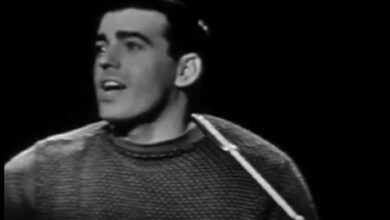
In 1974, Charley Pride’s appearance at the Super Bowl marked a quiet but meaningful turning point in the event’s cultural history. It did not represent the first time the National Anthem was ever sung at the Super Bowl, but it did stand out for what it symbolized. At Super Bowl VIII, Pride stepped onto the field during the pregame ceremony and performed “America the Beautiful,” followed by “The Star-Spangled Banner.” There were no elaborate stages, no fireworks, and no spectacle designed for television drama. The moment relied entirely on presence, voice, and restraint.
By the early 1970s, the Super Bowl was already a major sporting event, but it had not yet evolved into the entertainment-driven production it would later become. Pregame ceremonies were formal and often ceremonial, frequently featuring bands or choirs rather than solo pop stars. Pride’s performance fit that tone, yet it also quietly expanded it. As a major country music star—and one of the genre’s most important figures—his inclusion reflected a broader recognition of country music within a national cultural setting.
It is important to be precise about what made the moment significant. Charley Pride was not the first singer to perform the National Anthem at a Super Bowl. Solo vocal performances had occurred earlier. What made 1974 notable was the visibility and symbolism of Pride himself. He was a chart-topping country artist at a time when the genre was rarely centered in mainstream sports ceremonies of that scale. His presence on the field was not framed as novelty or crossover spectacle; it was presented as natural and dignified.
The performance itself was understated. Pride sang without dramatic flourishes, backed by the stillness of the stadium rather than overwhelming production. Viewers and attendees later recalled the sense of pause that settled over the crowd—a feeling that the ceremony carried weight without needing amplification. In hindsight, that simplicity stands in sharp contrast to the anthem performances that would follow in later decades, when larger stages, dramatic arrangements, and celebrity branding became central features of Super Bowl presentations.
After 1974, the Super Bowl gradually opened its pregame ceremonies to a wider range of artists and musical identities. Pop, rock, R&B, and eventually global superstars would take their turns, often performing in front of increasingly elaborate setups. That evolution did not begin with Pride, but his appearance sits early on that path. It represents one of the first moments when a major recording artist, associated strongly with a specific American genre, occupied the Super Bowl stage without irony or spectacle.
Charley Pride’s performance endures not because it was “the first,” but because it was foundational. It demonstrated that the Super Bowl could serve as a space for cultural inclusion as much as entertainment. Long before anthem performances became moments engineered for viral impact, Pride stood alone on the field and delivered a performance defined by calm authority. The door to something larger was already opening—but in 1974, it opened quietly.