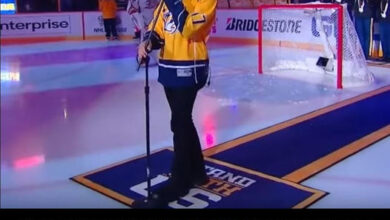
They Told Him to Tone It Down — Toby Keith Turned Anger Into an Anthem After 9/11
On a quiet week after September 11, 2001, Nashville was still trying to figure out what it was allowed to feel. Grief was permitted. Reflection was encouraged. Anger, especially the loud, blunt kind, made people nervous. Into that moment stepped Toby Keith—an Oklahoma baritone with a work-worn background and a reputation for saying the thing you’re not supposed to say on television. What came next wasn’t a carefully focus-grouped single or a slow-burn album cut. It was a flash of emotion that hit like a door kicked open, and it would put Keith at the center of one of the most combustible cultural arguments country music had seen in years.
The ingredients that made the song possible were already baked into him long before the first draft. Toby Keith’s story didn’t start with a red carpet or a grooming team. He’d worked blue-collar jobs in Oklahoma’s oil industry and carried himself like someone who’d spent more time around loud machinery than quiet conference rooms. He wasn’t built like a delicate songwriter either—he’d played semi-pro football, and even his speaking voice sounded like it had been sanded down by weather. That biography mattered, because the moment demanded authenticity, and he had it in his bones: the kind of authenticity that doesn’t always behave politely when it’s angry.
Then there was the personal fuse already burning. Keith’s father, a U.S. Army veteran, had died earlier in 2001, before the attacks. The loss sat on his chest like a weight, and it reshaped the way he heard the word “service.” When the country was hit on 9/11, it wasn’t just a national trauma to him—it landed in a house already mourning a soldier’s life. That is part of why the song that followed didn’t sound like a press release. It sounded like a son talking to his dad’s memory, and like a citizen talking to anyone who might mistake restraint for strength.
By Keith’s own retelling, the writing happened fast—shockingly fast for a song that would become so widely quoted. Roughly a week after 9/11, he sat down and wrote “Courtesy of the Red, White and Blue (The Angry American)” in about 20 minutes, an outburst of feeling captured before it could cool into something more diplomatic. There’s a particular kind of writing that can only happen that way: not because the writer is lazy, but because the moment is too hot for long revision. You can hear it in the cadence—direct, punchy, designed to be shouted back by a crowd, not murmured in a headphone mix.
The lyric that would make headlines was the lyric that refused to negotiate. It wasn’t metaphorical. It wasn’t subtle. It was an image of American retaliation delivered with the swagger of a man who believed the nation needed a spine-stiffening chant more than it needed a lullaby. In the months after 9/11, plenty of artists reached for unity and healing—and many people needed exactly that. Keith reached for a different emotional register: rage, resolve, the clenched-jaw promise that the next move would not be passive. Whether you heard it as catharsis or escalation often depended on where you stood, what you’d lost, and how you wanted your patriotism to sound.
At first, the song lived in a space that felt more intimate than commercial. Keith was hesitant about recording it right away and instead performed it in contexts tied to military audiences, where the reaction was immediate and visceral. People didn’t just clap; they responded like they’d been handed language for something they’d been carrying silently. In that setting, the song functioned like a morale flare. It wasn’t trying to win a debate. It was trying to steady people who were about to ship out or who already had someone overseas. The song’s life began where emotions weren’t theoretical—where consequences were packed in duffel bags.
As the story goes, the momentum eventually pushed it out of those rooms and onto the radio. Keith later said military leadership encouraged him to put it on record, framing it as a way he could serve—by lifting spirits in a time when spirits were brittle. That detail matters, because it explains why the song doesn’t feel like a marketing pivot. It feels like a musician responding to a request from the people he most wanted to honor. The public often imagines a machine behind songs like this, but in this case, the machine was chasing the moment, not creating it.
Once the track moved toward release, the gatekeeping instincts of mainstream television and polite entertainment culture kicked in. A patriotic national broadcast seemed like the natural place for a song wrapped in flags and fury—but that’s where the clash sharpened. Keith was invited to appear on an ABC Fourth of July special in 2002, and then the invitation came with conditions: soften the lyric or pick a different song. The request wasn’t subtle. The message was clear: patriotism was welcome, but not that kind— not with that level of anger, not with that punch-to-the-mouth phrasing.
The host at the center of that moment was Peter Jennings, and the disagreement quickly turned into a story bigger than a booking decision. Keith refused to change the song, refused to swap it out, and didn’t appear on the special. In another era, that might have been a quiet scheduling hiccup. In 2002, it became fuel. The entire country was negotiating its emotional boundaries in public, and here was a country singer saying, in effect, I will not sanitize my reaction to being attacked. The industry might have seen risk management. Keith saw a test of nerve.
What happened next is a familiar paradox in American pop culture: the attempt to contain something often amplifies it. The controversy didn’t shrink the song; it gave it oxygen. Interviews multiplied. Debates spread beyond country radio into morning shows, news segments, and dinner-table arguments. People who didn’t care about Nashville suddenly had an opinion about what Nashville should sound like. The song became a kind of cultural Rorschach test: to some, it was crude and inflammatory; to others, it was honest and necessary. Either way, it refused to stay in its lane—and the more people argued about it, the more it seeped into the national bloodstream.
Then the charts arrived like a scoreboard. When “Courtesy of the Red, White and Blue” hit radio as a single in 2002, it didn’t behave like a niche political track. It performed like a hit, climbing to the top of country radio and crossing into the broader Hot 100 conversation as well. That commercial reality mattered because it demonstrated something uncomfortable for the gatekeepers: even if they didn’t like the tone, a massive audience was choosing it anyway. It wasn’t just being tolerated. It was being embraced, sung loudly in trucks, bars, and arenas—where “polite society” has never had final authority.
Onstage, the song turned into an event inside the event. Country crowds are already good at call-and-response, and Keith knew how to conduct them. The chorus didn’t just land; it detonated, the kind of chorus that turns a concert into a single roaring organism. In those performances, you could see why he wouldn’t dilute it. The lyric wasn’t simply a line—it was a release valve. The song offered a blunt sense of agency at a time when many Americans felt stunned and powerless. Whatever you thought of the messaging, the emotional mechanics were undeniable: it gave people a loud place to put what they were feeling.
Of course, not everyone heard it as therapy. Critics argued that art that celebrates retaliation can help harden public appetite for war, and that the song’s imagery fed the ugliest impulses in a moment already volatile. Others countered that it was never meant to be policy, only emotion—that you can’t legislate how grief and fury should sound. This tension is part of why the episode remains interesting years later: it exposes the fault line between expression and endorsement. Keith didn’t present himself as a professor. He presented himself as a guy who wrote what he felt, and who believed that turning down the volume would be dishonest.
The Toby Keith brand that emerged from this was more than a single: it was a public character. “The Angry American” label stuck, and Keith leaned into the idea of being unfiltered, stubborn, and allergic to elite approval. That posture won him devotion and backlash in equal measure. But it also clarified his lane at a time when country music was increasingly polished for crossover success. Keith’s refusal to sand off rough edges made him a symbol for a specific kind of American self-image—proud, loud, and deeply skeptical of anyone who tries to manage the narrative from a studio control room.
His relationship with the troops became a central part of the story people told about him afterward. He performed for service members repeatedly, including in overseas settings, and he spoke about those shows not as photo ops but as a responsibility. In the mythology of modern country music, that matters: artists have always borrowed military imagery, but not all of them build a real bond with military audiences. Keith’s supporters point to that pattern as proof the song came from commitment, not opportunism. His detractors might argue it blurred entertainment and ideology. Either way, it tied the song to a lived connection beyond radio play.
What makes the “Courtesy of the Red, White and Blue” episode special isn’t just that a hit was controversial. It’s that it captured the emotional chaos of a specific post-9/11 window—when people were simultaneously mourning, furious, patriotic, frightened, and desperate to feel solid ground under their feet again. Keith wrote a song that did not ask permission to be messy. The industry tried to apply manners to it. The public turned it into a chant. And the clash revealed something enduring about American culture: we argue as fiercely about how we should feel as we do about what we should do.
Today, you can trace a line from that moment to every modern argument about “acceptable” patriotism in pop culture. The questions haven’t gone away; they’ve just changed costumes. Should artists comfort or confront? Is anger a valid form of mourning? Who gets to decide what’s “too much” for television? Toby Keith’s answer, back then, was simple and immovable: I wrote what I wrote. And whatever anyone thinks of the song’s politics or poetry, that refusal to apologize—paired with the public’s thunderous willingness to sing along—explains why this wasn’t just a release. It was a cultural flare shot into the sky, bright enough to start a fight and loud enough to be remembered.