Ilia Malinin And The Family Behind The Quad God
Ilia Malinin’s story has always been told through jumps, rotations, and records, but the foundation of everything he became was laid far from the spotlight, inside a family that understood elite skating not as spectacle, but as sacrifice. Long before arenas filled with chants and expectations, his parents were already living the reality of the sport: early mornings, aching bodies, financial strain, and the emotional toll that competitive skating quietly demands from those closest to the athlete.
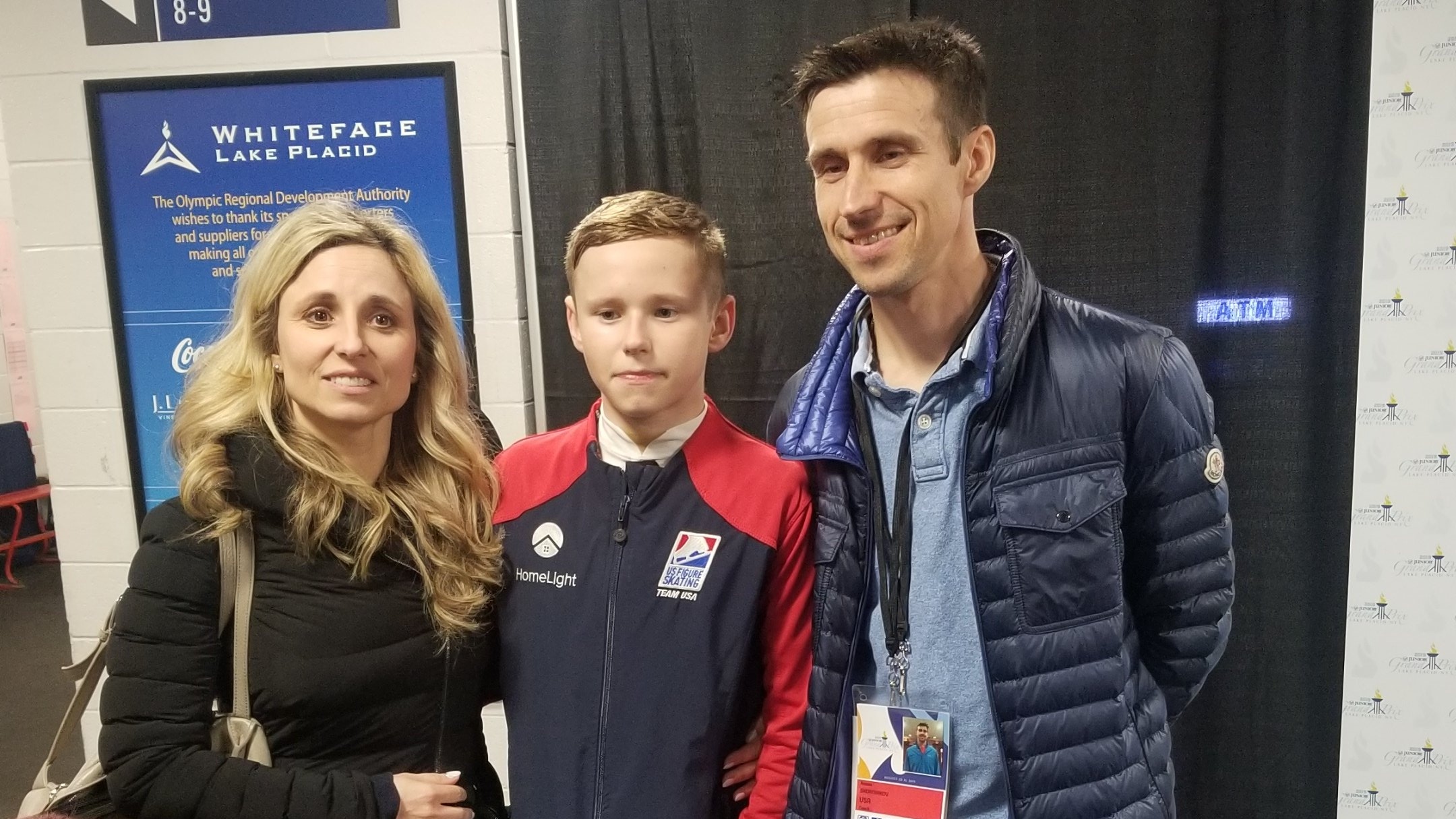
Malinin was born into a rare skating lineage. His mother, Tatiana Malinina, is a former Olympic figure skater who represented Uzbekistan, finishing eighth at the 1998 Nagano Olympics and later competing at the World Championships. His father, Roman Skorniakov, also competed at the Olympic level. This was not a household discovering skating by chance; it was a family deeply aware of what the sport gives and what it takes away. That awareness shaped how Ilia was raised, trained, and protected — even when protection meant allowing him to suffer through growth.
From the beginning, Ilia’s parents made a deliberate choice not to rush him into the spotlight. Despite their own elite backgrounds, they resisted the temptation to market him early as a prodigy. Instead, they focused on fundamentals, balance, edge quality, and long-term health. This patience became crucial later, when Ilia’s technical ambitions began to stretch the physical limits of men’s skating itself. His parents knew that longevity in the sport mattered more than viral moments.
As Ilia entered his early teenage years, the family dynamic shifted. Training intensified, travel increased, and the rhythms of normal adolescence began to disappear. Birthdays were spent at rinks. School schedules were built around practice sessions. Social life became fragmented and conditional. This was not accidental neglect; it was a conscious family decision that everyone involved understood would come with emotional consequences. His parents accepted that burden alongside him, not above him.
By the time Ilia reached international junior competition, his parents were no longer just supporters — they were emotional stabilizers. Roman handled technical discussions and strategic planning, while Tatiana often managed the psychological side, recognizing patterns of self-criticism that she herself had lived through as an athlete. The household became a place where ambition was encouraged but emotional collapse was allowed. That balance proved essential as Ilia’s technical ceiling continued to rise faster than anyone expected.
When Ilia landed the first ratified quad axel in international competition in 2022, the moment was historic, but inside the family, it was met with controlled pride rather than celebration. His parents understood that the jump would change how the world looked at their son — and how much pressure would follow. They knew that history-making feats do not relieve expectations; they multiply them. From that point on, every performance would be judged not by excellence, but by whether he repeated the impossible.
During his ascent through senior competition, including World Championship titles and Grand Prix dominance, Ilia’s parents became increasingly protective of his mental space. They limited interviews, filtered media narratives, and tried to shield him from online discourse when possible. This was not about controlling his image, but about preserving his identity beyond results. In private, they continued to remind him that medals did not define his worth, even as the outside world insisted otherwise.
The lead-up to the Milano Cortina Olympic cycle marked the most intense period the family had ever faced. Expectations were no longer abstract; they were explicit. Ilia was widely framed as the future of men’s skating, a near-guarantee for gold. His parents, having lived the Olympic experience themselves, understood how dangerous that framing could be. They watched their son carry not just his own ambitions, but the weight of a nation’s hopes.

When the Olympic free skate did not go as planned and Ilia finished outside the podium, the disappointment was immediate and global. For his family, however, the moment triggered a different response. They had seen exhaustion before anyone else did. They had watched him push through injuries, fear, and relentless expectation. The result did not shock them as much as it saddened them, because it confirmed what they already knew: no one can remain invincible forever.
In the aftermath, Tatiana Malinina spoke publicly as a mother, not as a former Olympian. Her focus was not technical errors or placements, but the emotional cost of a childhood shaped by elite sport. She reminded the public that her son began carrying Olympic-level pressure at an age when most children are still discovering who they are. That perspective resonated widely because it came from lived experience, not abstraction.
Roman Skorniakov’s response was quieter but equally significant. He emphasized process over outcome, pointing out that Ilia’s career was far from over and that growth often comes through failure. Having experienced his own share of competitive disappointment, he understood that resilience is built not through constant winning, but through learning how to stand after falling in front of the world.
As Ilia chose to step back temporarily from competition, the family closed ranks. This pause was not framed as retreat, but as recalibration. His parents supported the decision fully, prioritizing mental health and personal identity over immediate redemption. For a family that had dedicated decades to skating, choosing rest over urgency was a powerful statement.
What makes Ilia Malinin’s family story compelling is not perfection, but honesty. They never pretended that elite sport is healthy by default. They acknowledged the costs, accepted the risks, and still chose to walk the path together. That unity — tested under Olympic pressure — remained intact when the medals were absent.
In the end, Ilia’s parents did what few in high-performance sport manage to do: they reminded the world that greatness does not cancel humanity. Their support did not waver when the narrative shifted from triumph to disappointment. If anything, it became more visible, more vocal, and more necessary.
Ilia Malinin’s career will continue, records will fall or be surpassed, and history will keep score. But the most enduring truth of his journey may not be written in protocols or statistics. It may live instead in the quiet, unwavering presence of a family that understood long ago that raising a champion means protecting the person first — even when the world demands the opposite.