The Righteous Brothers’ “(You’re My) Soul and Inspiration” — The Towering Love Anthem That Proved Their Magic Was Far From Over
There are songs that arrive like cultural earthquakes, and then there are songs that feel more mysterious than that, songs that seem to rise out of the radio already half remembered. “(You’re My) Soul and Inspiration” belongs to that second category. By the time most listeners first heard it in 1966, it sounded instantly familiar, as though it had always existed somewhere between heartbreak, devotion, and dramatic pop grandeur. That was part of its magic. The Righteous Brothers had already become major stars, but this record carried a special kind of pressure because it came after their split from Phil Spector. Plenty of people wondered whether the duo could still summon that towering emotional force without the man most closely associated with their breakthrough sound. What they delivered instead was one of the great acts of pop survival: a record that honored the intensity of their earlier work while proving they were far more than passengers on someone else’s production train.
That backstory matters because “(You’re My) Soul and Inspiration” was not just another hit single sliding into the charts on momentum. It was a statement of identity. Written by Barry Mann and Cynthia Weil, the powerhouse Brill Building team behind so many era-defining songs, it had reportedly begun as an unfinished idea earlier in the duo’s ascent. Mann and Weil worried it felt a little too close in spirit to “You’ve Lost That Lovin’ Feelin’,” which made sense, because both songs thrive on sweeping emotional desperation and near-operatic romantic intensity. But when Bill Medley revisited the composition after the duo left Spector’s orbit, it became the perfect next move. Instead of sounding like a retread, it played like a continuation of a story, almost as if the same emotional universe had cracked open a second time and revealed a new masterpiece. The result was dramatic, aching, and shamelessly huge in all the right ways.
The beauty of the song is that it understands devotion as something nearly overwhelming. So many love songs promise affection, longing, or loyalty. This one sounds closer to surrender. The title alone is larger than life, and the arrangement leans straight into that scale. Bill Medley’s deep, grounded voice gives the opening lines a kind of masculine gravity, while Bobby Hatfield’s higher responses add lift, ache, and a flash of vulnerability. Together they do what the best Righteous Brothers records always did: create tension through contrast. Medley sounds like bedrock. Hatfield sounds like weather. One voice plants the listener on the ground; the other pulls the whole thing skyward. That contrast is what keeps the record from collapsing under its own melodrama. Instead of feeling excessive, it feels earned. The song goes big because the emotion inside it is already enormous, and the duo had the vocal chemistry to make that scale believable.
Part of what makes the record so enduring is how clearly it belongs to a very specific era while still feeling emotionally current. Mid-1960s pop was overflowing with ambition, but “(You’re My) Soul and Inspiration” occupies a special lane within that landscape. It is lush without being soft, theatrical without becoming camp, and deeply polished without losing all sense of human urgency. That is harder to pull off than it sounds. Big ballads often age badly because they mistake volume for feeling. This song does not. Its drama is rooted in genuine emotional dependence, in the almost frightening idea that another person has become the thing that gives life shape and meaning. That is why listeners still respond to it. Even when the production announces its period, the emotional stakes do not feel dated. The need at the center of the song still feels immediate, still feels dangerous, and still feels just a little too honest for comfort.
Commercially, the song did exactly what it needed to do and more. It topped the Billboard Hot 100 and held the No. 1 position for three weeks, which was not simply a chart victory but a kind of artistic vindication. For The Righteous Brothers, it proved that leaving Phil Spector did not mean leaving greatness behind. In fact, the story becomes even more interesting because Bill Medley himself took on the producer role, helping shape a record that still carried the grandeur people associated with the duo’s earlier classics. That achievement tends to get overlooked when casual listeners think of the group only in relation to a handful of immortal oldies staples. But “(You’re My) Soul and Inspiration” deserves to be heard not as an aftershock of previous success, but as a bold reaffirmation of what made the act special in the first place. It turned doubt into momentum and pressure into one of the biggest singles of their career.
The song also stands as one of the great examples of blue-eyed soul at its most unapologetically emotional. That label can sometimes feel limiting or too tidy for artists whose music traveled across pop, soul, and adult romantic balladry, but in this case it captures something essential. The Righteous Brothers were always at their best when they brought the physical force of rhythm-and-blues feeling into mainstream pop arrangements built for mass radio impact. “(You’re My) Soul and Inspiration” is a textbook case. It has the pleading intensity of soul music, the large-scale hooks of pop, and the sort of polished architecture that made 1960s singles feel like self-contained emotional movies. In just a few minutes, it builds a world of need, affirmation, and almost unbearable intensity. It is not subtle, but subtlety would have ruined it. This song wins by committing fully to its own emotional weather and never apologizing for the storm.
Hearing it now, what stands out most is how alive the arrangement remains. The strings, horns, backing voices, and rhythmic push all work together to support the vocal drama rather than distract from it. That is one reason the song still feels thrilling instead of merely nostalgic. At its best, classic pop reminds listeners that craft can be as emotionally powerful as spontaneity. This record is crafted down to the bone, but it never feels sterile. Every swelling instrumental choice seems to answer the emotional pitch of the lyric. Every pause feels placed for maximum ache. Every harmony seems designed to make the central declaration hit harder. The architecture is almost architectural in its precision, yet the final impression is emotional rather than technical. You do not walk away admiring its blueprint. You walk away feeling like you have just witnessed someone throw their entire heart across the room and somehow survive the landing.
That is exactly why live performances of the song can be so fascinating. A studio recording this grand is always a challenge to carry onto a stage, because the song demands both control and abandon. Sing it too neatly and it loses its desperation. Push too hard and it slips into self-parody. The best performances thread that needle by letting the drama breathe through the singers rather than trying to replicate every studio flourish note for note. When the song works live, it becomes less like an ornate pop artifact and more like a live-wire confession dressed in formal clothes. That is what makes audience-shot and television-era performances so rewarding to revisit. They strip away a little of the perfection and reveal the human mechanics underneath: the timing, the strain, the blend, the sheer nerve required to stand in front of people and sing something this emotionally exposed without flinching.
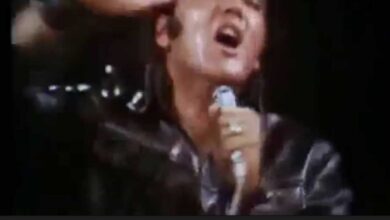
A fan-captured performance like this instantly changes the song’s emotional temperature. In a raw live setting, “(You’re My) Soul and Inspiration” becomes less about preserving a polished old hit and more about testing whether that giant emotional core still holds up in real time. It usually does, and that says everything. Audience footage can be imperfect in all the ways collectors and purists complain about, but that imperfection is often the point. It restores risk to songs that history has made seem inevitable. Suddenly you are not listening to a monument. You are listening to human beings trying to fill a room with longing, harmony, and bravado. The more lived-in the performance feels, the more clearly the song’s construction reveals itself. The melody still surges. The declaration still lands. The crowd still reacts when those familiar lines arrive. That is not just nostalgia at work. That is durability, the kind of durability only genuinely great pop writing can sustain.
The studio hit remains essential because it captures the song in its most concentrated form: two voices, one gigantic emotional proposition, and a production approach designed to make devotion sound larger than ordinary life. Listening to the original now, it is easy to hear why the public embraced it so completely in 1966. There is no wasted motion in the performance. The song knows exactly when to build, when to hold back, and when to let the emotional curtain fly open. Bill Medley’s production work deserves particular credit here, because the record managed to preserve the larger-than-life sonic sweep listeners associated with The Righteous Brothers while also proving the duo could shape that drama themselves. The single sounds self-assured without sounding complacent. It does not chase past glory nervously. It simply walks into the room and claims its place. That confidence is one reason it still feels so satisfying nearly six decades later.
Television performances from the 1960s add a different kind of thrill because they show how songs like this had to function in front of cameras, sponsors, variety-show audiences, and all the invisible expectations of network entertainment. That environment might seem too controlled for a song built on emotional extremity, yet The Righteous Brothers were unusually well suited to it. Their visual contrast mirrored their vocal contrast: Medley steady and commanding, Hatfield more piercing and expressive, both bringing a seriousness that elevated even the most formal TV setting. Watching the song performed in that context reminds you how unusual it really was. This was not novelty pop, not disposable teen fluff, not dance-floor fluffery. It was grand emotional theater entering American living rooms at a time when pop music was rapidly expanding its sense of scale. A performance like this lets the viewer witness the transition from hit record to public mythology happening almost in real time.
By the early 1980s, a song like “(You’re My) Soul and Inspiration” could have easily become a nostalgia prop, the kind of familiar crowd-pleaser wheeled out for old-times’ sake and little more. What makes later live versions compelling is that the song often resists that fate. Age changes the voices, of course, but it also changes the emotional weight. Lyrics about inspiration and emotional dependence land differently once singers carry decades of triumph, grief, fatigue, and survival in their tone. What was once youthful romantic extremity starts to sound closer to hard-earned testimony. That is a fascinating shift, because it proves the song is not trapped in the emotional vocabulary of 1966. It matures. It adapts. It allows the performance to gather new meanings as the people singing it gather more life. A strong live version from a later era does not merely repeat the hit. It reframes it through time, and that can be even more moving than flawless replication.
This kind of later-era appearance is useful for another reason: it highlights just how central harmony and interplay are to the song’s lasting power. Plenty of classic singles survive because one singer dominates them so completely that the arrangement becomes secondary. “(You’re My) Soul and Inspiration” does not work that way. It depends on tension between voices, on the emotional dialogue created by difference in tone and phrasing. That is why it remains so rewarding to revisit in performance. Every version becomes a study in balance. How much weight does the lead carry? How much lift comes from the other voice? How do they meet at the song’s emotional summit without crowding each other? Those questions are built into the composition, and later performances make them wonderfully visible. The song is not merely a vehicle for a giant chorus. It is a carefully engineered duet of emotional forces, and that architecture is a major part of its longevity.
What also keeps the record fresh is the songwriting pedigree behind it. Barry Mann and Cynthia Weil were among the true masters of high-impact pop writing, capable of packing sophistication, immediacy, and commercial instinct into the same song. Their catalog is enormous, but this one remains especially interesting because it almost flirts with being too much and then somehow transforms that risk into triumph. The title itself should be impossible to sell without tipping into melodrama. The lyric’s emotional dependence should feel overblown. The arrangement should collapse under its own grandeur. Yet none of that happens. Mann and Weil understood how to shape emotional escalation so that each line earns the next. They knew when to reach for plain words and when to let the music carry the excess. That balance between craftsmanship and surrender is what gives the song its staying power. It is exquisitely built, yet it still sounds like feeling spilling over the rim.
There is also something satisfying about the way the record sits inside The Righteous Brothers’ broader legacy. Casual listeners often reduce the duo to two or three giant titles, as if their history were a narrow hallway of mega-hits. But “(You’re My) Soul and Inspiration” shows why their best work deserves a wider and more attentive hearing. It captures everything that made them unusual: the dramatic scale, the soul influence, the distinctiveness of the vocal pairing, and the ability to make romantic anguish sound almost physically overwhelming. At the same time, it marks a turning point, because it proved they could endure beyond one production partnership and one chapter of their career. The song was not just another jewel in the catalog. It was a declaration of artistic continuity. It told the public that The Righteous Brothers were still a force, still capable of making records that sounded huge, wounded, and unforgettable.
In the end, “(You’re My) Soul and Inspiration” lasts because it refuses moderation. It is not interested in guarded affection or understated longing. It wants full commitment, full vulnerability, and full musical sweep. That kind of all-in emotional style can look unfashionable in cooler eras, but great records outlive fashion by telling the truth in whatever language suits them best. For The Righteous Brothers, that language was towering harmony, orchestral lift, and romantic urgency turned all the way up. The song remains one of the clearest examples of how pop can be both grand and personal at once. It moves like a widescreen production, but its emotional engine is intimate and very human. That is why it still lands. It is not just a period piece from 1966. It is a beautifully oversized reminder that sometimes the heart does not whisper, does not negotiate, and does not behave with restraint. Sometimes it sings exactly like this.