No Medal, No Score — How Ilia Malinin Reclaimed His Voice At The Milano Cortina 2026 Exhibition Gala
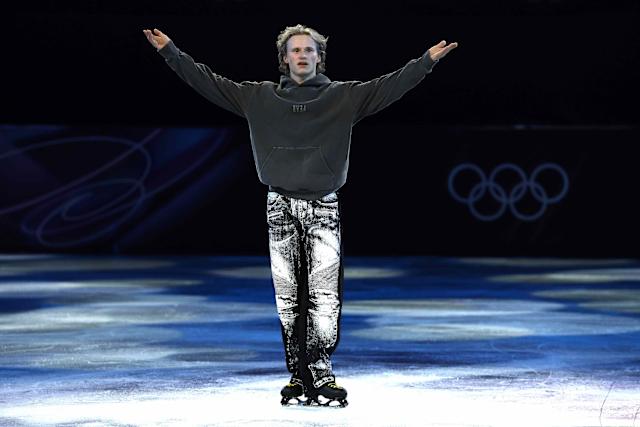
Ilia Malinin’s return to the ice at the Milano Cortina 2026 Winter Olympics Exhibition Gala on February 21 became one of the most emotionally resonant moments of the Games. Only days removed from a difficult showing in the men’s singles competition, Malinin stepped back onto Olympic ice under entirely different circumstances. There were no medals to chase, no scores looming overhead, and no technical expectations dictating every move. Instead, the gala offered space for expression, reflection, and a kind of freedom that competition rarely allows.
The backdrop to that appearance added significant weight. Entering the men’s event, Malinin was viewed as one of the most anticipated skaters of the Olympics, known globally for his extraordinary technical ability and quad repertoire. The free skate, however, unraveled in unexpected ways. Two costly falls disrupted his momentum, and despite moments of strong skating, those mistakes ultimately dropped him to eighth place. The quiet that followed the final scores felt stark compared to the hype that had surrounded him days earlier.
Rather than fade from view after that disappointment, Malinin chose to reemerge at the exhibition gala with intention. Galas traditionally serve as a release valve, a chance for skaters to perform without the constraints of scoring systems and strict judging criteria. For Malinin, the moment became an opportunity to reshape how his Olympic story would be remembered, not through explanations or press statements, but through movement and presence on the ice.
The selection of music immediately established the mood. Skating to NF’s “FEAR,” Malinin aligned his program with a song that confronts anxiety, pressure, and internal struggle head-on. The track’s intensity stood apart from the lyrical or playful selections often chosen for gala performances. From the opening seconds, it was clear the skate was rooted in personal emotion, signaling that this was less about entertainment and more about honest expression.
His wardrobe reinforced that atmosphere. Appearing in a gray hoodie with the word “FEAR” printed upside down across the chest, paired with understated pants, Malinin rejected traditional figure skating aesthetics. The choice felt deliberate, echoing the song’s themes and emphasizing vulnerability rather than polish. Visually, it suggested an athlete stepping onto Olympic ice without protective layers, willing to be seen as he was in that moment.
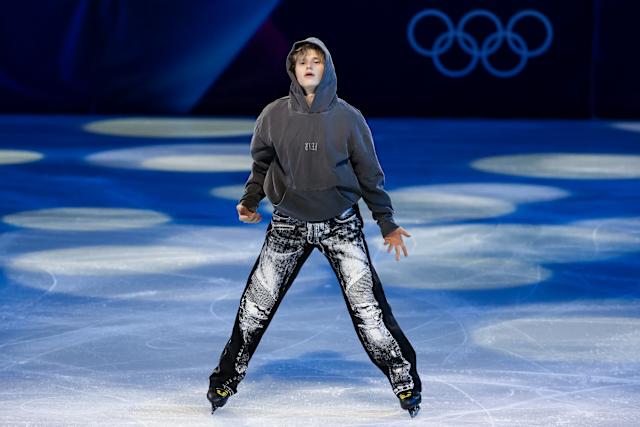
From a technical perspective, the routine prioritized clarity and control over risk. Malinin opened confidently, establishing rhythm early, and moved through the program with smooth transitions and strong edge work. Freed from the need to chase maximum difficulty, he allowed the choreography to unfold naturally, letting musical accents dictate pacing instead of forcing elements into a tight competitive structure.
The choreography itself felt carefully shaped. Certain movements suggested pushing away outside noise, while others hinted at internal confrontation and self-reflection. Though Malinin did not formally narrate these gestures during the performance, many viewers interpreted them within the broader context of social media scrutiny and the psychological weight placed on elite athletes performing on the Olympic stage.
The response inside the Milano Ice Skating Arena reflected that interpretation. As the routine progressed, the crowd grew increasingly engaged, reacting not just to clean execution but to the emotional trajectory of the skate. By the closing moments, spectators rose together, offering sustained applause that recognized the honesty of what they had witnessed rather than any numerical outcome.
Earlier in the gala, Malinin also appeared in Team USA’s group number, where he included a signature backflip that drew an immediate roar from the stands. In the relaxed gala environment, the move felt celebratory and playful, a reminder of the athletic flair that has made him such a compelling figure in modern figure skating.
While an individual medal eluded him in Milano Cortina, Malinin still left the Games as part of the United States team that secured gold in the team event. That achievement ensured his Olympic experience was not defined solely by setback. Positioned between triumph and disappointment, the gala performance functioned as a moment of balance rather than closure.
Many observers noted a visible shift in Malinin’s demeanor during the exhibition. He appeared calmer, more grounded, skating with a quiet intensity that contrasted with the tension of earlier competition. The performance carried the feeling of an athlete who had absorbed both expectation and disappointment, choosing presence over resistance in the aftermath.
In the days that followed, conversations around Malinin evolved. Focus gradually moved away from placement and technical errors toward themes of resilience, maturity, and long-term development. At just 21 years old, his willingness to confront disappointment openly rather than retreat from it resonated with fans and fellow skaters alike.
The exhibition skate did not alter the official results of the men’s final, nor did it attempt to. Instead, it provided context. It showed an athlete navigating one of the most challenging moments of his career with composure, using the Olympic stage not to seek redemption, but to express where he stood emotionally.
As the gala came to a close and the lights dimmed, Malinin left the ice having delivered something rare. The performance carried weight without relying on medals or scores, standing on its own as a meaningful moment. It served as a reminder that the Olympic experience is shaped as much by response as by result.
In time, Milano Cortina 2026 may be remembered less as a disappointment for Ilia Malinin and more as a formative chapter. The exhibition did not promise revenge or declare defeat. Instead, it revealed an athlete still growing, still learning, and firmly positioned within the future of the sport.
Ultimately, the gala performance reframed the narrative. It transformed pressure into perspective and setback into space for growth. Long after scores and standings fade, the image of Malinin skating freely beneath the Olympic lights may endure as one of the most quietly powerful moments of the Games.