No Protest Filed And Paint It Black At Milano Cortina 2026
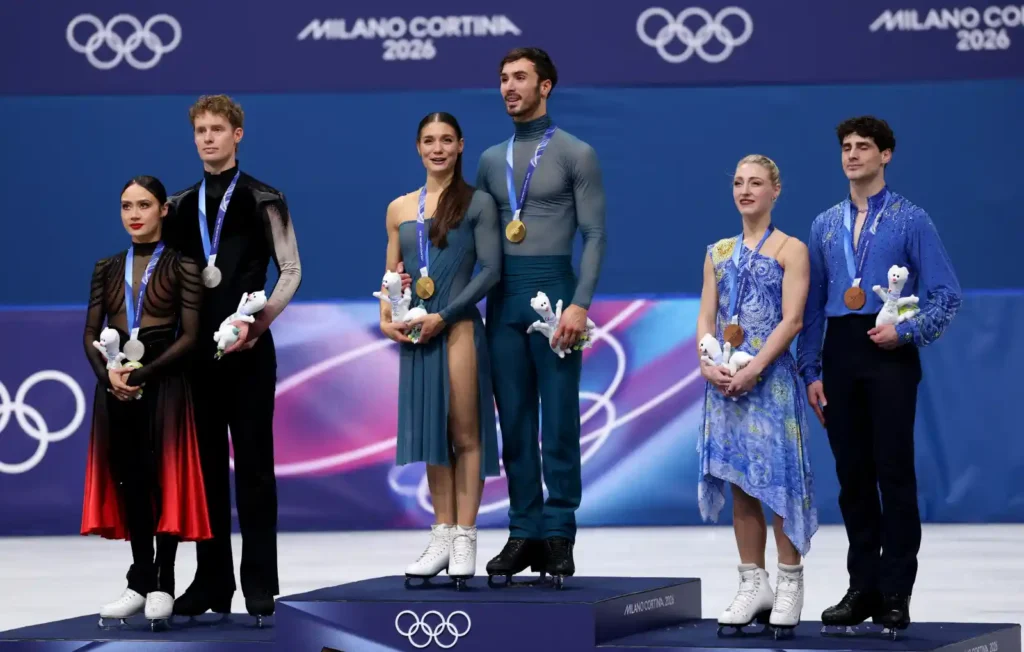
The night Madison Chock and Evan Bates skated their “Paint It Black” free dance in Milan felt like one of those Olympic moments that seems to lock into place before the scores even appear. The arena energy was the kind that makes people sit forward, not because they’re waiting for a twist, but because they can sense they’re watching a pair hit that rare zone where intention, timing, and nerve all align. Their skating had that electric, tightrope quality ice dance fans love: fast enough to feel risky, controlled enough to look inevitable, and expressive without ever turning into acting for the judges. When they finished, the celebration looked instinctive, like their bodies already believed they’d done what was needed.
That’s what made the final result land with such a thud. Ice dance is built on margins, and everyone knows it, but this one didn’t feel like a normal “close call.” It felt puzzling in the specific way that creates arguments that last for years, because people weren’t just debating taste, they were debating logic. Chock and Bates were within striking distance heading into the free dance, delivered a performance that read as a season peak, and still watched gold slip away by a fraction. In a sport where the public already struggles to decode how points become podiums, this was the kind of finish that turns casual viewers into detectives overnight.
Part of the backlash wasn’t even about the idea that France won. It was about how the scoring pattern looked when fans started comparing judge panels, element sheets, and the spread between the top and bottom marks. When one judge falls dramatically out of line with the rest—especially when nationality overlaps with the medal outcome—it triggers the oldest anxiety in the sport: that the math can be bent, quietly, without leaving fingerprints obvious enough for an official reversal. People weren’t reacting to one low mark in isolation. They were reacting to a gap large enough to change the story of the night, paired with a finish narrow enough to make that gap feel decisive.
The “seven-point discrepancy” became the lightning rod because it’s a number that non-experts can understand immediately. You don’t need to know a rotational lift from a stationary lift to know that seven points in ice dance is huge, especially when the rest of the panel doesn’t mirror the same view. In public conversation, the number took on a symbolic role: it became shorthand for the feeling that two different competitions were being judged at once. One version of the event lived in the arena and on television, where many viewers saw the Americans as near-flawless. Another version lived in a single set of marks that pulled the final totals in a different direction.
That’s where the phrase “No Protest Filed” started to sound less like a procedural note and more like a plot twist. In most sports, if you believe something went wrong, you challenge it. In figure skating, challenges exist, but they are narrow, technical, and time-sensitive. Even when a team is furious, the appeal route is not a simple button you press to “fix” an outcome. It’s paperwork, deadlines, standards of proof, and the uncomfortable reality that the system is designed to protect finality. Still, fans expected something—any public move that signaled resistance. Instead, the clock ran out, and the silence became its own headline.
From the outside, that decision can read like surrender, but it can also read like calculation. Appeals can backfire. They can harden institutional defenses, invite retaliation in the court of skating politics, or turn an athlete’s defining Olympic moment into a courtroom story rather than a performance story. The brutal irony is that even if a team wins the moral argument online, the official argument requires a very specific kind of evidence. If the issue is “This judge’s scoring appears biased,” proving that to a standard that triggers a remedy is notoriously difficult. Many federations know this, and they choose their battles, not their feelings.
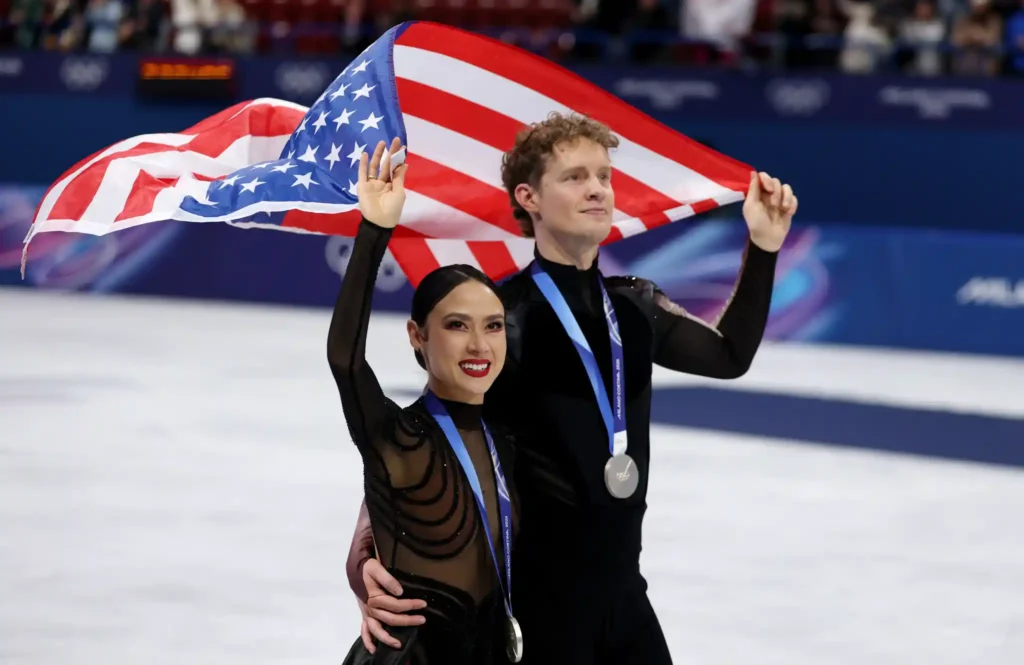
There is also the athlete’s reality, which is often more complicated than the fan narrative. Chock and Bates didn’t look like people chasing a viral controversy. They looked like people protecting something personal: the fact that they skated a program they can live with forever. When an athlete says, “It felt like a winning skate,” that line isn’t only about the medal. It’s about identity. It means, “I didn’t leave anything behind.” The risk with an appeal circus is that it turns the memory into a constant argument, and athletes are the ones who carry that weight the longest, long after hashtags have moved on.
At the federation level, choosing not to appeal can also be a way of keeping leverage for a different fight. Public appeals are loud and binary: win or lose. Quiet pressure behind the scenes can be slower but sometimes more effective, especially when the long-term goal is reform—clarity in judging, transparency in scoring communication, or stronger safeguards against conflicts of interest. That’s why statements from leadership tend to sound careful, almost sterile, even when the emotions underneath are volcanic. They’re signaling they’re not done, without committing to a legal path they may not be able to win.
The controversy also exposed a larger problem ice dance keeps running into: the sport depends on artistry, but it’s scored like engineering. Viewers can accept subjectivity if the scoring feels coherent, but when they see a performance with visible issues rewarded over a performance that looks clean and commanding, trust breaks quickly. And when trust breaks, growth breaks with it. Chock’s own comments about clarity and fan confidence hit at the heart of the issue. Sports survive on belief. People need to feel that what they’re cheering for has rules that make sense, even when their favorite loses.
What makes this especially poignant is that Chock and Bates were not newcomers asking for sympathy. They were veterans, leaders, and the kind of partnership fans invest in because it feels built, not manufactured. They’ve spent years refining how they skate together—how they match edges, how they create speed without chaos, how they sell a story without sacrificing technique. “Paint It Black” wasn’t just a music choice; it was a statement program with a hard rhythm, sharp contrasts, and a performance demand that leaves nowhere to hide. If you’re even slightly off, everyone sees it. They weren’t off.
And because they weren’t off, the conversation didn’t die after the medal ceremony. It spread: petitions, debates, breakdown threads, side-by-side comparisons, and the familiar cycle of skating outrage that always contains two truths at once. The first truth is that judging in ice dance is complex and can legitimately produce close results. The second truth is that the sport has a long history of political shadows, and fans have learned to watch patterns, not just programs. When those two truths collide, the argument becomes less about one night and more about whether the sport can evolve into something the public can trust without needing a decoder ring.
The most interesting question now isn’t whether a protest was filed. It’s what happens next, quietly. If the federation and the athletes truly want to “support the future of the sport,” the best legacy of this moment might not be an overturned result—because that’s rare—but a push for reforms that make future results easier to defend in plain language. Transparency doesn’t mean removing artistry. It means explaining, clearly, why one performance earned what it earned. If the sport can’t do that, it will keep losing casual fans right when it needs them most.
And yet, even if the politics never satisfy everyone, the performance remains. That’s the part fans keep returning to, replaying the opening seconds, the way the choreography attacks the beat, the way the elements feel threaded into the character rather than pasted on top. Medals are permanent in record books, but programs are permanent in memory. Chock and Bates skated something that will be referenced for years, precisely because it sits at the intersection of excellence and controversy. The danger is that the controversy becomes the headline forever. The opportunity is that the excellence becomes the standard the sport has to answer to.
There’s a reason ice dance scandals linger longer than many other Olympic disputes: they tap into fairness, nationalism, artistry, and math all at once. The public senses, correctly, that power structures matter here, and that “best” is often negotiated rather than measured. That’s why “No Protest Filed” can feel like a strategic grenade rather than an absence of action. Sometimes refusing to play the official game is its own statement. If the goal is to change how the sport operates, the loudest move isn’t always the most effective. The next moves may be quieter, but they could be far more disruptive.