Barry Gibb’s Brisbane Duet With His Son Turns “I’ve Gotta Get A Message To You” Into A Timeless Tribute
Brisbane can be deceptively loud in the hours before a big concert. You feel it in the traffic patterns, the little clusters of fans in black tees and vintage tour merch, and the way strangers start talking like they’ve known each other for years. When Barry Gibb brought his solo show to the Brisbane Entertainment Centre, the atmosphere carried that particular kind of anticipation reserved for artists whose songs have lived inside people’s lives for decades. It wasn’t nostalgia in a dusty sense. It was more like reunion energy, where everyone arrives with their own memories attached to the same melodies. And because Barry’s catalog is so interwoven with family, harmony, and history, the room already felt emotionally tuned before a single note landed.
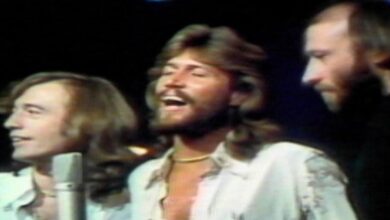
“I’ve Gotta Get A Message To You” is one of those songs that arrives with a built-in ache. Even if someone can’t recite the verses perfectly, the emotional shape is unmistakable: urgency, regret, and that last grasp at connection before time runs out. The Bee Gees recorded it in 1968, and the story at its core has always been haunting, built around a condemned man pleading for a final message to reach the person he loves. That dramatic premise is why the song holds up so well live; it has tension baked into every line, and it demands sincerity more than vocal tricks. When a crowd recognizes that, the song becomes communal, like everyone in the building is carrying the lyric together.
What made the Brisbane moment feel uniquely heavy, though, wasn’t just the song’s original narrative. It was the way Barry framed it as something larger than a classic hit, letting it carry the weight of family legacy in front of a crowd that understood exactly what those names mean. Bee Gees music has always been family music, not in the soft, background sense, but in the literal sense: brothers writing, brothers singing, brothers building a sound that could only exist because of blood and shared history. So when “Message” appears in a Barry Gibb set without Robin and Maurice present, it naturally becomes a different kind of performance. The absence isn’t spoken, but it’s felt in the spaces between phrases.
That’s why the arrival of Stephen Gibb beside his father changes the temperature in the room. The second a son steps into a song that was once carried by brothers, the meaning starts to shift. It turns into a bridge between eras: the original Bee Gees story on one side, the present-day continuation of that legacy on the other. Live, it doesn’t feel like a “special guest” moment for spectacle. It feels like something more intimate, like family choosing to hold the song together instead of letting it stand alone. The harmonies don’t just sound pretty; they sound symbolic, the way two voices can make grief feel less solitary for a few minutes.
Brisbane also matters because it captured that feeling in a way that’s easy to recognize even through fan-shot footage. The crowd response isn’t just cheering; it’s attentive, almost protective. You can sense people leaning in, listening harder, reacting to small shifts in phrasing and breath. And in an arena setting, that’s not a given. Big venues can swallow emotional songs if the room isn’t willing to quiet down and meet the performer halfway. Here, the stillness becomes part of the arrangement. The song’s urgency lands differently when thousands of people decide, together, to let it breathe. That choice from the crowd is part of what turns a good performance into a lasting one.
Another layer that makes this duet hit harder is how “Message” fits into the Bee Gees’ long arc. People often talk about the disco-era dominance, the glittering melodies, the cultural takeover. But songs like this are the reminder that the Bee Gees were always storytellers first. They could write pop that danced, yes, but they could also write pop that stared straight into mortality without flinching. In Brisbane, Barry isn’t singing it like a period piece. He’s singing it like a living letter, one that still needs to be delivered. And having Stephen there sharpens that feeling, because it quietly reframes the performance as an act of keeping family voices present through the music.
The setlist context adds to that sense of intention. On a night built around beloved classics, “Message” works like a hinge: it connects the celebratory moments to the reflective ones. It’s the point where the show stops being only about hits and starts being about meaning. According to documented set information from the Brisbane date, Stephen is part of the evening’s emotional architecture, appearing alongside Barry in ways that underline the family thread running through the performance. That’s why the duet doesn’t feel random. It feels placed, like Barry knows exactly when to invite that shared silence, and exactly when to let the crowd exhale again.
What ultimately makes the Brisbane duet feel timeless is that it doesn’t chase perfection; it chases truth. You hear a father and son stepping into a song that’s already emotionally loaded and letting it become even more personal without turning it into melodrama. That’s a difficult balance. Too polished, and it can feel distant. Too sentimental, and it can feel forced. Brisbane sits in the rare middle ground: a respectful, grounded performance where the meaning is carried by restraint. It’s the kind of moment people replay not because it’s flashy, but because it feels real, and because it turns a familiar classic into a living tribute.
There’s a reason fan-shot videos of moments like this spread so widely: they capture what official recordings often can’t, which is the emotional “air” of a room. You can feel the audience’s patience, the way the attention locks in, and the subtle swell when people recognize they’re witnessing something more intimate than a standard tour stop. In Brisbane, that atmosphere becomes part of the duet’s impact. The performance reads like a family conversation held in public, a shared remembrance that never needs to announce itself as remembrance. It’s also a reminder that Barry’s legacy isn’t just his voice; it’s the way his songs can still gather strangers into a single, quiet agreement: some music is bigger than the night it’s performed.
Hearing the original studio recording after the Brisbane performance is like seeing the song’s skeleton and realizing how strong it has always been. The 1968 version carries a youthful urgency, with a dramatic structure built around the ticking pressure of time. It’s cinematic without being overdone, and it’s emotionally direct in a way that makes the lyric feel almost uncomfortably close. That closeness is exactly why later live performances can hit so hard; the core is already there. The Brisbane duet doesn’t need to reinvent anything. It simply shines a new light on what the song has always been: a plea, a confession, a last attempt to be understood before it’s too late.
The Bee Gees’ 1997 “One Night Only” performance shows another dimension of “Message,” one that emphasizes how the song can scale up without losing its emotional grip. In that era, the brothers deliver it with the confidence of artists who have survived every wave of pop culture and still command the room with a single line. It’s less fragile than the 1968 original, more seasoned, but the urgency remains. Placing that beside Brisbane highlights what changes when time passes and loss enters the story. Brisbane doesn’t have the same trio dynamic, and that absence becomes part of the arrangement. The song shifts from brotherhood performed as presence to brotherhood felt as memory.
The Soldiers’ version featuring Robin Gibb introduces yet another emotional angle: tribute in a formal, public sense, where the song is used to carry collective remembrance and national mourning. Robin’s involvement gives the performance a poignant historical resonance, especially because it frames his voice inside a context that’s explicitly about honoring the fallen. Next to Brisbane, it underscores the song’s rare versatility. “Message” can be a personal drama, a family statement, or a communal act of remembrance, and it still works because the lyric is built on the simplest human need: to be heard, to be forgiven, to be remembered. In Brisbane, that need feels intimate; in this version, it feels ceremonial, and both readings deepen the song.
The 2014 live versions with Stephen Gibb further explain why the father-son pairing resonates so strongly. Once you hear how naturally their voices sit together, you realize the duet isn’t just symbolic; it’s musically convincing. Stephen doesn’t sound like a guest trying to match a legend. He sounds like a musician who understands the emotional pacing of the song and knows when to support and when to step forward. That’s what makes Brisbane feel less like a novelty and more like a genuine continuation of a musical lineage. It aligns with how audiences and commentators have described the moment: not as a gimmick, but as something genuinely moving because it’s rooted in family and history.
By the time Barry reached moments like Glastonbury 2017, the song had become part of a broader late-era identity: a celebration of joy and survival that still leaves room for the heavier corners of the catalog. In that context, “Message” sits among songs that make stadiums dance, and yet it still pulls the mood inward when it arrives. That contrast is instructive. It shows the Bee Gees’ songwriting power in full: the ability to make a crowd move physically and emotionally in the same night. Brisbane shares that power, but channels it through intimacy rather than festival-scale spectacle. One is a public victory lap; the other is a private letter read aloud to thousands.
The Brisbane duet endures because it gives audiences something rare: a classic performed not as a reenactment, but as a living act of remembrance and connection. It reminds people that songs don’t stay frozen in the year they were written. They accumulate meaning, especially when artists carry them through decades of life, change, and loss. Barry and Stephen’s shared phrasing turns “Message” into something that feels like it’s traveling between generations in real time. That’s why the moment lands like a tribute without needing to announce itself as one. It’s simply music doing what the best music does: turning private emotion into something a room full of strangers can understand together.
And in a world where viral moments often come from shock, controversy, or spectacle, this one spreads for the opposite reason. It spreads because it’s tender. It spreads because it’s restrained. It spreads because a father and son stood side by side inside a song that already knows how to break hearts, and they let it be honest without turning it into performance-as-theater. If the Bee Gees story has always been about brotherhood, then this duet is about the echo of that brotherhood, carried forward in harmony. Brisbane didn’t just get a great song that night. It got a living family history, sung softly enough for people to feel it.
Even the framing of the moment in later coverage points to the same conclusion: audiences recognize when something is more than a hit delivered on cue. They recognize when a performance becomes a small ceremony, when memory and melody overlap so cleanly that it feels like time folding in on itself. The father-son duet of “I’ve Gotta Get A Message To You” has been repeatedly described as emotional and heartbreaking for exactly that reason: it’s a reminder of who isn’t there, and a statement of who still is, holding the music steady. That balance between loss and continuity is what makes the Brisbane duet feel permanent.