People were convinced it was CGI. They were wrong
When Budweiser’s “American Icons” aired during Super Bowl LX, the closing seconds looked almost unreal. A bald eagle surged upward as the Clydesdales thundered below, wings stretched wide against a burning sunset sky. Within minutes, the internet was doing what it always does—pausing frames, zooming in, analyzing shadows, questioning physics. It had to be digital, many argued. There was no way a live eagle would launch mid-gallop with that kind of precision.
But he did.
His name is Lincoln, and long before he became the emotional climax of a Super Bowl commercial, he was a rescued bald eagle whose life could have taken a very different turn. Found injured in Tennessee in the late 1990s, Lincoln was ultimately classified as non-releasable. He could not survive independently in the wild. For many birds, that’s where the story ends quietly. For Lincoln, it marked the beginning of a new kind of purpose.
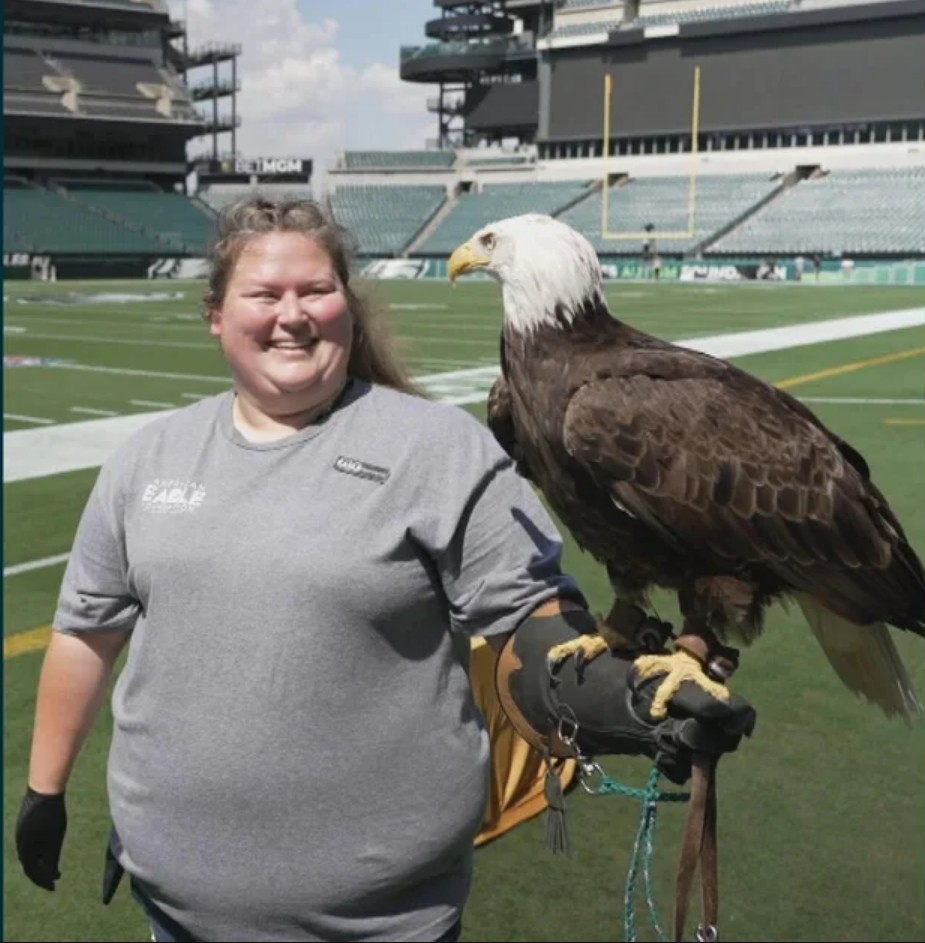
Under the care of the American Eagle Foundation, Lincoln grew into one of the nation’s most recognizable ambassador eagles. Instead of hunting rivers and open wilderness, he learned to soar across stadiums. Instead of fading into obscurity, he became a living symbol of conservation and second chances. His life has revolved around trust—between bird and handler, instinct and repetition, strength and control.
That reality reframes the Budweiser moment entirely.
The Clydesdales have defined Budweiser’s Super Bowl identity since 1975. Towering, steady, almost mythological in presence, they carry decades of American nostalgia with them. Pairing them with a bald eagle was never going to be subtle. It was a deliberate layering of symbols—power, freedom, heritage, endurance.
But what set “American Icons” apart wasn’t symbolism. It was authenticity.
Released during Budweiser’s 150th anniversary year, the campaign leaned into sincerity rather than spectacle. No celebrity cameos. No punchlines. Just atmosphere, patience, and real animals captured with cinematic care. The final shot—Lincoln lifting into the air as the Clydesdales surged forward—was not engineered in a graphics lab. It was built on preparation, repetition, and a relationship years in the making.
Lincoln is accustomed to pressure. He has performed ceremonial flights at Philadelphia Eagles home games, gliding above tens of thousands of roaring fans. The noise of 70,000 voices isn’t chaos to him—it’s routine. That experience explains the calm visible in the Super Bowl spot. When the cameras rolled, he didn’t falter. He didn’t hesitate. He simply flew.
The emotional response to the commercial was shaped as much by that knowledge as by the visuals themselves. Once viewers realized the eagle was real, the narrative shifted. The flight wasn’t an effect—it was a testament to trust. A bird who could never return to the wild had found a different sky—one illuminated by stadium lights and watched by millions.
Watching Lincoln in a true stadium environment clarifies why the Super Bowl moment felt so composed. The arc of the flight, the positioning of the handler, the smooth upward sweep—it all reflects years of conditioning and partnership. Wildlife ambassadors are not forced into performance. They respond to cues rooted in familiarity and safety. That difference matters. What looks spontaneous is actually the product of structure and trust.
The official “American Icons” commercial captures that partnership in cinematic form. Its pacing mirrors the rise of Lynyrd Skynyrd’s “Free Bird,” beginning in quiet stillness before expanding into lift. The Clydesdales anchor the scene with grounded strength. Lincoln provides the vertical release. The power of the shot lies in that balance—earth below, sky above, both moving in sync.
The preparation behind that balance is largely invisible. Handlers ensure that both species are comfortable sharing space. Clydesdales are disciplined and deliberate; eagles are instinct-driven but highly responsive when properly trained. Weeks of coordination allow the moment to appear effortless. In wildlife performance, effortlessness is never accidental—it’s carefully built.
The earlier teaser, “Stable,” set the tone by embracing mystery. Five Clydesdales turn toward a rattling bucket, offering suspense without explanation. It was a clever way to spark curiosity without overselling emotion. By the time Lincoln appeared in full flight, audiences were already leaning forward, ready to feel something larger.
Years of local coverage show Lincoln’s life extending far beyond a single commercial. Education programs, conservation outreach, ceremonial flights—his story has been unfolding long before the Super Bowl spotlight found him. That depth is why the ad resonated differently. It wasn’t a stunt. It was amplification.
Comparisons to other live eagle flights highlight how rare such precision is under pressure. Large crowds and tight timing introduce unpredictability. When everything aligns, the result feels scripted—but it isn’t. It’s preparation intersecting with instinct at exactly the right moment.
People weren’t moved simply because the shot was beautiful. They reacted because beauty combined with authenticity carries more weight. In a digital era where audiences assume enhancement, discovering that Lincoln is real adds gravity. The moment shifts from brand spectacle to resilience narrative—about a bird who couldn’t return to the wild but still found a sky.
Budweiser gained from that authenticity, but the emotional center belongs to Lincoln. The Clydesdales represent tradition. The music carries nostalgia. Lincoln delivers lift. Together, they create a closing frame that blurs the line between commercial and modern myth.
An injured eagle discovered decades ago now soaring across one of the most watched broadcasts in the world feels almost scripted in its symmetry. That’s precisely why it resonated.
Not because it was flawless.
But because it was real.