A 35-Second Miracle: How Nathan MacKinnon’s Late Strike Sent Canada to the Gold Medal Game in Milan
MILAN, ITALY — Across Olympic history, some games are remembered for wild celebrations and explosive finishes. Others endure because of precision, discipline, and the crushing pressure of seconds ticking away. This semifinal belonged firmly to the latter.
On Friday night at the Milano Cortina 2026 Winter Olympics, Team Canada produced a moment that will be replayed for years — not because of anything theatrical after the buzzer, but because of what happened just before it sounded.
Almost no one expected it.
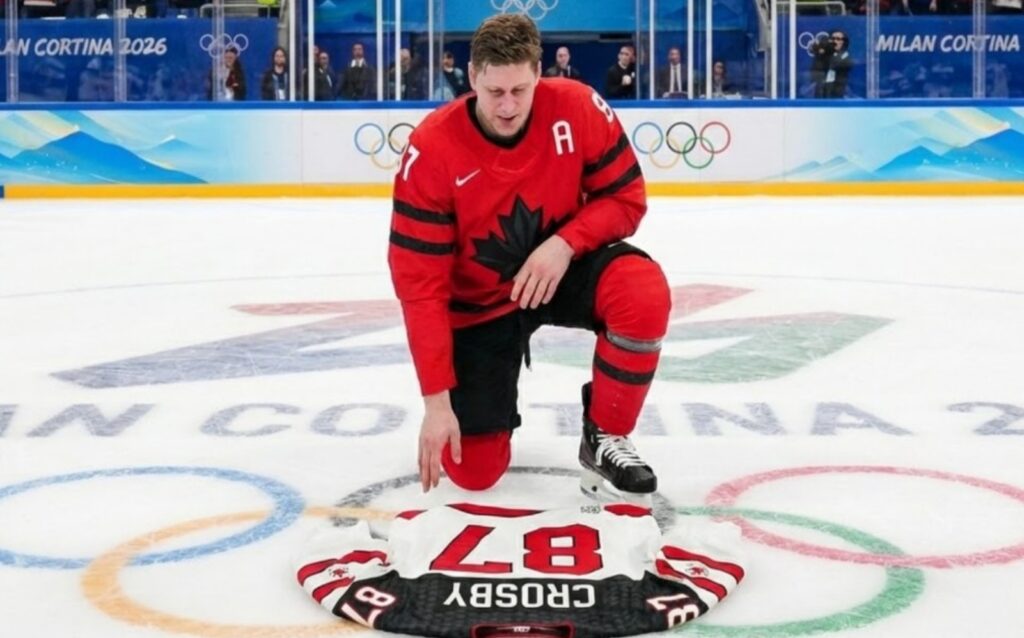
After spending most of the night chasing the game, Canada completed a dramatic 3–2 comeback against a tightly structured Finnish team in the Olympic semifinals, earning a place in the gold medal game in breathtaking fashion.
The decisive goal came with just 35.2 seconds remaining, finished by Nathan MacKinnon under the heaviest pressure imaginable — a pure execution play at the highest level of international hockey.
To fully grasp the importance of that moment, the context matters.
In the days leading up to the semifinal, uncertainty surrounded Team Canada. Captain Sidney Crosby had been ruled out after suffering an injury in the quarterfinals, forcing Canada to adjust leadership roles and lineup chemistry at a critical stage of the tournament.
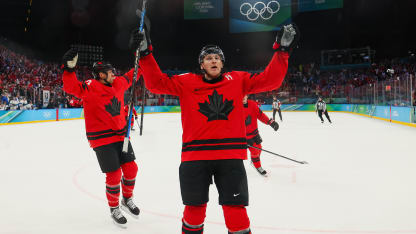
With Crosby unavailable, responsibility shifted to Connor McDavid, who carried both the tactical burden and the symbolic weight of leading a roster suddenly missing its long-time anchor.
For much of the game, Finland controlled the flow. Their defensive structure was disciplined and suffocating, closing lanes through the neutral zone and limiting Canada to contested, low-quality chances.
Finland struck first through Mikko Rantanen, capitalizing on a breakdown to take an early lead and quiet the arena. The situation worsened in the second period when Erik Haula intercepted a Canadian pass on the power play and scored shorthanded, pushing the Finns ahead 2–0.
Goaltender Juuse Saros anchored the effort, delivering a calm, composed performance and turning away shot after shot as Canada searched for momentum.
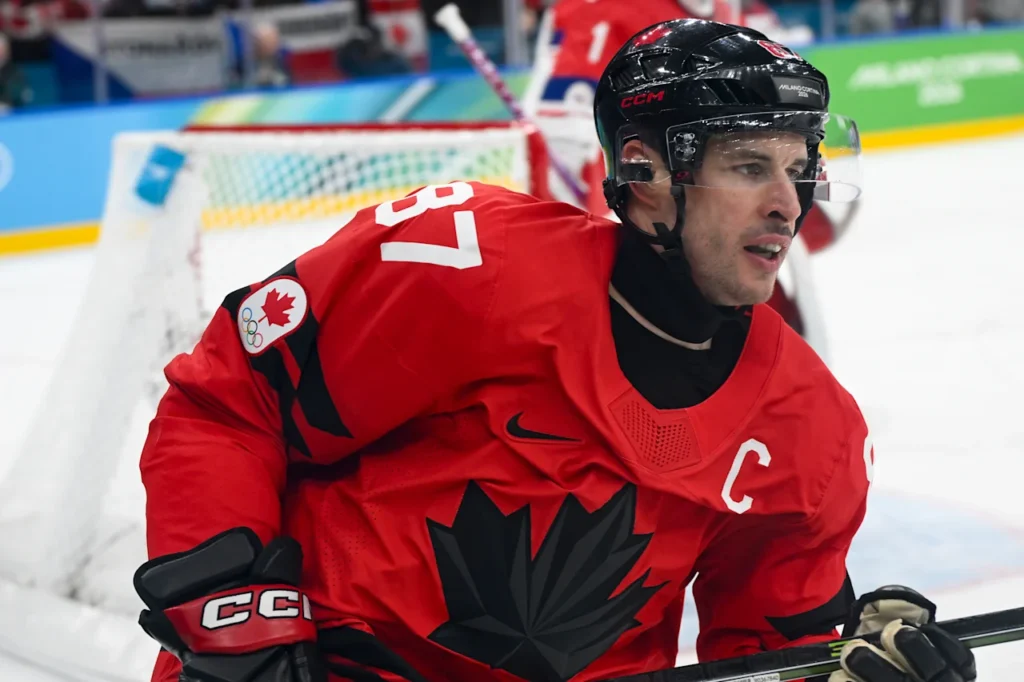
That momentum finally arrived late in the second period. Sam Reinhart forced a rebound through traffic and converted it, cutting the deficit in half and giving Canada a lifeline heading into the third.
The final period became a test of resolve. Canada increased the tempo, extended offensive-zone time, and gradually wore down Finland’s defense. With under ten minutes remaining, defenseman Shea Theodore fired a point shot through traffic that slipped past Saros, leveling the game at 2–2.
As the clock wound down and overtime loomed, tension inside the arena tightened with every shift.
Then came the defining sequence. McDavid collected the puck deep in Canada’s zone and accelerated through the neutral ice, drawing multiple defenders toward him before sliding a perfectly timed pass to a streaking MacKinnon.
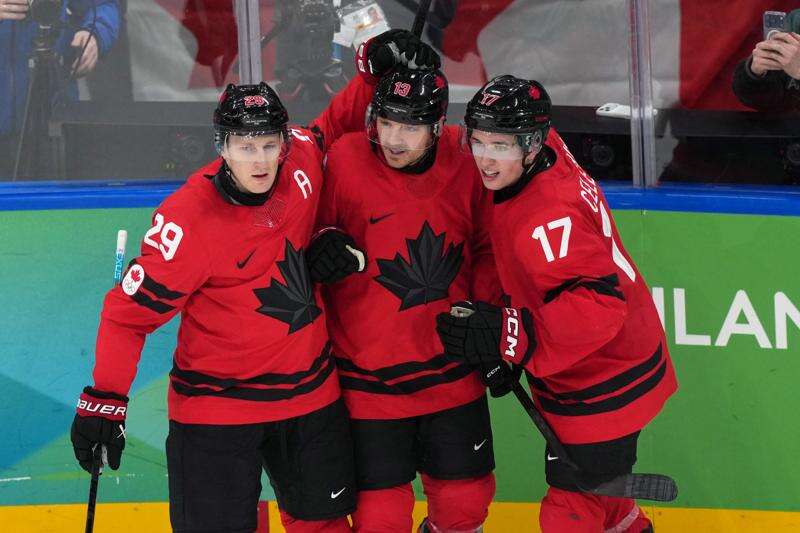
MacKinnon released a one-timer with pace and precision. The puck beat Saros cleanly. Canada had its lead — and just 35.2 seconds left to defend it.
Finland immediately challenged the play for offside, forcing a lengthy video review that froze the building in suspense. When officials confirmed the goal, the eruption was instant.
Canada managed the final seconds and secured its place in the Olympic gold medal game.
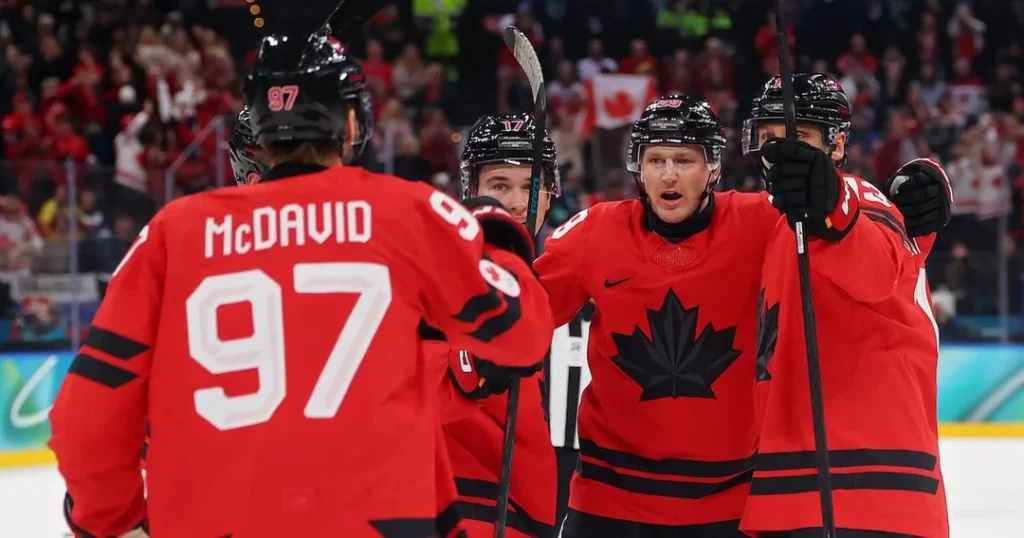
There was no dramatic postgame display, no manufactured symbolism. What made the night unforgettable was its clarity: execution under pressure, leadership in adversity, and a refusal to unravel when the margins were razor thin.
MacKinnon’s goal will be remembered not only for when it came, but for what it represented — trust, resilience, and elite composure at the defining moment.
Canada won on skill and resolve.
And in Milan, that proved to be more than enough.