How Jeff Lynne, Dhani Harrison and Joe Walsh Let ‘Something’ Speak for Itself
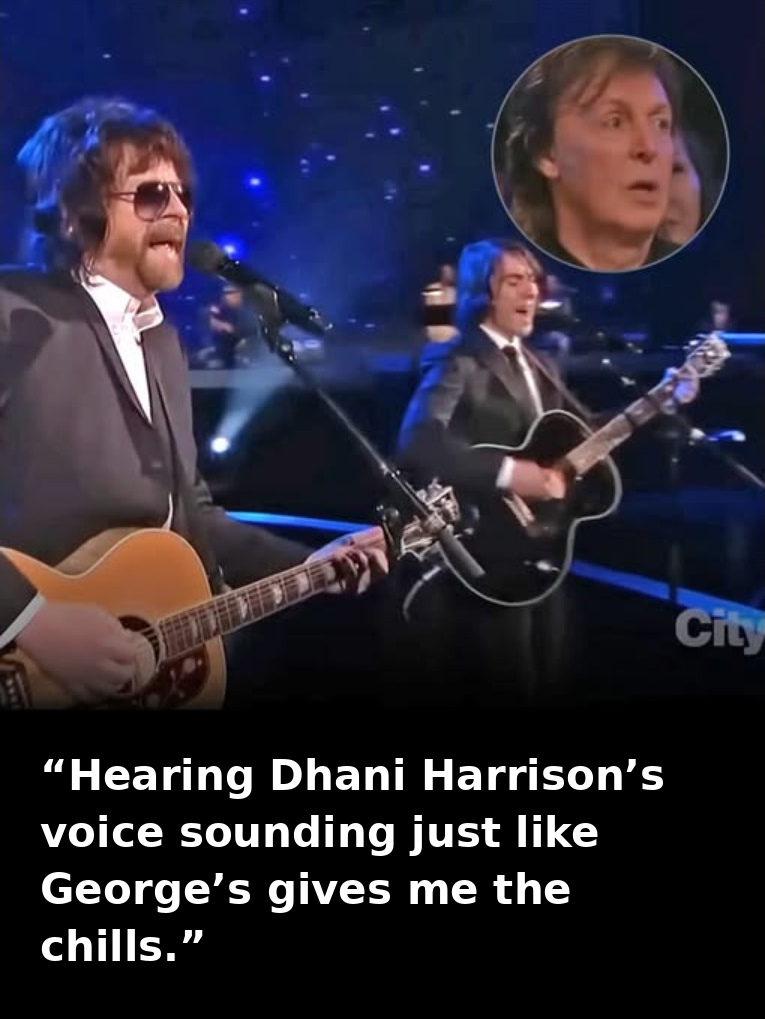
A tribute performance succeeds when its arrangement serves both the composition and the occasion. Jeff Lynne, Dhani Harrison and Joe Walsh’s reading of “Something” offers an especially engaging example: the musical lines remain clear, while the identities of the performers give the familiar song a personal frame.
The trio appeared in the 2014 television special The Night That Changed America: A GRAMMY Salute to the Beatles. Paul McCartney and Ringo Starr were among those present, linking the live interpretation directly to the band whose work the programme celebrated.
The choice of song is central. Harrison’s ballad has a melodic shape that can establish intimacy without depending on a large vocal gesture. Its movement gives a singer room to be expressive while remaining conversational.
Lynne supplies a recognisable vocal character within that framework. His contribution is most interesting in relation to the surrounding parts: a lead line gains warmth when the supporting voices leave it enough space.
Dhani’s involvement adds a familial connection, but the arrangement still asks him to function as a musician within an ensemble. Listening to the balance between the voices reveals more than comparing his appearance with his father’s.
Walsh’s guitar provides another melodic presence. In a ballad, an instrumental phrase can act as an answer to the singer, extending the emotional line through tone, timing and the shape of a sustained note.
The relationship between these parts explains why restraint can be such a powerful choice. Leaving a little space around a phrase makes the listener more aware of its beginning, its direction and its resolution.
“Something” originally appeared on Abbey Road in 1969. Its continued life in concert settings shows how a composition can retain its identity while taking on meaning from new performers and new surroundings.
A recording associated with its author has a particular authority, but a tribute creates a different listening situation. The audience hears the composition alongside the relationships that brought the performers together.
That is especially noticeable when McCartney and Starr appear in the audience. They connect the present performance with a shared past without needing to step into the arrangement themselves.
The performance invites attention to blend rather than competition. Each recognisable musician has a role, yet the song remains the point toward which those roles converge.
Returning to the Beatles recording afterwards offers a useful comparison. Differences of vocal texture and instrumental colour become easier to notice when the underlying melody stays so familiar.
A second comparison is the Concert for George version involving McCartney and Eric Clapton. Hearing the same piece in another commemorative setting shows how an introduction and a change of instrumental emphasis can alter its emotional perspective.
These versions need not compete for a definitive ranking. They demonstrate the flexibility of a song that can support different forms of remembrance while preserving its own melodic character.
Lynne, Dhani Harrison and Walsh leave a lasting impression because their collaboration gives the composition room to work. The performance honours its writer through attentive music-making, with the personal meaning emerging naturally from the ensemble.
More performances to enjoy
The Beatles’ original “Something” provides the starting point for hearing how the melody and arrangement have travelled into later tributes.
Paul McCartney and Eric Clapton’s “Something” from Concert for George offers another perspective on the same song as a musical remembrance.
Social Media Image