Veronika Zhilina Shapes an Ice Routine Around “Hallelujah”
Veronika Zhilina skates an exhibition routine to ‘Hallelujah’. Her white costume and the arena lighting give the performance a clear visual frame, while gliding, turns and extended body positions connect the movement with the song’s continuing musical phrases.
The upload identifies Zhilina and presents the routine without the commentators’ voices over the music. That version keeps the soundtrack and skating at the centre, allowing viewers to follow their relationship without the spoken broadcast material surrounding the performance.
The ice provides a broad space for the movement to develop. Changes in direction and position can be seen against the arena setting, giving the programme a different scale from a dance routine performed on a fixed floor or small stage.
The music supplies a continuing line through those changes. Its phrases provide points of emphasis and release, while the skater’s movement gives that musical progression a visible form through the way she travels and shapes her body positions.
The complete recording below preserves the routine in sequence. Following it through makes the connection between skating and soundtrack easier to see, keeping the individual movements within the programme rather than treating each position as a separate photographed moment.
Watch the performance
A skating performance combines travel with movement performed in a smaller area. Gliding carries the programme across the ice, while turns and held positions create different kinds of focus, allowing the routine to respond to changes in the musical material.
The costume contributes to how those positions read on camera. Its light colour contrasts with the surrounding arena, making the outline of the skater’s body and the direction of her movement visible within the programme’s larger performance setting.
Extended lines are one part of that presentation, but transitions are equally important. The movement between positions connects the routine into a continuing sequence, allowing the viewer to follow how one musical phrase leads toward the next passage on the ice.
The soundtrack’s returning melody gives the programme a recognisable thread. A familiar song can be followed while the skating changes its visual focus, connecting different movements through material that remains audible across the complete routine.
The arena lighting adds another frame around the performance. It helps locate the skater within the ice surface, while the recording keeps the music and physical movement together as the programme develops through its changing positions and directions.
The available upload is a presentation of an existing exhibition recording. Its publication date does not by itself establish the date of the original skating occasion, so the performance is best identified through the skater, music and routine visible in the footage.
The programme’s musical character can be appreciated without inventing competition results around it. The movement, costume and soundtrack provide the performance’s practical structure, with the full recording supplying the sequence needed to understand their relationship.
Another upload of Zhilina’s ‘Hallelujah’ routine appears below as companion material. It gives the skating an additional viewing frame, while retaining the same performer and musical basis rather than introducing a different athlete under the song’s title.
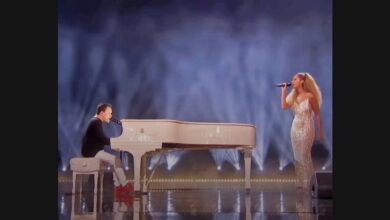
Alexandra Burke’s X Factor rendition offers a separate vocal comparison for ‘Hallelujah’. It brings the song into a singing performance, allowing listeners to hear the musical material in another context while the central recording remains an ice routine.
The two performance forms use the melody differently. A singer shapes it through vocal phrasing, while a skater connects movement to the recorded sound, making the soundtrack a shared reference point between distinct kinds of presentation.
Zhilina’s routine gives ‘Hallelujah’ a visual movement across the ice. The complete footage preserves the skating and music together, allowing body lines, turns and travel to remain connected within the exhibition programme’s continuing sequence.
More videos to explore
For a companion recording, Aurora Angel presents “Veronika Zhilina & Halleluja .” This separate video offers another setting for comparison, with its own performers, arrangement and occasion.
For a companion recording, The X Factor UK presents “Hallelujah, WHAT A PERFORMANCE from Alexandra Burke! | Live Shows | The X Factor UK.” This separate video offers another setting for comparison, with its own performers, arrangement and occasion.
Further reading: Performance background and source.