Mark and Matthew Weber Share the Vocal Lines of “Tell My Father”
Mark Weber and his son Matthew sing “Tell My Father” as a close vocal partnership. Their positions beside the microphones make the duet’s shared character visible, while the song gives two different voices a common line of musical expression to follow.
The Minnesota National Guard’s original recording documents the performance at the Minnesota History Center in Saint Paul on June 14. That direct source places the duet within an identified public occasion, preserving the singers and the surrounding room within one recorded event.
The opening allows each voice to become recognizable before the combined sound grows. An individual phrase establishes tone and pace, giving the next entrance something to answer.
The difference between the singers’ vocal colors adds depth to the exchange. A lower line can give the sound weight while another voice introduces a lighter register. Their distinct contributions make the shared passages interesting without requiring identical delivery from both performers.
The accompaniment provides continuity beneath the changes of voice. Its movement holds the song together while the singers shape separate phrases, allowing pauses and entrances to remain part of a clear progression. That foundation gives the duet room to develop at a measured pace.
Watch the performance
A song addressed through family relationships gains another frame when performed by a father and son. The connection is present in the partnership itself, giving the audience a specific reason to notice how the voices meet.
The microphones keep the vocal contributions clearly associated with individual performers. Viewers can connect an entrance with the person delivering it, then hear the sound expand when the lines come together. The recording makes the duet’s construction accessible through both image and sound.
The measured tempo leaves space for the ends of phrases. A sustained note can settle before the next line begins, making breath and release part of the performance’s shape. The singers’ timing helps preserve continuity across those quieter intervals.
Shared passages gain their effect from the separate statements around them. When the voices overlap, the arrangement has already established their individual colors. The harmony therefore adds a broader sound to something the listener can recognize rather than appearing without preparation.
The live setting gives the duet a close physical frame. The performers remain near one another, and the recording keeps their participation within the same view. That proximity supports the sense of a shared musical task carried out before the audience in the room.
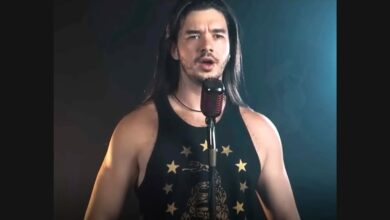
Matthew’s earlier choir recording included below offers a separate performance of the same song. It supplies another setting in which to hear his delivery, allowing listeners to compare the vocal line outside the father-and-son appearance featured here.
John Owen-Jones’s released recording provides another interpretation of “Tell My Father.” A different singer changes the vocal color and emphasis while the composition remains recognizable. Hearing the versions together draws attention toward the choices made within a familiar melodic structure.
On another listen, follow the point where a single voice becomes part of the combined sound. The transition shows how a duet can expand without losing its individual contributions. Both singers remain essential to the relationship heard within the shared phrase.
Then attend to the accompaniment under the quieter passages. Its continuity allows a singer to leave space while the song keeps moving. The complete performance depends on those supporting details as well as the moments when the voices occupy the foreground together.
The song’s musical direction also gives the audience a way to follow the performance across successive statements. Melody and accompaniment provide a stable framework, while the singers’ particular timing gives each line its own place within that larger progression.
Mark and Matthew Weber’s “Tell My Father” joins family partnership with clearly shaped vocal exchange. The original National Guard recording preserves the duet within its public setting, allowing listeners to follow separate phrases, shared harmonies and the accompaniment that connects them.
More videos to explore
For a companion recording, mkweber1234 presents “Tell My Father 5-26-11 – Matthew Weber – Rosemount Choir.” This separate video offers another setting for comparison, with its own performers, arrangement and occasion.
For a companion recording, John Owen Jones – Topic presents “Tell My Father.” This separate video offers another setting for comparison, with its own performers, arrangement and occasion.
Further reading: Performance background and source.