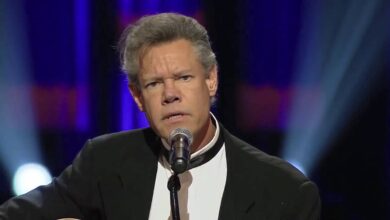
Bublé and Groban Turn Vocal Imitation into a Stage Exchange
Imitation becomes the organizing idea when Michael Bublé and Josh Groban share a concert stage. Their exchange plays with the vocal styles audiences associate with each singer, using changes of delivery and movement to make musical identity part of the comedy.
He framed it like a “career announcement,” teasing the crowd with the idea that he was tired of being boxed into jazz and standards. The setup felt intentionally absurd, like he was daring the audience to believe him for five seconds.
Then he swerved into the “new direction” with a punchline that had nothing to do with reinvention and everything to do with pure showmanship: he decided his fresh era would involve becoming Josh Groban. It wasn’t a casual nod or a quick vocal quote.
He committed to the bit with exaggerated seriousness, pushing his voice into that operatic-pop power lane and pairing it with mannerisms that made the impersonation instantly readable even if you weren’t a superfan.
The true “how is this even happening?” jolt arrives when Josh Groban appears behind him like a magician’s reveal. It’s the kind of entrance that instantly changes the oxygen in the room, because now the joke has consequences.
Watch the performance
Groban’s reaction is what turns a hilarious cameo into a classic two-person scene.
The funniest part is how the impressions become less about voice alone and more about musical identity. Bublé’s whole persona is swing, swagger, and that smooth, wink-at-the-audience charm. Groban’s lane is bigger, more dramatic, more cinematic.
What makes it feel special, beyond the laughs, is that it’s a rare glimpse of two polished, brand-heavy artists letting the brand slip—on purpose—without losing control of the room. This one feels like skilled improvisation in the sense that they’re reacting, timing, and adjusting to the crowd’s energy second by second.
It also works because it’s rooted in genuine respect. The impressions are sharp, but they don’t feel mean-spirited. They feel like inside jokes between artists who understand what it takes to own a stage in different ways. That’s why their fans embraced it instead of turning it into a weird rivalry clip.
By the time it spread online, the clip had everything the internet likes to reward: a clear setup, a perfect surprise reveal, a second surprise (the retaliation), and a payoff that keeps topping itself. It’s short enough to rewatch, big enough to share, and specific enough to feel authentic.
Watching the crowd’s reaction is half the experience, because the laughter doesn’t just sit on top of the music—it becomes part of the rhythm. You can feel the exact moment the room realizes Groban is actually there, and how that realization changes the energy of every next note.
Hearing a live performance of “You Raise Me Up” afterward helps explain why it’s such a tempting target for an impression in the first place.
The two complete concert performances below give the comedy a useful musical context. Groban’s “You Raise Me Up” develops through long, expansive phrases, while Bublé’s “Feeling Good” draws attention to rhythmic placement and stage presence.
Bublé’s impression skills have always been part of his stage identity, and clips like this show why the Groban moment landed so naturally. He doesn’t just mimic a tone; he mimics posture, timing, and the invisible “rules” of a style.
The exchange is also enjoyable for how little explanation it needs once both singers are on stage. A shift in vocal tone, a familiar gesture or a perfectly placed pause can carry the joke, because each performer’s musical identity is already so clear.
Groban’s side of the equation matters just as much, because his humor is often built on the same principle: take the seriousness people project onto him and puncture it with precision. When he leans into comedy, the contrast is the point—this huge voice paired with an unexpectedly playful, self-aware vibe.
More videos to explore
For a companion recording, BBC Music presents “Josh Groban – You Raise Me Up (Proms in Hyde Park 2018).” This video offers another musical setting to explore alongside the featured performance, with attention to its own arrangement and the performers’ delivery.
For a companion recording, Michael Bublé presents “Michael Bublé – Feeling Good (Live from Tour Stop 148).” This video offers another musical setting to explore alongside the featured performance, with attention to its own arrangement and the performers’ delivery.
Further reading: Performance background and source.