Meryl Davis and Charlie White Skate to David Cook’s ‘Billie Jean’ in Vancouver
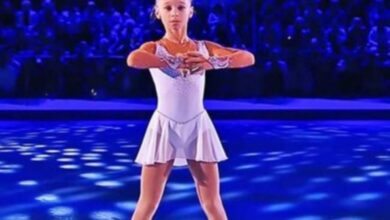
Meryl Davis and Charlie White’s Vancouver exhibition pairs ice dance with David Cook’s interpretation of ‘Billie Jean.’ The familiar Michael Jackson song reaches the audience through a different voice and arrangement while the skaters give it a visual form.
The Olympic channel’s official ‘Music Monday’ recording identifies the performers and the music. It preserves their appearance at the 2010 Winter Games, providing a direct reference for the routine rather than an uncredited skating compilation.
The number belongs to the exhibition gala, distinct from the competitive programs through which the pair earned their ice-dance silver medal. That difference explains the occasion without treating this particular ‘Billie Jean’ routine as the medal-winning competition performance.
Cook’s version changes the song’s musical character. Its more sustained vocal and instrumental presentation provides another rhythmic and expressive frame, allowing the skaters to approach familiar material through an arrangement with a different pace and emphasis.
The routine has to connect movement with that frame. Steps and changes in position become readable when they meet the music’s phrasing, giving the audience a relationship between what is heard and what unfolds across the ice.
Watch the performance
Partner coordination is central to that relationship. Each skater’s movement has to connect with the other’s position and timing, allowing the pair to create a continuing visual sequence rather than two independent routines occupying the same space.
The musical line helps organize the progression. A developing phrase gives the performers a direction to follow, while changes in emphasis provide points at which a movement or a shared position can become more prominent.
The recording’s camera views make those decisions visible. Wider framing establishes the use of the rink, while closer views reveal the relationship between the partners as they move through the routine together.
The exhibition setting gives the performance its own purpose. The pair are presenting a number for the gathered audience, and the music supplies the structure through which their coordinated movement becomes a complete stage-like appearance on the ice.
The full recording is therefore more informative than a brief extract of one striking position. The earlier movement and musical development establish how later gestures belong within the routine’s continuing direction.
Jackson’s official ‘Billie Jean’ video provides the original recorded reference. Hearing it alongside the exhibition music makes the change in vocal tone and musical atmosphere easier to recognize without confusing the two arrangements.
The song’s identity remains clear across that change. A different interpretation can retain recognizable melodic material while altering the pace and supporting sound, giving the choreography another set of musical possibilities.
Jackson’s ‘Smooth Criminal’ video offers a broader movement comparison. Its filmed choreography occupies a different performance space, yet it provides another example of music and coordinated bodily actions being presented together.
Those references keep the featured routine within a clear listening context. Jackson supplies the original song, Cook’s interpretation supplies the exhibition’s musical arrangement, and the skating pair translate that arrangement into movement.
The Olympic recording rewards attention to all three parts of that connection. The familiar composition, the changed musical setting and the partners’ shared timing give the routine its particular visual and sonic character.
Davis and White’s ‘Billie Jean’ exhibition shows how a recorded song can acquire another performance life. A documented Olympic occasion and coordinated ice dance bring the music into a complete routine with a distinct setting of its own.
More videos to explore
Jackson’s official ‘Billie Jean’ video supplies the original song and production. It makes the difference in musical atmosphere introduced by the exhibition’s cover arrangement easier to hear.
His official ‘Smooth Criminal’ video offers another relationship between music and movement. Its filmed choreography provides a contrasting performance space alongside the ice-dance routine.
Further reading: Performance background and source.