Cameron Hughes Turns a Golden Knights Crowd Into a Joyful Dance Party
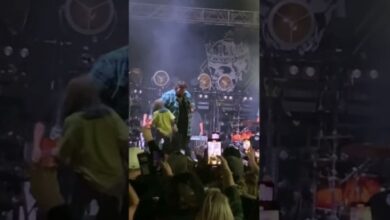
Cameron Hughes knows how to turn the attention of a sports arena into a performance. At a Vegas Golden Knights game, “Mony Mony” gives him the soundtrack for an exuberant dance. The soundtrack supplies an immediate rhythmic invitation. The live contribution is his movement and interaction with the spectators, with the familiar recording providing the musical frame.
The camera’s attention is the opening cue. Instead of offering a small wave, Hughes turns his place in the crowd into a stage. The change is easy for the nearby audience to understand. A spectator’s expected response to the camera becomes the opening of a much larger visual routine.
Clapping establishes a simple connection with the surrounding spectators. The movement then grows into an energetic trip along the aisle. The repeated action gives people an accessible way to join him. Participation begins simply before the routine introduces a more elaborate comic surprise.
His shirt-changing gag supplies a further surprise. The reveal becomes part of the rhythm of the entertainment. The reveal has a clear place within the buildup. The audience can anticipate a change, giving the joke more effect than an immediate display would have.
The recording is enjoyable because the crowd gradually joins the moment. One person’s commitment changes the mood around him. Their response gives the scene its direction. A routine performed among spectators becomes more engaging when the people around it visibly begin to share its energy.
Watch the performance
Billy Idol’s recording provides a strong, recognizable pulse. It is easy for spectators to clap along without needing instructions. That common pulse helps coordinate a response across different people. The entertainment can begin with a recognizable rhythm before it asks for more attention.
Hughes uses large movements that can be understood across an arena. The performance is designed for visibility. The gestures need to communicate at different distances. A nearby spectator and someone watching the arena screen should both be able to follow the idea.
That scale also works on the video screen. Each gesture gives the camera something clear to follow. The clear shape of the movement gives the recording a simple visual direction. The viewer can follow the buildup without needing a spoken account of each step.
The humor depends on anticipation. Delaying a reveal allows the nearby crowd to become part of the setup. The wait invites spectators to predict what will happen next. Their attention becomes part of the joke before the clothing reveal supplies its visible payoff.
A sports audience is already used to responding together. Hughes redirects that shared energy into a different kind of celebration. That existing habit gives the entertainer something to work with. The crowd is capable of a shared response, and the routine offers another reason to produce one.
The clip shows entertainment as an exchange. The dancer needs the crowd’s response, and the crowd gains confidence from his enthusiasm. The exchange can build through those responses. Each visible sign of participation gives the routine a warmer atmosphere and encourages the next part of its development.
It also illustrates the appeal of wholehearted participation. Hughes commits fully to a playful idea. That commitment makes the invitation easy to recognize. A hesitant gesture might disappear into the crowd, while a clear routine gives people something definite to follow.
The surrounding spectators help tell the story through their reactions. Surprise and laughter are visible beside the movement. The camera can preserve both performer and reception within the same view. The surrounding faces make the growing participation part of the entertainment itself.
Watch the buildup rather than jumping to the final gag. The pacing gives the reveal its effect. The short sequence has its own comic architecture. An invitation becomes a buildup, and the eventual reveal gains meaning through the attention gathered beforehand.
Hughes’s work as a professional crowd entertainer gives the scene another useful perspective. The performance begins among spectators rather than on a conventional stage, so its success depends on making the surrounding people want to participate. Clear gestures, anticipation and a recognizable rhythm give the invitation a shape that can be understood both nearby and through the arena screen.
This Golden Knights moment turns a familiar arena song into a compact piece of crowd theater. Hughes supplies the invitation, and the spectators help complete the performance. Its appeal comes through that shared development. The dancer’s energy gives the crowd a cue, and their reactions turn an individual routine into a collective moment.
More performances to enjoy
Hughes shares an arena dance moment with Malcolm in his own recording “Malcolm’s Incredible Dancing and Spirit Leaves Crowd in Awe.” The live crowd interaction offers another example of an invitation becoming a shared performance.
Their “Dance Like Malcolm” appearance at a Senators event provides another live crowd routine. The recording shows the same welcoming approach operating within a different sporting setting.