Steve Perry and Journey Share an Emotional “Faithfully” at Bill Graham’s Memorial
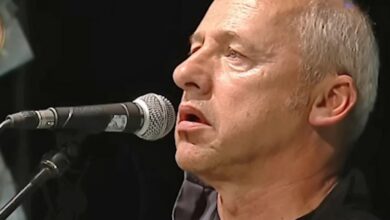
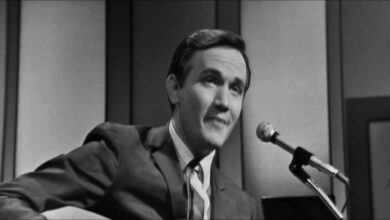
Steve Perry, Neal Schon and Jonathan Cain reunited for a performance of “Faithfully” at the Bill Graham memorial concert. The setting gave Journey’s ballad an especially reflective atmosphere. The song’s familiar emotional direction remains intact while the occasion adds another layer. Its performance becomes part of a public gathering rather than an ordinary tour stop.
The appearance took place in San Francisco’s Golden Gate Park. It offered a rare chance to hear the musicians together outside the usual frame of a full tour. The November 1991 occasion brought musicians and listeners together in remembrance. That context gives the familiar song a specific reason to be heard by this gathering.
Perry’s voice is central to the recording’s appeal. The familiar melody arrives with the expressive phrasing listeners associate with Journey’s classic era. His voice provides an immediate point of recognition. The interpretation remains interesting through the phrasing around the larger notes, where a ballad establishes its personal character.
Schon and Cain supply the musical relationship around it. Their contributions help the performance feel like a shared piece of history rather than a vocal appearance alone. The separate instrumental colors matter to that recognition. The keyboard gives the melody a foundation while the guitar extends the performance’s expressive line beyond the sung phrases.
The memorial context gives the song another emotional dimension. Its themes of connection and commitment fit an occasion built around remembering someone. The performance can carry both established meaning and the feeling of its new setting. A familiar song gains another association through the people and occasion around it.
Watch the performance
The arrangement leaves the melody easy to follow. A ballad of this kind gains strength when its emotional line is clear. Clarity gives the quieter lines an opportunity to establish their mood. The larger passages then have a direction to continue instead of arriving as isolated demonstrations.
Listen to how Perry shapes the quieter phrases before the larger notes. Those decisions establish the feeling that the chorus later releases. The contrast gives those later passages weight. A ballad’s emotional shape depends on the connection between its different scales, rather than on the strongest note alone.
The guitar and keyboard also have different responsibilities. Their interplay supports the voice while preserving the recognizable character of the song. Those responsibilities work together within the arrangement. The voice does not have to carry every expressive transition because the accompaniment can continue the musical thought.
A reunion can invite viewers to search for the past. This recording is more rewarding when heard as a particular live moment with its own setting. Its occasion is part of what distinguishes it from an earlier tour recording. The familiar music is being offered to a gathering with another shared purpose.
The musicians’ familiarity with the material is part of the effect. They can move through the song without losing its emotional direction. Their experience provides continuity through the transitions. A musical relationship developed over time becomes audible in how the players leave space for one another.
The performance offers a different kind of intimacy from a large touring production. The focus is on musicians responding to a meaningful occasion. That emphasis keeps the setting close to the song. The performance has a reason to unfold here, with the repertoire contributing to the broader act of remembrance.
Its enduring interest does not require a claim that no later singer could perform the song. What the clip preserves is the distinctive chemistry of these musicians. The particular combination is worth hearing in its own right. Recognizable voices and instrumental roles can make a recording distinctive without diminishing later interpretations.
The audience brings its own memories to the ballad. That recognition helps make a familiar chorus feel newly charged. A known melody gives the gathering a shared reference. People can enter the performance through their own history with the song while listening to the current rendition.
Watch the performance through its final phrases. The emotional impression depends on the complete arc rather than a single isolated note. The closing direction is prepared by what comes before it. Following the complete sequence gives the larger phrases their proper relationship with the quieter opening.
The reunion’s scale makes the familiar song feel unusually direct. A piece associated with Journey’s touring history becomes part of a memorial gathering, giving its established themes another setting. The appeal is not only the return of particular musicians; it is the way their relationship with the material can serve a meaningful occasion outside their normal concert frame.
This “Faithfully” is a moving record of Journey’s musicians returning to a song that already carried years of shared meaning. At the memorial, that history becomes part of a broader act of remembrance. That connection is why the recording remains compelling beyond a reunion headline. The music and the memorial occasion give the appearance a lasting purpose.
More performances to enjoy
Journey’s official live “Open Arms” from Houston on the 1981 Escape tour presents another ballad with Perry’s lead vocal. The full band recording gives a useful earlier setting for the group’s melodic and instrumental relationships.
The band’s official live “Separate Ways” from Manila offers a later lineup and a more forceful song. Hearing the two recordings gives the repertoire a broader concert perspective without repeating the memorial appearance.