Ye-lim Kim Turns “A Thousand Years” Into a Graceful Charity Ice Performance
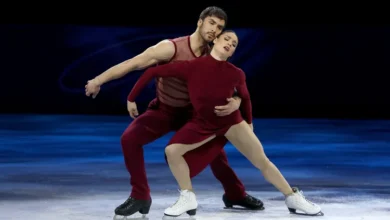
Ye-lim Kim’s performance to Christina Perri’s “A Thousand Years” turns a familiar ballad into a sequence of movement on ice. The charity-show setting gives the routine a purpose beyond competition. The song supplies a recognizable emotional direction, while the exhibition gives the skater room to interpret it through movement. The result is accessible without familiarity with competition scoring.
The recording comes from An Evening with Champions, associated with Harvard’s skating community. Its atmosphere encourages the audience to appreciate expression as well as athletic skill. The 2023 recording presents the routine within a benefit-show tradition. Its purpose is a shared exhibition, giving the audience another frame for appreciating the skating.
Kim’s routine emphasizes a flowing relationship between the music and her movement. The skating gives the ballad a visible shape. A familiar melody lets the viewer follow changes in movement intuitively. The musical phrases provide a guide even when the technical names of the elements are unfamiliar.
A song with a gradual emotional build can support long lines across the ice. It offers room for the performer to let a gesture complete before beginning another. A sustained glide can keep the phrase visible as it unfolds. The routine does not need a new element on every beat to stay closely related to the song.
That patience is part of the routine’s appeal. The viewer can follow the movement without needing a scoring sheet to understand why it feels graceful. The unhurried passages make smaller details easier to notice. A change in posture or direction can give a musical line a clear physical counterpart.
Watch the performance
Figure skating combines technical control with musical interpretation. A performance becomes especially engaging when neither quality appears separate from the other. The elements gain expressive value through their placement. A technically controlled movement can support the music’s direction instead of appearing as a separate athletic demonstration.
Watch the upper-body movements alongside the changes of direction. The arms and shoulders help translate the music’s phrasing into the space of the rink. Those details contribute to the feeling of the entire phrase. The interpretation extends through the body rather than residing only in the placement of the skates.
The glide itself is another expressive tool. Sustained motion can echo a long vocal line without requiring a dramatic element at every moment. Continuity becomes a visible form of phrasing. The viewer can see motion carrying a line forward, with its completion providing a natural point for a new gesture.
The familiar song also creates an accessible starting point for viewers outside skating. They can follow the routine through music they already recognize. Recognition gives the audience a shared starting point. The routine can then reveal another quality in the song through its use of balance, direction and physical space.
A charity exhibition changes the way a performance is framed. The routine contributes to a shared event rather than being presented only as a result in a standings table. That setting makes expression a particularly direct part of the audience’s experience. The spectators can follow the musical arc without treating each moment as a separate competitive result.
That does not remove the demand of the skating. Balance, timing and control remain necessary for the movement to appear unforced. The apparent ease is therefore part of the skill being observed. A graceful line has to be maintained through movement, with control supporting the impression of flow.
The softer passages reward close attention. Their beauty often comes from continuity and detail rather than an obvious burst of speed. Those passages offer more than a pause between larger elements. Their continuity helps the routine communicate a complete musical thought rather than a list of individual accomplishments.
As the song opens up, the routine can expand with it. The relationship between musical scale and physical space becomes clearer. That expansion has greater meaning when the earlier movement has established restraint. The rink becomes an expressive space whose scale can change with the music.
The recording is worth watching in full rather than through a single highlight. Its emotional shape depends on the transitions between elements. The full sequence reveals how one motion prepares another. Its beauty depends partly on connections that would disappear if the routine were reduced to a few isolated elements.
The camera’s movement is useful for appreciating the routine’s relationship with space. A skater can travel through a musical phrase rather than remain in one fixed position, making direction and distance part of the interpretation. Watching that continuity gives the familiar ballad another expressive dimension while preserving the athletic work required to make the movement appear natural.
Kim’s “A Thousand Years” offers an inviting example of skating as musical expression. The performance brings athletic precision into a setting shaped by grace, generosity and the pleasure of watching a complete routine. The familiar soundtrack and the exhibition atmosphere give viewers a welcoming way into that relationship. The routine rewards both musical attention and appreciation of the skating’s control.
More performances to enjoy
Veronika Zhilina’s skating routine to “Hallelujah” offers another interpretation of a familiar ballad on ice. Its musical pacing provides a useful comparison with Kim’s flowing exhibition.
Alexandra Trusova’s live gala exhibition at Skate Canada in 2019 gives another perspective on skating outside the main competitive program. The performance offers a contrasting character within the exhibition format.