Heart’s Kennedy Center “Stairway to Heaven” Honors Led Zeppelin’s Legacy
Heart’s rendition of “Stairway to Heaven” at the 2012 Kennedy Center Honors begins with the patience a familiar song deserves. Ann and Nancy Wilson let the opening establish its mood before the arrangement grows toward a much larger finish. In the audience, Led Zeppelin’s surviving members watch their music return through another band’s interpretation, giving the performance a visible emotional exchange as well as a musical one.
The occasion honored Robert Plant, Jimmy Page and John Paul Jones, placing the song inside a celebration of Led Zeppelin’s contribution to music. That setting makes the task more demanding than an ordinary cover. Heart are performing for people closely identified with the original recording, as well as for an audience that already knows its shape. Respect for the song has to coexist with a convincing new performance.
Ann Wilson carries the vocal line while Nancy’s guitar helps establish the opening. Their roles give the early section a clear center: a recognizable melody, an instrumental foundation and enough space for individual phrases to register. Starting at this scale is essential to the tribute’s eventual effect. If the arrangement reaches its maximum force too soon, the song has nowhere meaningful left to travel.
Jason Bonham’s appearance at the drums brings a family connection to the occasion. His late father, John Bonham, was Led Zeppelin’s drummer, so his participation belongs to the tribute’s emotional meaning as well as its musical structure. The performance does not ask the audience to forget that loss. Instead, it includes the next generation within an evening devoted to honoring the band’s continuing legacy.
The arrangement gradually widens through additional instrumental and vocal textures, preparing a final section that feels much larger than the opening. The live recording shows that progression alongside the reactions of the musicians being honored. Watch the full arc below: the quieter introduction matters because it creates the distance the ensemble will later cross when the choir and band bring the tribute to its climax.
Watch the performance
Ann’s delivery is effective because the song requires more than one kind of expression. The early passages need clarity and restraint, while the later sections demand a voice capable of holding its place within a fuller arrangement. Moving convincingly between those demands gives the performance continuity. The vocal power at the finish feels connected to the opening rather than detached from it as a separate display.
Nancy’s contribution helps keep that continuity audible. The guitar is part of the song’s recognizable identity, so its presence gives listeners a point of orientation as the arrangement changes around it. A tribute can introduce new colors without abandoning those familiar foundations. Here, the relationship between recognizable material and a growing ensemble allows the performance to expand while still feeling grounded in the composition.
The choir’s entrance is one of the recording’s most memorable turns. Additional voices change the scale of the refrain, bringing a collective sound into a song that began with much more intimacy. That release is effective because it has been prepared over time. The audience can hear the arrangement reaching outward rather than merely becoming louder, and the visual reveal gives the musical change another dimension.
The bowler hats supply a thoughtful visual reference associated with John Bonham. Alongside Jason’s participation, they connect the performance’s large ensemble to a specific part of Led Zeppelin’s history. The detail gives the finale an identity beyond spectacle. Its impact comes from the relationship between the music, the people performing it and the memory being acknowledged within the tribute.
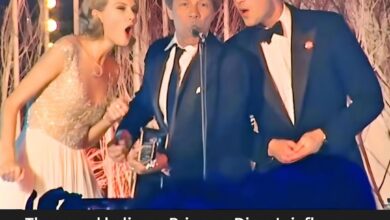
Audience shots provide another thread to follow without replacing the musical story. Robert Plant’s visible emotion has become a familiar part of the recording, while Jimmy Page and John Paul Jones also watch the rendition unfold. The camera allows viewers to see the tribute reaching its recipients. That exchange matters because the performance is intended as an offering to musicians whose own work made the occasion possible.
The reactions are most meaningful when kept alongside the arrangement that produces them. A short clip of a moved listener can attract attention, but the complete performance explains the sequence surrounding that response. The opening establishes recognition, the ensemble adds scale, and the ending gathers those elements into a shared musical statement. Watching that process gives the famous audience moment its proper context.
Heart’s interpretation also demonstrates why a respected cover needs expressive decisions of its own. Reproducing a recording exactly can acknowledge its importance, but a live tribute asks performers to make it speak in the room they occupy. The Wilson sisters bring their own vocal and instrumental character to the material. The arrangement supports those identities while maintaining the song’s recognizable movement from reflection toward intensity.
The performance is an example of musical pacing on a ceremonial stage. Its different sections need to feel distinct without losing their relationship to one another. Changes of texture, vocal emphasis and ensemble size provide that movement. The finale earns its force because the earlier passages have left room for it, making the eventual expansion feel like the completion of a journey the listener has already begun.
For another view of Heart’s relationship with Led Zeppelin’s repertoire, their live “Going to California” on the Howard Stern Show offers a valuable companion. The acoustic setting highlights different demands from a large tribute arrangement, including the space around the voices and instruments. It shows that the connection to Zeppelin’s music can be expressed through intimacy as well as through a spectacular ceremonial finish.
A live performance of “Barracuda” supplies a contrasting perspective by returning to Heart’s own material. Hearing it alongside the covers places the tribute within the Wilson sisters’ broader musical identity. Their authority on the Kennedy Center stage comes from that identity, not simply from choosing a famous song. The same combination of vocal conviction and instrumental focus can serve original rock music and a deeply considered reinterpretation.
What makes the Kennedy Center “Stairway to Heaven” worth returning to is the way its musical and personal elements reinforce one another. The restrained opening gives the finale room to grow, the choir adds collective force, and Jason Bonham’s presence connects the tribute to the band’s history. The emotional audience response belongs to that complete experience: familiar music offered back with care, skill and a clear sense of occasion.
More performances to enjoy
Watch Heart perform Led Zeppelin’s “Going to California” live on the Howard Stern Show. The acoustic cover provides a more intimate companion to the Kennedy Center tribute, highlighting another side of the Wilson sisters’ connection to Zeppelin’s music.
For a contrast with the tribute, hear Heart perform their own “Barracuda” live. The recording puts the band’s original rock sound at the center, showing how Ann’s voice and Nancy’s guitar can create force in a different musical setting.