Jon Bon Jovi Just Won a Major Food Award — And No, It’s Not for His Music. His ‘Pay It Forward’ Restaurants Have Now Served 234,000 Free Meals
Most rock stars celebrate two decades of philanthropy by posting a throwback photo and calling it a day. Jon Bon Jovi celebrated his by winning the 2026 James Beard Impact Award — one of the most prestigious honors in the American food world — for a nonprofit restaurant chain that lets people who can’t afford a meal volunteer in exchange for a three-course dinner. The announcement, made this week by the James Beard Foundation, recognized the Jon Bon Jovi Soul Foundation and its JBJ Soul Kitchen restaurants for their work in fighting hunger, poverty, and homelessness across New Jersey and beyond. It’s the kind of award that typically goes to celebrated chefs and innovative restaurateurs, not to the guy who wrote “Livin’ on a Prayer.” But then again, Bon Jovi has spent the last twenty years proving that his second act might be more important than his first.
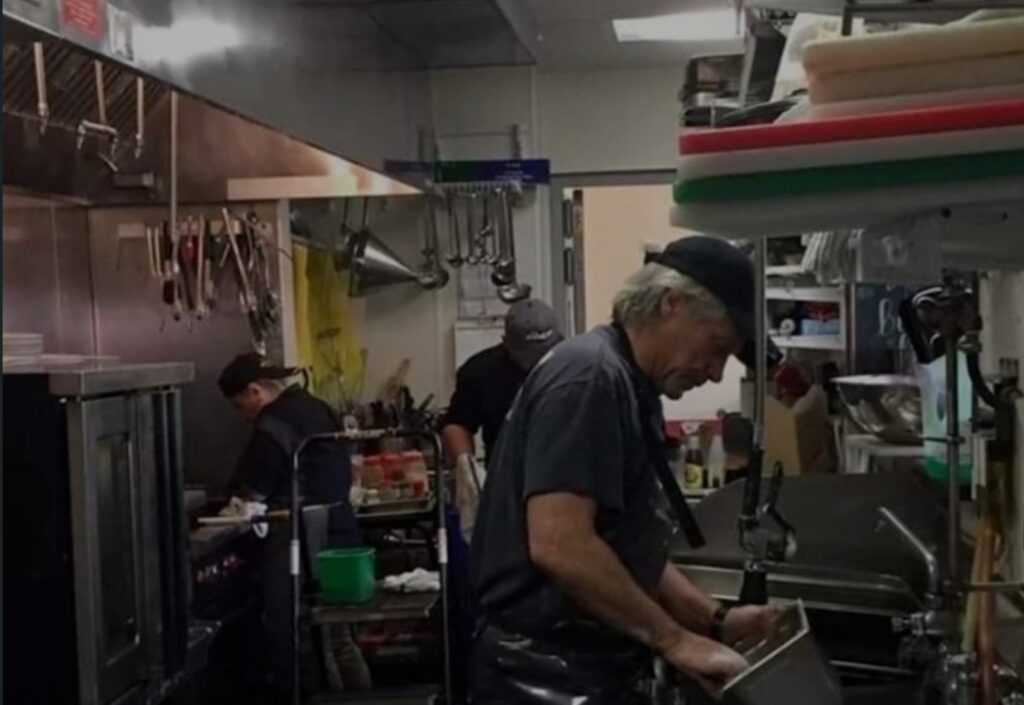
The JBJ Soul Kitchen model is deceptively simple and quietly radical. There are no prices on the menu. Every guest — regardless of income, background, or circumstance — sits at the same table and eats the same locally sourced, three-course meal. If you can pay, there’s a suggested donation. If you can pay more, your extra covers someone else’s meal. And if you can’t pay at all, you volunteer — washing dishes, prepping vegetables, greeting other guests — and you eat the same dinner as everyone else, with the same dignity. There is no separate line, no visible marker of who paid and who didn’t. The whole point is that you can’t tell. Since opening its first location in Red Bank, New Jersey in 2011, JBJ Soul Kitchen has served over 234,000 meals across four New Jersey locations. Of those, 58 percent were earned through volunteer hours and 42 percent were covered by donations. The math is striking: more than half the people who eat at these restaurants work for their meal rather than pay for it, and the system sustains itself.
Jon Bon Jovi and his wife Dorothea Bongiovi launched the Soul Foundation in 2006 after what Jon has described as a moment of sudden clarity. He was looking out of a hotel window in Philadelphia one night and saw a man sleeping on a steam grate in the street. The sight hit him with unexpected force. He later told interviewers that he thought about the gap between the America that the country’s founders had envisioned and the America where people froze on sidewalks, and decided he had to do something concrete about it. The foundation’s initial focus was affordable housing — building and funding permanent, supportive housing for individuals and families trapped in cycles of poverty and homelessness. To date, the JBJ Soul Foundation has helped provide support for nearly 1,000 units of affordable housing in twelve states and Washington, D.C., serving thousands of people including veterans and at-risk youth.
The Soul Kitchen concept grew out of that housing work as Jon and Dorothea realized that hunger and homelessness are not separate problems but interconnected symptoms of the same systemic failures. The flagship restaurant in Red Bank opened with just thirty-three seats and a simple premise: food should not be a privilege. The response from the community was immediate and overwhelming. In 2016, they expanded to include The B.E.A.T. Center in Toms River, New Jersey, which combines a Soul Kitchen location with a food pantry and a culinary training program. In 2020, they opened a location at Rutgers University-Newark, bringing the model directly onto a college campus and addressing food insecurity among students — a problem that affects roughly one in three college students nationwide but rarely makes headlines. A fourth location followed at New Jersey City University in 2023.
The Toms River expansion was not without controversy. In 2025, a pop-up Soul Kitchen location inside the Ocean County Library became a flashpoint when the township’s mayor publicly dismissed it as a “soup kitchen” that was attracting homeless people to the area. The remark generated significant backlash — both from locals who had seen the pop-up’s positive impact firsthand and from the broader public, who pointed out the obvious irony of a politician objecting to hungry people being fed. Jon and Dorothea responded with characteristic directness, issuing a statement that read, in part, “We are not a soup kitchen. We are not a pay-what-you-want restaurant. We are a unique pay-it-forward model where those who are unable to pay volunteer their time.” The pop-up served more than 11,000 meals during its run before closing in January 2026. The foundation has publicly stated its intention to continue fighting food insecurity throughout 2026 and beyond.
The James Beard Impact Award, announced on April 1st, 2026, places Bon Jovi’s work in a context that the music industry’s own accolades never quite captured. The James Beard Foundation is the gold standard of American culinary recognition — its annual awards are often called the Oscars of the food world. The Impact Award specifically honors individuals and organizations that are working to create a more equitable and sustainable food system. For the foundation to recognize a rock musician’s nonprofit restaurant — alongside professional chefs and food policy advocates — is a statement about the seriousness and effectiveness of what the Soul Kitchen has built. The award ceremony will take place on June 14th in Chicago. Jon Bon Jovi is now, officially, both a Grammy winner and a James Beard honoree. That particular combination of hardware probably fits in a very small club.
What makes the Soul Kitchen model genuinely innovative, and not just a celebrity vanity project with good PR, is the depth of its programming beyond the meal itself. JBJ Soul Kitchen doesn’t just feed people and send them on their way. The restaurants offer job training, resume support, and employment assistance. They partner with local mental health providers to connect guests with counseling and support services. They provide referrals to housing resources. The meal is the entry point — the warm, welcoming, stigma-free front door — but behind it is a network of services designed to help people stabilize their lives and move toward self-sufficiency. In a country where the social safety net is often fragmented, underfunded, and difficult to navigate, the Soul Kitchen functions as a kind of one-stop community hub disguised as a restaurant.
The timing of the award also coincides with a busy period for Bon Jovi the musician. The band’s rock and roll origin story is being developed as a music biopic, with Jon himself involved in the project. Bon Jovi is also set to embark on their Forever Tour beginning in July 2026, returning to arenas after a period of uncertainty surrounding Jon’s well-publicized vocal cord surgery. But it is telling that the headlines this week are not about ticket sales or setlists but about a restaurant where you can pay for your dinner by chopping onions. Jon Bon Jovi has been famous for four decades, but the work that seems to matter most to him — the work that earns awards from food foundations rather than record labels — is the work he does when the amplifiers are off and the aprons are on.
Dorothea Bongiovi, who has been the operational force behind much of the Soul Kitchen’s day-to-day work, was inducted as an Unsung Hero into the New Jersey Hall of Fame in 2025 for her tireless contributions to the state’s communities. Her role in the foundation’s success is difficult to overstate. While Jon’s celebrity has provided the platform and the fundraising muscle, Dorothea has been the one building the systems, managing the logistics, and ensuring that the restaurants actually function as sustainable community institutions rather than well-intentioned experiments that burn out after a few years. The couple has been married since 1989 — high school sweethearts from Sayreville, New Jersey — and their partnership in philanthropy mirrors a stability that is rare in both the music industry and the nonprofit world.
The numbers tell a story that goes beyond any single award. Nearly 1,000 housing units built. 234,000 meals served. Four restaurant locations operating. Twelve states reached. Twenty years of continuous operation. A culinary training program that teaches marketable skills to people who might otherwise have no path into the workforce. A pay-it-forward model that has been studied and replicated by other organizations around the country. And at the center of it all, a guy who once sang about being halfway there and holding on to a prayer — and who has spent the second half of his career proving that holding on isn’t enough. You have to build something.
The James Beard Foundation will honor the JBJ Soul Foundation alongside several other Impact Award recipients at the June ceremony in Chicago. It will be, by any measure, a long way from the stages of Giants Stadium and Wembley Arena. But for Jon Bon Jovi, who saw a man sleeping on a grate in Philadelphia and decided that rock stardom was not a sufficient answer to the question of what to do with a life, it might be the award that means the most. And for the 234,000 people who have sat at his tables and eaten a meal they might not otherwise have had — with dignity, without judgment, and without a bill they couldn’t afford — the award is long overdue.