Keith Whitley’s “I’m No Stranger To The Rain” Became A Number One Hit Just Weeks Before His Death
Country music has always carried a unique ability to sound beautiful while telling the hardest truths, and few recordings capture that contrast more painfully than “I’m No Stranger to the Rain.” When Keith Whitley recorded the song, nothing about it felt artificial. The performance carried a quiet weight, as if every line had already been lived long before it was ever sung. His voice did not reach for drama. It stayed grounded, steady, and deeply human, which made the emotion feel even more real.
There is a kind of honesty in that recording that separates it from countless others. It does not sound like a performance designed to impress. It sounds like a man trying to make sense of something difficult. That is why the song continues to resonate decades later. It speaks to endurance, to surviving storms, and to the complicated reality of carrying pain while still moving forward. Whitley did not just interpret the lyrics. He embodied them.
By the late 1980s, Keith Whitley had already established himself as one of the most respected voices in country music. His rise had been relatively fast, but it never felt rushed. Each release added to a growing sense that he was something rare. Songs like “Don’t Close Your Eyes” and “When You Say Nothing at All” were not just hits. They were performances that showcased an emotional depth many artists spend entire careers trying to reach.
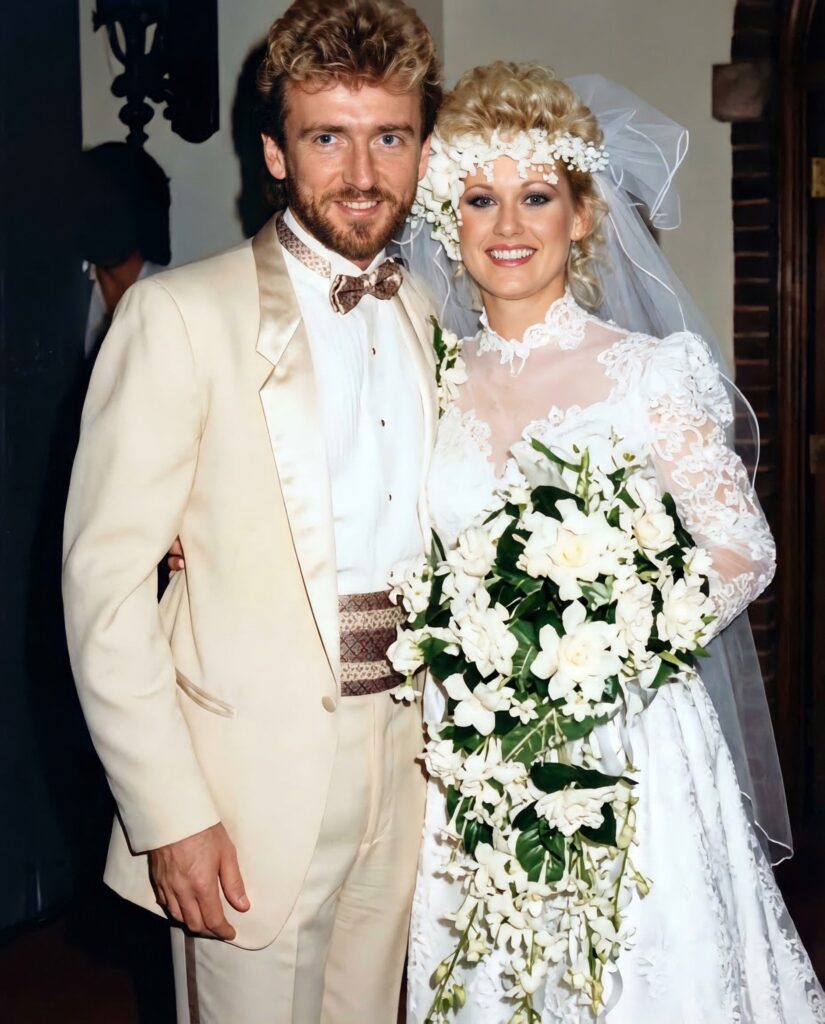
What set Whitley apart was not just tone or technique, although both were exceptional. It was the restraint in his delivery. He understood when to hold back and when to let a line breathe. That balance created a sound that felt intimate, even on large records. In Nashville, his name was spoken with respect, not hype. He represented a kind of traditional country authenticity that listeners immediately trusted.
In early 1989, “I’m No Stranger to the Rain” reached number one on the Billboard Hot Country Singles chart. On the surface, it marked another major milestone in his career. It confirmed that his sound connected not only with critics and industry professionals, but with a wide audience. The success seemed to signal that he was entering a new phase, one where his place among country music’s leading voices was fully secured.
Yet the song itself carried a message that feels heavier in hindsight. Its lyrics revolve around struggle and resilience, about learning to live with hardship without letting it take everything from you. Whitley delivered those words with a sincerity that made them feel personal. There was no distance between the singer and the story. It felt as though he was drawing directly from his own experience.
Producer Norro Wilson once described Whitley with a line that has followed his legacy ever since: “God gave him the voice — but forgot to give him the armor.” It remains one of the most accurate and heartbreaking ways to understand his life. The talent was undeniable. The vulnerability was equally present. Together, they created an artist whose strengths and struggles were closely intertwined.
Those who knew Whitley understood that his personal challenges were real and ongoing. Success did not erase them. Fame did not shield him from them. Like many artists whose work feels deeply emotional, he carried a private weight that was not always visible to the public. His music reflected resilience, but his life showed how difficult that resilience could be to maintain.
On May 9, 1989, Keith Whitley was found dead in his Nashville home. He was only 33 years old. The official cause of death was alcohol poisoning, with a reported blood alcohol level of 0.477. The news moved through the country music community with devastating speed. For many, it was difficult to process how a voice that felt so alive could be silenced so suddenly.
At the time of his death, Whitley was at the height of his career. He had achieved multiple number one hits and had earned the respect of both fans and fellow musicians. There was a strong sense that his best work might still be ahead of him. That is part of what made the loss so profound. It was not only the end of a life, but the loss of a future that seemed full of possibility.
His wife, Lorrie Morgan, was on tour when she received the news. The personal dimension of that moment adds another layer to the tragedy. Behind the public figure was a family, a relationship, and a shared life that ended without warning. For those closest to him, the loss was not measured in chart positions or awards, but in the sudden absence of someone they loved.
In the years that followed, Whitley’s music did not fade. If anything, it grew in meaning. Listeners returned to his recordings and heard them differently. “I’m No Stranger to the Rain” in particular took on a new weight. Lines that once sounded like reflections on hardship began to feel almost prophetic, as if the song had captured something deeper than anyone realized at the time.
Lorrie Morgan later recorded a duet using Whitley’s previously recorded vocals, allowing his voice to be heard in a new context after his passing. The recording charted, and for many listeners, it was a powerful and emotional experience. His voice still carried the same warmth, the same clarity, and the same emotional truth. It did not sound distant or faded.
That is one of the most haunting aspects of his legacy. The recordings preserve him in a way that feels immediate. When his songs play, there is no sense of time having passed. It feels as though he is still present in the moment of the performance. That illusion of presence is both a gift and a reminder of what was lost.
Keith Whitley’s impact on country music goes beyond statistics or chart success. He represents a kind of honesty that cannot be manufactured. His work continues to resonate because it reflects real emotion without exaggeration. It speaks quietly, but it speaks directly, and that is why it endures.
When “I’m No Stranger to the Rain” plays today, it still carries the same strength it did when it first reached number one. But now, it also carries history. It stands as both a testament to his talent and a reminder of how closely art and life can intersect. That is why his voice continues to linger, long after the moment it was recorded.