Sam Williams Honors Hank Williams Legacy With “I’m So Lonesome I Could Cry” as Hank Williams Jr. Watches On Stage
Some nights in country music feel larger than the stage itself. Not because they are louder or more dramatic, but because something about the moment carries a deeper weight. The audience senses it before the first note is even sung. It is the kind of atmosphere where history seems present in the room, and every lyric feels tied to something much older than the performance itself.
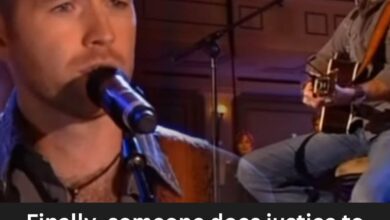
That feeling surrounded Sam Williams when he stepped forward to perform beneath a towering image of Hank Williams, the legendary songwriter whose influence still shapes country music decades after his passing. The moment was not simply a tribute or a routine performance. For many watching, it felt like a rare point where the past and present of country music briefly met on the same stage.
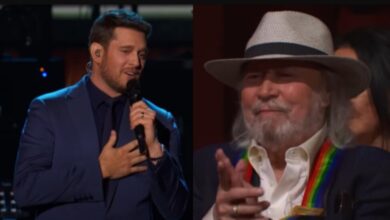
At 76, Hank Williams Jr. is long past the stage of his career where he needs to prove anything to anyone. His legacy is already firmly established through decades of music, hit records, and a voice that helped define an entire era of country. But on this particular night, he stood slightly back and allowed his son, Sam Williams, to take the lead in a moment that felt deeply symbolic.
Sam Williams stepped into that spotlight carrying one of the most recognizable names in country music. The Williams name is not just famous—it carries the memory of Hank Williams Sr., whose songs like “Lovesick Blues” and “I’m So Lonesome I Could Cry” helped shape the emotional core of the genre. Performing those songs is never simply about singing them. It means stepping into a legacy that has influenced generations of artists.
When Sam began performing “I’m So Lonesome I Could Cry,” the room grew noticeably quiet. The song, first released by Hank Williams in 1949, remains one of the most haunting and respected recordings in country music history. Its simplicity demands honesty from whoever sings it. There is no place to hide behind spectacle or showmanship.
Sam approached the song with restraint and respect for its history. Rather than trying to overpower the moment, he delivered it with a calm, careful vocal that allowed the song’s sadness to speak for itself. For many listeners in the room, it felt like a bridge between generations of the Williams family.
Nearby stood Hank Williams Jr., watching his son carry a song that once belonged to his own father. It was a powerful image: three generations connected through one piece of music that has endured for more than seventy years. For Hank Jr., the moment represented both family memory and the continuation of a musical tradition.
Hank Williams Jr. has spent most of his life in the public eye as a performer known for toughness, independence, and a larger-than-life stage presence. Yet during the performance, cameras captured brief glimpses of a more reflective side as he watched Sam sing a song tied so closely to the family’s history.
When the final notes faded into the venue, the applause that followed felt less like ordinary crowd excitement and more like recognition of what had just taken place. The performance was not about spectacle or reinvention. It was about honoring a song and a lineage that still resonates deeply within country music.
Moments like this remind audiences why the Williams family name carries such weight in the genre. Hank Williams wrote songs that continue to influence artists more than seventy years later. Hank Williams Jr. built a career that expanded that legacy in his own rebellious style. Now Sam Williams represents the next generation finding its place within that story.
By the end of the night, what remained most memorable was not just the performance itself, but the sense that the Williams musical story is still evolving. The songs that began with Hank Williams in the 1940s are still being sung, still being interpreted, and still finding new voices.
For a few quiet minutes during that performance, the distance between generations seemed to shrink. One song connected past, present, and future in the same room—reminding everyone there that the Williams story in country music is far from finished.