Grace Slick’s “White Rabbit” — The Psychedelic Anthem That Turned A Children’s Story Into A Rock Revolution
In 1966, a woman sat alone at a worn red piano — an inexpensive instrument missing ten keys that she had purchased for only fifty dollars — and created one of the most quietly rebellious songs ever broadcast on American radio. It wasn’t written in a professional studio, and no record executive or manager stood behind the idea. The song came together in her home in Marin County, California, near the end of an acid trip, while Miles Davis records spun repeatedly in the background and a well-used copy of Alice’s Adventures in Wonderland sat nearby.
That woman was Grace Slick.
She had noticed something most people overlooked. Lewis Carroll’s famous 1865 children’s story — read to generations before bedtime — contained images that felt strangely psychedelic: mushrooms that changed a person’s size, mysterious substances that altered perception, and characters who spoke in absurd authority. To Grace, the story didn’t feel like simple fantasy. It felt like a coded map hiding in plain sight. And she decided to turn that realization into a song.
She first wrote it for her band the Great Society. Soon afterward, in 1966, she joined Jefferson Airplane as their new female vocalist after the group’s previous singer departed. The band eventually recorded the track for their 1967 album Surrealistic Pillow. The result was a short but unforgettable piece of music — barely two and a half minutes long — that slowly built in intensity. Its rhythm echoed the bolero structure popularized by Ravel, while its mood carried hints of the jazz phrasing Grace admired in Miles Davis. The lyrics drew directly from Carroll’s world, referencing the White Rabbit, the hookah-smoking caterpillar, and Alice herself.
“One pill makes you larger, and one pill makes you small…”
The line was anything but vague. Grace was pointing at contradictions she saw everywhere. Many adults warned young people about curiosity and experimentation, yet those same adults drank heavily or relied on prescription sedatives while presenting themselves as moral authorities. The song subtly exposed that tension. As Slick later explained, she always found it ironic that adults happily read children stories filled with magical powders, enchanted flowers, and mind-altering mushrooms — then seemed shocked when younger generations became curious about altered states of mind.
“Feed your head. Feed your head.”
Not obey. Not stay quiet. Feed your head.
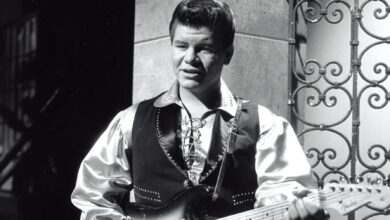
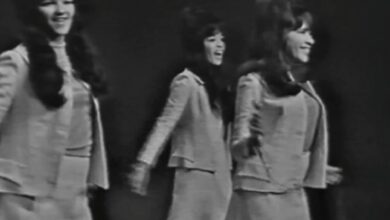
In May 1967, Jefferson Airplane performed the song on The Smothers Brothers Comedy Hour, a popular variety show watched by families across the United States. As people sat in their living rooms during dinner, Grace stood before the cameras and delivered the lyrics with deliberate clarity. She later explained that she sang the words slowly on purpose so that anyone who needed to understand the message would hear it clearly.
Later that same year, she appeared with the band at the Monterey Pop Festival, performing in front of thousands. At a time when women in rock were often expected to stand quietly in the background and simply look appealing, Grace shattered that expectation. She had once worked as a model, but on stage she became something entirely different — one of the most commanding voices in the entire festival.
White Rabbit eventually climbed to number eight on the Billboard Hot 100. Decades later, it would be inducted into the Grammy Hall of Fame and recognized among the songs that helped shape rock music itself. Over the years it has appeared in countless films, television shows, and commercials, instantly recognizable even to listeners born long after the Summer of Love had faded into history.
What makes the story even more compelling is that Grace Slick never insisted the song was purely about drugs. She repeatedly explained that the real theme was curiosity — the idea of following your own “white rabbit” into unfamiliar places that challenge the mind. For her, the song was about reading, questioning, exploring, and refusing to let others dictate what should fill your thoughts.
A broken piano with missing keys.
A classic children’s book.
And one woman who refused to stay silent.
The result was a song that an entire generation would sing.