Megan Moroney’s “Beautiful Things” Live at Houston Rodeo 2026 Turns NRG Stadium Into a Moment of Pure Emotion
Megan Moroney’s performance of “Beautiful Things” at Houston Rodeo 2026 unfolded in one of the largest live music environments in American country music. Inside NRG Stadium, a venue built for spectacle, she delivered a moment that felt unexpectedly intimate. RodeoHouston concerts are known for their massive scale, dramatic stage setups, and audiences that can exceed tens of thousands of people, yet Moroney approached the song with a calm, reflective presence that contrasted beautifully with the surrounding spectacle. The crowd’s energy was enormous throughout the night, but when this song arrived the atmosphere shifted noticeably. Instead of the roaring excitement typical of rodeo concerts, a quiet attentiveness filled the stadium, as if the audience instinctively understood that something more delicate was unfolding in the middle of the massive arena.
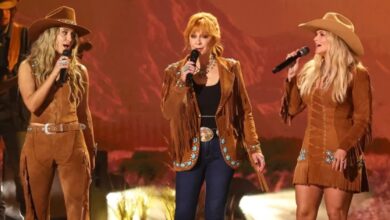
The Houston rodeo stage has always been a proving ground for country artists, especially younger performers stepping into one of the genre’s most high-profile live platforms. Megan Moroney arrived at this performance riding the momentum of a rapidly growing fan base and a string of emotionally resonant songs. Her stage presence blended glamor and vulnerability, reflecting the aesthetic that fans often associate with her “emo cowgirl” persona. Glittering outfits and confident stage movement gave the show its visual excitement, but the emotional core of the night emerged most clearly during quieter moments like “Beautiful Things.” In a venue filled with bright lights and a roaring crowd, the performance proved that Moroney could slow everything down and hold the audience’s attention with nothing more than her voice and the emotional weight of the song.
One reason the song connected so strongly that night is the deeply personal story behind it. “Beautiful Things” was inspired by Moroney’s feelings about protecting the people she loves, particularly younger family members whose futures feel both hopeful and fragile. The song explores the bittersweet realization that the most precious parts of life are often the ones we worry about losing the most. In Houston, that message seemed amplified by the setting. When a quiet reflection about love and vulnerability echoes through a stadium full of people, the contrast makes the emotion feel even stronger. The crowd’s reaction showed that listeners were not simply hearing the song; they were absorbing its meaning in a way that turned a personal story into a shared emotional experience.
Throughout the concert, Moroney demonstrated the kind of pacing that skilled live performers rely on. Upbeat songs earlier in the set created a celebratory atmosphere, with fans singing along loudly and waving their phones in the air. By the time “Beautiful Things” arrived, the audience had already connected with her energy and personality. That trust allowed her to shift the tone without losing the crowd. The transition felt natural rather than abrupt, as though the show had been guiding listeners toward this quieter emotional center all along. Moments like this are crucial in large concerts because they prevent the performance from becoming a nonstop barrage of noise. Instead, they create emotional peaks and valleys that make the entire show feel more dynamic and memorable.
Vocally, the Houston performance highlighted Moroney’s ability to convey emotion without relying on overwhelming power. Her voice carries a conversational quality that feels almost confessional, as if she is speaking directly to each listener rather than addressing a massive crowd. That style works especially well in a song like “Beautiful Things,” where the lyrics depend on sincerity rather than dramatic vocal flourishes. During the performance, subtle changes in tone and phrasing carried the emotion of the song. Instead of pushing for dramatic high notes, she allowed the lyrics to breathe, giving the audience space to absorb the story. In a stadium environment where artists often feel pressured to sing louder and bigger, this restraint became one of the performance’s most powerful elements.
The visual presentation of the concert also contributed to the song’s impact. Houston Rodeo shows are famous for their elaborate staging and colorful lighting, and Moroney’s performance embraced that tradition while still leaving room for emotional focus. Pink-tinted lights washed across the stage and reflected the aesthetic fans often associate with her style. Yet when “Beautiful Things” began, the lighting softened and the atmosphere became calmer. The contrast between the vibrant stage design and the reflective tone of the song created a cinematic feeling that heightened the emotional effect. In that moment, the enormous stadium seemed to shrink into a more personal space, as though the performance had pulled thousands of listeners into a single shared mood.
Another factor that made the performance memorable was the audience itself. RodeoHouston crowds are known for their enthusiasm and diversity, bringing together longtime country fans, casual listeners, and families attending the event as part of the broader rodeo celebration. During “Beautiful Things,” the audience’s reaction demonstrated how widely Moroney’s music resonates. Instead of restless movement or chatter, the crowd remained focused and engaged, with thousands of people quietly watching the stage. Phone lights shimmered across the stadium like stars, creating a visual reminder that even in a massive venue, a song built on vulnerability can unite listeners in a surprisingly intimate way.
As the performance unfolded, it became clear that this moment represented more than just another song in the setlist. For Megan Moroney, singing “Beautiful Things” at Houston Rodeo felt like a statement about the direction of her career. The ability to command a stadium audience with a soft, emotionally complex song suggests a level of artistic maturity that many performers spend years developing. Rather than relying solely on catchy hooks or high-energy anthems, she demonstrated that thoughtful storytelling could hold the same power. That realization transformed the performance into a milestone moment, showing how her songwriting and stage presence were evolving together.
Fan-recorded footage from the Houston performance captures the scale of the moment in a way that professional recordings sometimes cannot. The camera shakes slightly as the crowd reacts, and the vast stadium stretches outward behind the stage, reminding viewers just how enormous the environment really was. Despite the distance between the performer and the upper rows of the arena, the emotional clarity of the song still comes through. The video shows listeners swaying gently and raising their phones, creating a constellation of lights that surrounds the stage. Watching the performance through this perspective emphasizes the remarkable balance Moroney achieved between stadium spectacle and emotional intimacy.
Comparing the live Houston performance with the studio version of “Beautiful Things” reveals how live music can transform a song’s meaning. In the recorded version, the arrangement feels polished and carefully layered, emphasizing the song’s gentle melody and thoughtful lyrics. The Houston performance retains those elements while adding a sense of immediacy that only live settings can provide. The subtle imperfections of a live vocal and the natural reactions of the crowd give the song a living, breathing quality. Rather than replacing the studio recording, the live rendition expands the emotional palette of the song, demonstrating how it can grow beyond its original format.
Another live version of the song offers an interesting contrast because it was performed in a much smaller venue. In that environment, the audience is closer to the stage and the atmosphere feels more like a private listening session. The Houston performance, however, required a different approach. Moroney had to project the same emotional sincerity across a far larger space without losing the song’s intimacy. Observing the two performances side by side highlights how adaptable the song is. Whether performed in a theater or a stadium, the core message remains clear, proving that strong songwriting can transcend differences in scale and setting.
Other artists have delivered similarly emotional stadium performances, and comparisons help illustrate why Moroney’s Houston rendition stands out. Many singers attempt to translate quiet songs into large arenas by dramatically expanding the arrangement or adding extra instrumentation. Moroney chose a different path by preserving the song’s simplicity. That decision kept the focus on the lyrics and the emotional story rather than on spectacle. When an artist resists the temptation to overproduce a live ballad, the result often feels more authentic. In Houston, that authenticity allowed the song’s meaning to resonate even in the middle of a massive entertainment event.
The legacy of Houston Rodeo performances often depends on moments that capture the imagination of fans long after the night ends. For Megan Moroney, “Beautiful Things” provided exactly that kind of moment. The performance combined emotional storytelling, confident stage presence, and the unique energy of one of country music’s biggest live stages. Long after the lights faded and the crowd filtered out of NRG Stadium, recordings of the performance continued circulating online, allowing fans who were not present to experience the atmosphere. In the rapidly evolving landscape of live music, moments like this can define how an artist is remembered during a particular era of their career.
Ultimately, the Houston performance of “Beautiful Things” demonstrated how a thoughtful song can become even more powerful when placed in the right setting. Megan Moroney used the enormous scale of RodeoHouston not as a distraction but as a canvas for emotional storytelling. The contrast between the massive stadium and the vulnerability of the song created a rare balance that few artists manage to achieve. Instead of being overshadowed by the spectacle of the event, the song became its emotional centerpiece, proving that sincerity and quiet strength can resonate just as powerfully as fireworks and amplifiers.