Carrie Anne And The Hollies’ Brightest Three Minutes Of Pop Magic
Carrie Anne And The Hollies’ Brightest Three Minutes Of Pop Magic
The Hollies didn’t just release “Carrie Anne” in 1967 — they bottled a very specific kind of British pop electricity that only existed for a brief window, when harmony groups were competing with rock bands, and radio singles still had to do everything in under three minutes. The song lands with instant lift: a smiling melody that feels like it’s already mid-celebration, stacked harmonies that snap into place like a well-rehearsed choir, and a rhythm that keeps nudging the whole thing forward without ever sounding rushed. It’s playful on the surface, but it’s also unusually sophisticated in the way it balances sweetness with momentum, the way it moves through its sections like a confident band showing off without making it obvious.
Part of the fun is how “Carrie Anne” carries The Hollies’ personality in every corner. Allan Clarke’s lead is bright and direct, never fussy, built to cut through car radios and crowded rooms. Behind him, the vocal blend is the real signature — not just background support, but a second engine that keeps the chorus sparkling. The Hollies were masters at sounding joyous without sounding lightweight, and “Carrie Anne” is one of the best examples of that trick. Even if you’ve never looked up the credits or the charts, you can hear a band that knows exactly how to make a single feel big, and how to make the listener feel like they’ve joined the party.
The song also sits right in the middle of that era’s friendly rivalry, when the Beatles had kicked open new possibilities and everyone else had to decide how to respond. The Hollies responded by perfecting the craft side of pop-rock: tight songwriting, unstoppable hooks, and harmonies that could compete with anyone in the business. “Carrie Anne” does something clever: it doesn’t try to out-psychedelic the psychedelic bands, and it doesn’t try to out-blues the blues-rockers. Instead it doubles down on melody and blend, then adds just enough studio color to make the track feel fresh. The result is a record that still sounds like sunshine, but sunshine delivered with discipline.
One of the most talked-about details is the steelpan break, which gives the track a little flash of carnival color right when it might otherwise follow a predictable pop path. It’s a moment that feels bold without feeling random, because it doesn’t interrupt the song’s flow — it decorates it. That kind of choice is why “Carrie Anne” has stayed charming long after the fashion of 1967 changed. It’s not only nostalgia; it’s craftsmanship. When you listen closely, you can hear how carefully the band and producer shaped the dynamics so the track never plateaus. Every return to the chorus feels slightly more eager, slightly more alive, like the song is leaning toward you.
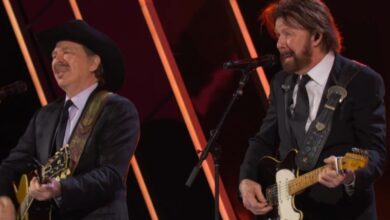
Live, “Carrie Anne” becomes something else entirely: less of a studio gem and more of a communal sing-along that shows how powerful a good chorus can be in a room. The Hollies had a stage advantage because their best recordings were already built around voices. When they performed it in front of an audience, the harmonies didn’t have to be “replicated” — they were the instrument. The joy of watching them do it live is seeing how effortless it looks when it’s actually difficult: three voices weaving without stepping on each other, phrasing matching even as the crowd noise rises, and the whole band playing with a bounce that keeps the song from turning into a stiff reenactment.
That’s why footage from the late 1960s hits so hard. You’re not just hearing a classic; you’re watching a band in its prime, inside the original cultural weather that created the song. Haircuts, suits, stage setups — it all feels like a time capsule, but the performance doesn’t. The tempo still moves like a modern pop record. The harmonies still feel “expensive.” And the lead vocal still has that confident pop clarity that makes every line easy to catch, even through old audio and vintage TV mixes. In that sense, “Carrie Anne” is the rare old hit that doesn’t require historical imagination. It works immediately.
There’s also a subtle emotional balance in the song that gets overlooked because it sounds so upbeat. The lyric is affectionate, teasing, a little romantic, but not syrupy. It feels like someone remembering a person with genuine warmth rather than writing a dramatic love story. That tone matches The Hollies’ strength: they excelled at making pop feel sincere without turning it into melodrama. “Carrie Anne” is flirty, bright, and forward-moving, which is exactly why it plays so well in live settings. It doesn’t demand silence; it invites motion. It’s the kind of song that makes people smile before they even realize they’re smiling.
By the time you reach later decades, the song becomes a marker of identity — the moment in the set where a band proves it can still deliver that 1967 sparkle in a completely different world. The arrangement may shift slightly with time, the vocal blend may age, but the essential charm remains because the song’s core is built on melody and rhythm, not production trends. That’s also why “Carrie Anne” keeps resurfacing in compilations, documentaries, and nostalgia programming: it represents a very specific standard of pop excellence. It’s not just a hit; it’s a demonstration of how to build a hit with brains and joy at the same time.
What makes that live-era energy so addictive is how the song “breathes” in performance. The chorus hits like a wave, but the verses keep the motion rolling, and the band never lets the groove sag. You can hear how the audience changes the feel: a studio recording is a perfect sealed object, while a live take is porous, reacting to the room’s noise and the band’s adrenaline. The Hollies were especially good at keeping their harmonies steady even when everything around them moved. That steadiness is part of the thrill — it’s like watching a tightrope walker run instead of walk, smiling the whole time.
Returning to the studio track after hearing live footage is like stepping back into a postcard version of 1967, where every element is framed to shine. The mix foregrounds what The Hollies did best: clarity. The guitar rhythm sits in the pocket, the vocals are stacked with precision, and the whole thing feels engineered to lift your mood without ever sounding frantic. It’s also a reminder of how effectively the band balanced pop gloss with band energy. Even in the studio, it doesn’t feel like session players polishing a product. It feels like a real group playing with intention, aiming for that sweet spot where a record is polished enough for radio but still human enough to feel immediate.
A later concert performance shows how “Carrie Anne” evolves when it’s no longer “new,” but beloved. The audience reaction tends to change from curiosity to recognition, and the band leans into that recognition by emphasizing the song’s singable turns. The tempo can feel a touch heavier, the sound bigger, but the charm remains because the chorus is built to survive any era. That’s the sign of a durable pop song: it isn’t dependent on one production moment. It can be played in a different decade, with different gear, in a different cultural climate, and it still lands because the hook is simply that strong.
By the 1980s, performances of “Carrie Anne” often feel like a celebration of the band’s own history, but not in a tired way. Instead, the song becomes a bridge between generations — older fans hearing it as a memory, newer listeners hearing it as a discovery. What’s striking is how well the melody carries across the years. The song doesn’t need reinvention to stay relevant. It needs conviction and a solid vocal blend, and The Hollies’ identity has always been rooted in those things. When the chorus arrives in later footage, it still has the same lift, as if the song refuses to let the room stay still.
The best way to understand why “Carrie Anne” stands out among The Hollies’ catalog is to compare it to their other mid-60s classics. “Bus Stop” has sharper storytelling and a slightly more dramatic swing; “Look Through Any Window” has that propulsive drive; “On a Carousel” spins with its own bright urgency. “Carrie Anne” sits in a special lane: it feels like pure color. The arrangement is confident but light on its feet, the harmonies are engineered to sparkle, and the steelpan moment adds a playful stamp that makes the song instantly recognizable. It’s a pop single that never loses its grin, even when you listen closely.
What also makes the song culturally sticky is how it represents the era’s idea of pop sophistication. In 1967, being “pop” didn’t mean being simple — it meant being efficient. You had to deliver a hook, a mood, and a personality fast. The Hollies were elite at this, and “Carrie Anne” is a masterclass in fast storytelling through sound. The opening harmonies act like a curtain rising, the verse moves briskly, and the chorus arrives with the confidence of a band that knows it has you. Then the record is gone, leaving you with a melody you can’t shake. That’s not accidental; that’s design.
The song’s staying power is also helped by how friendly it is to different listening contexts. It works as a driving song, a party song, a “radio in the kitchen” song, a nostalgia song, and a deep-dive song for people who love the craft of harmony. Not many records can do that. Some classics are classics because they’re dramatic. “Carrie Anne” is classic because it’s unbreakably pleasant without being shallow. There’s intelligence in its cheerfulness, and there’s a kind of emotional generosity in the way it gives the listener joy without asking for anything in return.
When people talk about The Hollies in the shadow of bigger headlines from the 1960s, songs like “Carrie Anne” are the reminder that pop history isn’t only written by the loudest revolutionaries. It’s also written by the bands who refined the form so well that the results became timeless. The Hollies’ harmonies, especially in this era, are a kind of signature architecture — bright, balanced, instantly identifiable. “Carrie Anne” is one of the clearest examples of that architecture working perfectly. It’s a record that doesn’t need myth-making. It just needs to be played.
And that’s why live clips keep circulating and studio versions keep getting rediscovered: the song offers a rare kind of uncomplicated happiness that still feels earned. It’s not naive; it’s skilled. It’s not a novelty; it’s built to last. Whether you encounter it through a grainy vintage performance, a clean remaster, or a later concert take, the essential effect stays the same: the chorus lifts, the harmonies bloom, and for a few minutes the world feels lighter. That’s the real legacy of “Carrie Anne” — not just chart history, but the way it continues to do its job, brilliantly, every single time it plays.