The Silent Moment That Changed the Super Bowl: Why Budweiser’s “American Icons” Spoke Louder Than Any Ad
Budweiser didn’t script it, over-direct it, or try to force meaning into the frame — and that quiet eagle moment ultimately landed with more weight than almost any Super Bowl commercial in recent memory. In a broadcast traditionally dominated by noise, punchlines, and celebrity spectacle, the brand chose restraint. That decision alone set the tone for something rare: an ad willing to trust silence, patience, and the audience’s emotional intelligence instead of demanding attention through volume.
Super Bowl commercials are usually engineered with precision to trigger laughs, spark controversy, or feature faces everyone already knows. Budweiser’s 2026 spot, “American Icons,” deliberately stepped away from that formula. There were no celebrities, no dialogue explaining the message, and no clever twist at the end. Instead, it relied on two symbols deeply woven into American imagery — the Clydesdale and the bald eagle — and allowed their interaction to speak in a way words never could.
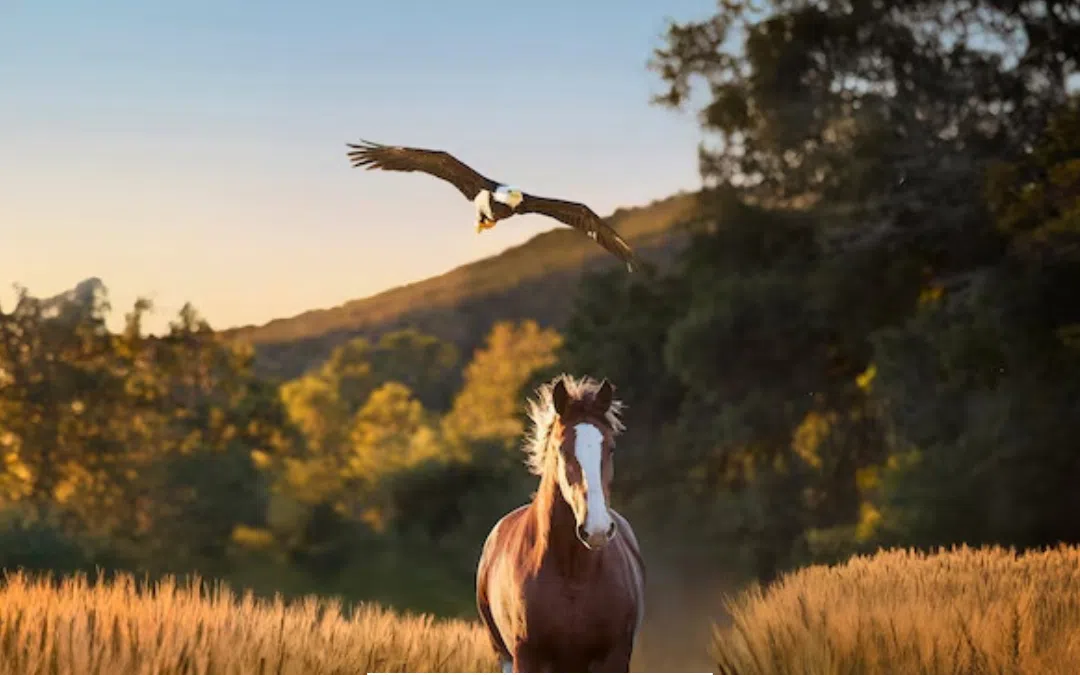
At the center of the story is a young Budweiser Clydesdale foal that encounters a fallen eaglet, vulnerable and grounded. What follows isn’t dramatized with urgency or manipulation. The bond between them develops slowly, shaped by weather, time, and shared presence. Rain falls. Seasons shift. Growth happens without commentary. The relationship unfolds the way real trust does — not through grand gestures, but through consistency and quiet companionship.
As the eagle matures and gains strength, the ad resists the temptation to rush toward its payoff. Instead, it lingers. The camera allows viewers to sit with uncertainty, mirroring the unease many feel in the real world. When the eagle eventually takes flight from the horse’s back, the moment feels earned rather than staged. It doesn’t arrive with fireworks. It arrives with relief — and that makes all the difference.
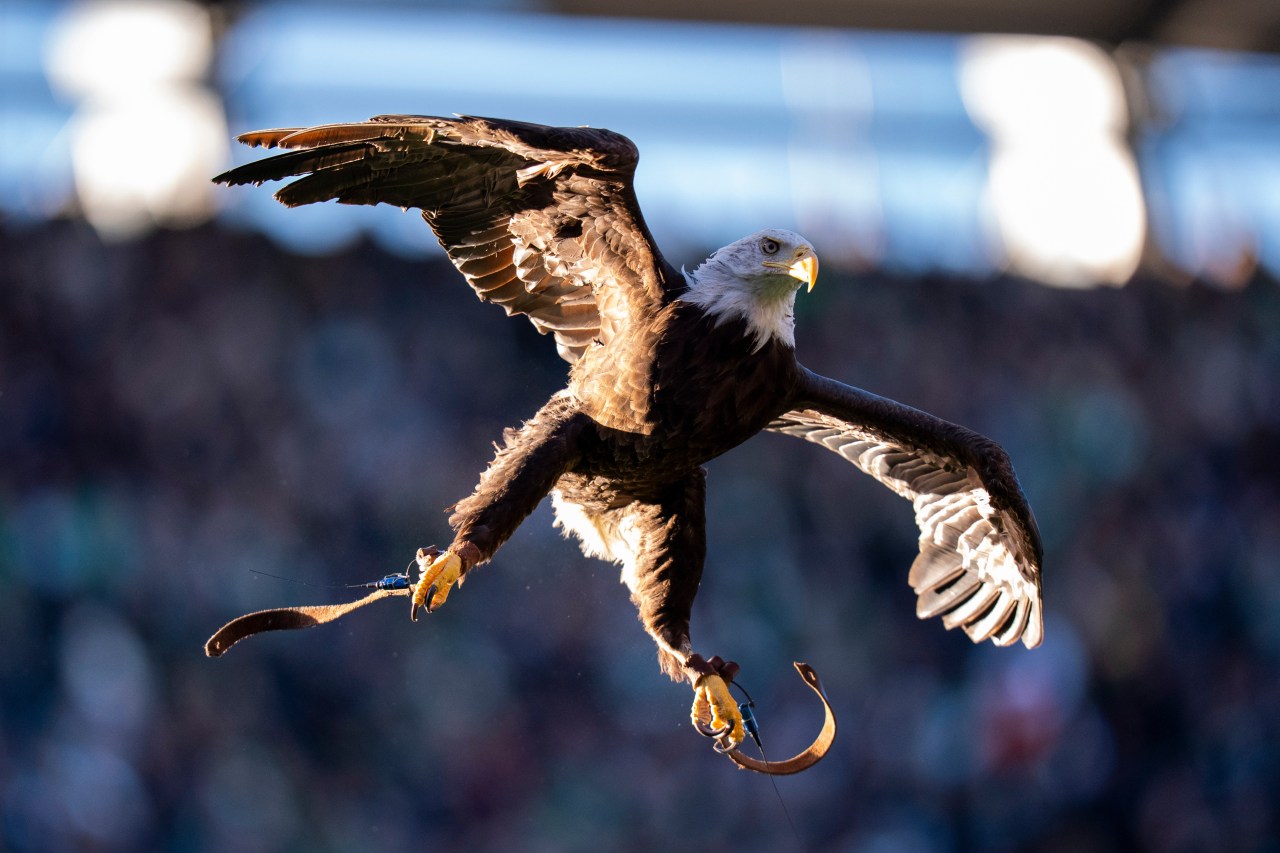
That single image — an eagle rising from a Clydesdale’s back — carries almost mythic weight. It evokes shared journeys, mutual reliance, and the idea that freedom doesn’t always begin alone. It suggests that strength can be borrowed, offered, and returned. Rather than feeling symbolic in a forced way, it feels inevitable, as if the story could only end this way.
What makes the moment especially powerful is how little Budweiser interferes with it. There is no narration instructing viewers what to feel. No slogan cutting in to explain the metaphor. The brand shows rare confidence by stepping aside, allowing emotion to surface naturally. In doing so, vulnerability becomes the point, not something to be hidden or dressed up.

Placed among louder, flashier ads packed with jokes and celebrity cameos, Budweiser’s commercial stood apart because it didn’t compete — it waited. That patience drew viewers in. The choice of Lynyrd Skynyrd’s “Free Bird” didn’t overwhelm the imagery; it complemented it, reinforcing themes of endurance, release, and hard-earned freedom deeply embedded in American cultural memory.
The music swells, but never hijacks the scene. Instead, it feels like an emotional undercurrent that had always been there, simply waiting for the right moment to surface. In that sense, the song functions less as a soundtrack and more as a shared memory, reminding viewers of simpler narratives built around perseverance and hope.
Importantly, the eagle’s flight doesn’t feel engineered for virality. It wasn’t designed as a meme-ready moment or a guaranteed emotional trigger. It resonates because the story allowed space for anticipation. The silence before movement matters just as much as the movement itself, creating a pause that invites reflection instead of demanding reaction.
In a media landscape obsessed with instant payoff, Budweiser took a risk by slowing everything down. That risk paid off because it trusted viewers to engage on a deeper level. Rather than shouting meaning, the ad whispers it — and that whisper lingers long after louder messages fade.
The phrase “Made of America” lands not as a boast, but as a quiet observation. It feels earned rather than declared. The commercial suggests that American identity isn’t found in spectacle, but in endurance, trust, and the willingness to carry one another through uncertain moments.
By the time the screen fades, there’s no punchline to repeat and no tagline begging to be quoted. What remains is a feeling — a sense that something honest was shared without being explained. In an era dominated by overproduction and overstatement, that restraint becomes the ad’s most powerful statement.
In the end, Budweiser’s “American Icons” didn’t try to be meaningful — it trusted meaning to reveal itself. That trust is what turned a simple image into a lasting moment. Long after the noise of the broadcast faded, the silence stayed behind, reminding viewers that sometimes the bravest creative choice is to do less, not more.