Kid Rock Leads Turning Point USA’s Alternative Halftime Show Amid Super Bowl LX
The alternative halftime show didn’t arrive with fireworks or a dramatic countdown. Instead, it opened with a clear sense of purpose. As Super Bowl LX captured the attention of millions, Turning Point USA launched its own “All-American Halftime Show” as deliberate counter-programming—part tribute, part protest, part digital gathering. Framed as a response to the NFL’s choice of headliner, the event was presented as an answer for viewers who felt disconnected from the official show. In the hours before kickoff, promotion spread rapidly across social media, positioning the broadcast as both a patriotic concert and a memorial honoring the organization’s late founder, Charlie Kirk.
As halftime approached, the alternative show took on the urgency of a live moment meant to be experienced together. Supporters organized watch parties, shared links across platforms, and urged others to tune in when the game clock hit intermission. The production didn’t attempt to mirror the NFL’s stadium spectacle. Instead, it leaned into a streaming-first aesthetic, more intimate but unmistakably message-driven. Hosts framed the broadcast as a space for viewers who felt overlooked, and that framing resonated quickly. As anticipation for the official halftime show built online, the rival stream gained traction as a parallel cultural event unfolding at the same time.
One of the first twists came when technical issues forced a sudden change in streaming plans. Viewers reported difficulty accessing the show on its original platform, prompting organizers to redirect traffic to YouTube. The hiccup became part of the narrative almost instantly, with supporters interpreting it as resistance or interference. The shift ultimately consolidated viewers in one place, accelerating engagement. By the time the performance fully began, the live chat moved at a relentless pace, filled with flags, slogans, and messages of remembrance, creating the feeling of a digital crowd packed shoulder to shoulder.
At the heart of the broadcast was a tribute to Charlie Kirk. The show made clear from the outset that this dedication wasn’t symbolic filler but a central reason for the event itself. Hosts spoke directly to his legacy, framing the halftime slot as a moment of national visibility for his supporters. For many viewers, the broadcast functioned as a shared act of remembrance taking place during one of the most watched television events of the year. That contrast—grief unfolding alongside spectacle—gave the alternative show a weight that extended beyond entertainment and fueled its spread across social feeds and headlines.
Kid Rock’s headlining performance served as the show’s anchor and primary draw. His set leaned heavily into familiarity and attitude, delivering exactly what his audience expected. The staging emphasized Americana themes and moments designed to translate cleanly into short clips. Every chorus felt built for social sharing, and every pause invited audience affirmation. The performance wasn’t framed as a musical experiment but as a declaration. Fans treated it less like a concert and more like a statement, responding in real time with chants and commentary that reinforced the show’s identity.
The lineup broadened the event into a full country-rock showcase, adding artists like Brantley Gilbert, Lee Brice, and Gabby Barrett to maintain momentum. Their appearances helped shape a consistent emotional arc centered on resilience, pride, and connection to tradition. Rather than rushing through quick cameos, the show allowed each performance space to breathe, reinforcing the idea that this wasn’t a novelty act but a complete alternative experience. For viewers who chose this broadcast, it was positioned as something they didn’t have to sacrifice entertainment value to watch.
Patriotic imagery ran throughout the production, serving as both aesthetic and message. Visuals, musical choices, and spoken moments all reinforced a specific vision of American identity. Cinematic camera movements and dramatic lighting added to the feeling of significance, making the broadcast feel closer to a rally-concert hybrid than a standard music show. The approach was deliberate: keep the energy high while grounding it in symbolism meant to resonate emotionally. The result was a show that felt celebratory but serious, designed to communicate conviction as much as excitement.
The existence of the alternative show was inseparable from what it was responding to. Bad Bunny’s official halftime performance, centered on Puerto Rican pride and Spanish-language global culture, was always destined to dominate conversation. Turning Point USA didn’t attempt to stop that discussion; it positioned itself alongside it. By offering a competing broadcast, the organization turned halftime into a split-screen cultural moment. Attention flowed in both directions, with each performance amplifying the other’s visibility through contrast.
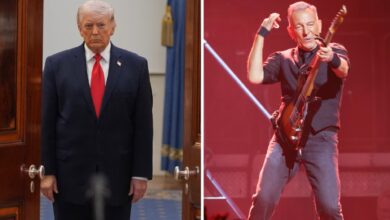
The situation intensified when Donald Trump publicly criticized Bad Bunny’s halftime show after the game. His remarks pushed the conversation beyond entertainment and firmly into political territory. For supporters of the alternative broadcast, the comments validated their decision to create a separate event. For others, they reinforced the importance of representation on a global stage. In either case, the reaction ensured the halftime discussion would dominate news cycles well beyond game night.
What made this moment stand out wasn’t controversy alone—halftime debates are nothing new. It was the scale and planning behind the response. This wasn’t limited to online outrage or hashtags; it was a fully produced broadcast with major performers and a clear strategy to capture live attention. By treating the halftime window as contested space, the alternative show redefined what counter-programming could look like during a cultural event of this size.
Audience numbers quickly became part of the narrative. Supporters shared screenshots and tallies, celebrating the reach of the stream. Critics questioned the metrics and their meaning. But regardless of interpretation, the fact that the broadcast drew enough attention to warrant widespread coverage marked a success in the modern attention economy. In a media landscape driven by clips and reactions, visibility itself is currency.
The memorial aspect gave the broadcast emotional depth uncommon in similar efforts. By centering Charlie Kirk’s legacy, the show combined music, politics, and mourning into a single moment. For viewers who felt personally connected, it transformed the halftime slot into a communal ritual. That blend of grief and message helped explain why the broadcast resonated beyond its core audience and why it was discussed as more than just an alternative concert.
On the other side, supporters of the official halftime performance framed Bad Bunny’s set as a reflection of contemporary America and its global influence. The contrast between the two broadcasts—one emphasizing multicultural celebration, the other highlighting traditional patriotism—created a clear narrative line. Two stages, two identities, one night. The result was a cultural divide that extended well past the final whistle.
Ultimately, what made the alternative halftime show notable wasn’t only who performed or what songs were played. It was the boldness of building a parallel stage during the most watched live moment of the year—and succeeding in drawing an audience. The event highlighted a shift in how shared cultural moments function. Halftime is no longer a single experience; it’s a choice. And Super Bowl LX demonstrated that even the most unified television event can now exist as multiple realities, each convinced it represents the true spirit of the moment.