When Time Stood Still at Wembley: George Michael’s “Last Christmas” in December 2006
“Last Christmas” isn’t just a song — it’s a shared emotional timestamp that seems to reappear every year without asking permission. The moment its opening notes arrive, people are no longer just listening; they are remembering. Streets feel quieter, rooms feel warmer, and something unspoken settles in. Few holiday songs manage to carry both joy and melancholy so effortlessly, and that balance is exactly why it continues to resonate across generations.
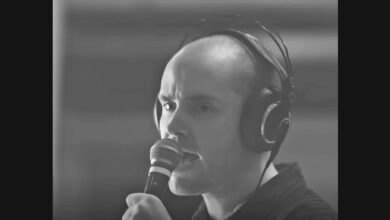
By December 2006, George Michael was no longer simply a pop star revisiting an old hit. He was an artist carrying decades of personal history, loss, growth, and reflection in his voice. When he stepped onto the stage at Wembley Arena that winter, the atmosphere already felt different, as if the audience understood they were about to experience something more intimate than a standard holiday performance.
From the first line, the crowd was locked in. There was no hesitation, no searching for the words. Every lyric was already memorized, already lived with. Instead of overpowering the performance, the audience became part of it, singing back not out of excitement, but recognition. It felt less like a concert and more like a collective ritual.
What made that night stand out wasn’t volume or spectacle, but restraint. George didn’t rush the phrasing or lean into theatrics. He allowed space between the lines, letting the emotion breathe. Each pause felt deliberate, as if he was giving both himself and the audience time to feel what the song had come to represent over the years.
The venue itself added to the weight of the moment. Wembley Arena, known for hosting massive, high-energy shows, felt unusually hushed. Thousands of people stood together, yet the performance carried the intimacy of a small room. You could sense that everyone was listening not just with their ears, but with memory.
By this point in his career, George’s voice had matured into something deeper and more textured. There was a softness to his delivery that hadn’t been there in the original recording. The youthful heartbreak of the 1980s version had transformed into reflection — not less powerful, but more knowing.
Every December, “Last Christmas” returns to radio playlists, shops, and family gatherings. It’s often treated as background music, something familiar and comforting. But this live performance refuses to stay in the background. It demands attention, pulling listeners into a quieter, more personal space.
There’s something uniquely powerful about hearing a crowd sing a song back to its creator. In Wembley, it felt like the audience was carrying the song for him as much as he was carrying it for them. The exchange was gentle, mutual, and deeply human.
The performance also carried a sense of time passing — not in a sad way, but in an honest one. You could hear the years in George’s voice, and instead of weakening the song, they strengthened it. The lyrics felt less like a story being told and more like a memory being revisited.
For many watching later, knowing what the future would hold for George adds another layer of emotion. Without intending to, the performance now feels like a quiet farewell — not dramatic or final, but tender. It captures an artist at peace with his past, standing comfortably inside it.
What’s striking is how little the song needed to be changed. No radical rearrangement, no modern updates. The power came from sincerity. Sometimes, the most moving performances are the ones that trust the material and the moment completely.
The lighting, the pacing, the audience — everything worked together without trying to steal focus. Christmas lights glowed softly, reinforcing the idea that this wasn’t about celebration alone, but reflection. About what we give, what we lose, and what stays with us.
For listeners revisiting the performance years later, it often triggers unexpected emotions. Not just romantic memories, but snapshots of who they were when they first heard the song. It becomes a bridge between past and present, reminding people how much life has happened in between.
This is why the Wembley performance endures. It doesn’t shout its importance. It doesn’t try to be definitive. It simply exists, honest and exposed, allowing people to project their own memories onto it.
In the end, that night in December 2006 feels like more than a live rendition. It feels like a moment when an artist and an audience met on equal ground, sharing a song that had outgrown its original meaning and become something larger.
“Last Christmas” will always return every year. But this version lingers longer than most, like a quiet conversation you replay in your head — wrapped in winter air, soft lights, and memories that never truly fade.