Britain’s medal dream slips away as Fear and Gibson fall short in Milan 2026
Britain’s Lilah Fear and Lewis Gibson sat side by side in the kiss and cry area after completing their free dance at the Milano Cortina 2026 Winter Olympic Games, their expressions revealing a mixture of shock, disbelief, and heartbreak. The bright arena lights reflected off the ice behind them, but the emotional weight of the moment seemed far heavier than the scores about to appear. It was a scene that captured both the beauty and cruelty of Olympic sport in a single frame.
Great Britain’s 32-year wait for an Olympic figure skating medal will stretch on after the ice dance duo’s medal hopes unraveled in dramatic fashion in Milan. Entering the Games as genuine contenders, Fear and Gibson had carried not only their own ambitions but also the expectations of a nation eager to see a return to the podium in this iconic discipline.
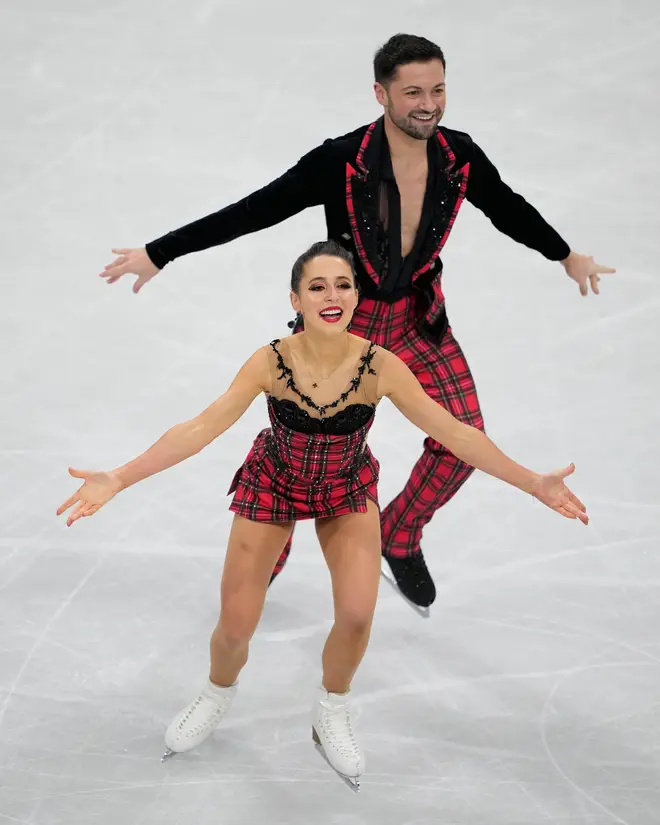
Competing at the Assago Arena under the watchful eyes of British legends Jayne Torvill and Christopher Dean, the pair delivered their lowest free dance score of the season at the worst possible moment. The presence of Britain’s most celebrated ice dancers added an emotional layer to the occasion, turning what was already a high-pressure skate into an almost symbolic passing-of-the-torch opportunity that ultimately slipped away.
Two early stumbles in their free dance routine immediately disrupted the flow and confidence that had defined much of their season. After holding fourth place following the rhythm dance, they needed precision and authority. Instead, those costly errors left them chasing lost points, and their final free dance score of 118.85 was nearly eight points below their season’s best.
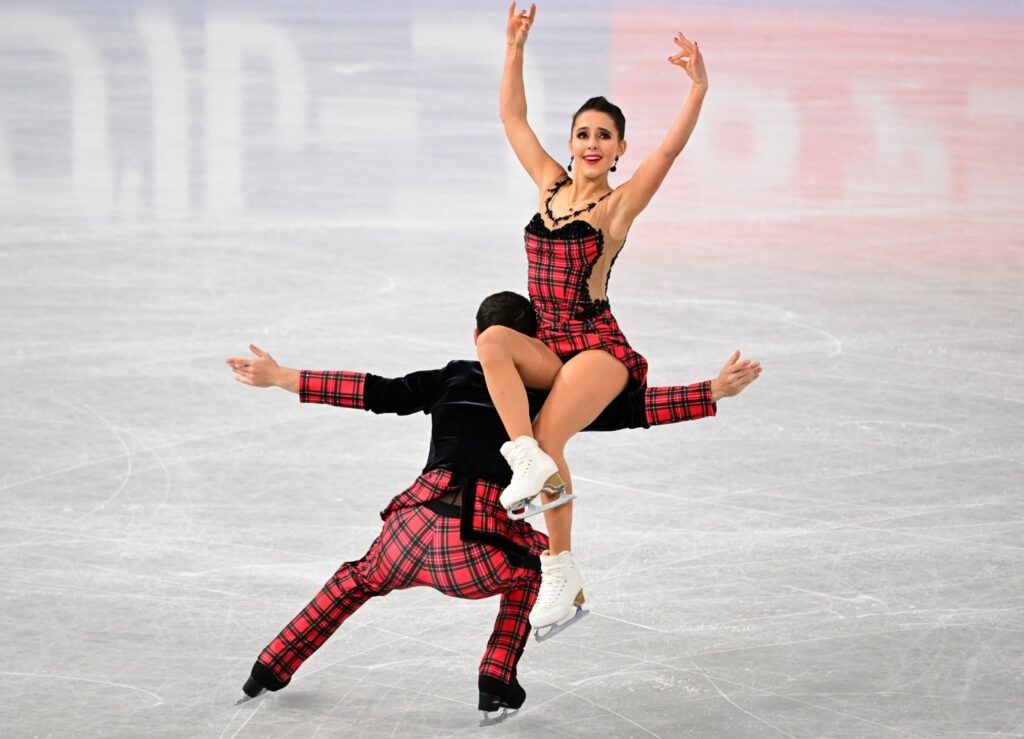
The disappointment was visible long before the numbers were confirmed. As they completed their program, the energy that usually radiates from their performances felt subdued. Their seventh-place finish marked a significant drop in the standings, a result that stood in stark contrast to the upward trajectory they had built through years of steady international success.
An emotional Lilah Fear struggled to articulate her feelings in the immediate aftermath. She admitted she could hardly believe what had happened, replaying the mistakes repeatedly in her mind. The enormity of the Olympic stage, combined with the sudden collapse of a medal dream, left her searching for words and acknowledging that true understanding would take time.
She had hoped to embrace the Olympic experience fully, skating freely and authentically for herself and her partner. The pair had often spoken about performing with joy and connection rather than fear. Yet on this night, the fine margins of elite ice dance proved unforgiving, and the pressure of the moment seemed to weigh heavier than anticipated.
Starting the evening only 0.71 points off the podium, Fear and Gibson were within striking distance of bronze. Their total score of 204.32 ultimately saw them slip well down the rankings. Canadians Piper Gilles and Paul Poirier capitalized on the opportunity, delivering when it mattered most and securing bronze with 217.74 after a commanding free dance.
The result brought a painful end to what had been framed as a potential breakthrough moment for British ice dance. Over recent seasons, Fear and Gibson had claimed medals at World and European Championships, establishing themselves as consistent contenders. Many believed Italy 2026 could finally mark Britain’s long-awaited return to Olympic figure skating glory.
The Games had begun promisingly, with a season’s best rhythm dance score in the team event that reinforced their medal credentials. However, a slight step-out from a twizzle during their individual rhythm dance earlier in the week proved costly, pushing them down the standings and leaving little margin for error in the decisive free dance.
Heading into the final segment in fourth place, they were positioned ahead of Italy’s Charlene Guignard and Marco Fabbri but behind the Canadians. To climb onto the podium, they realistically needed a career-defining performance. Instead, the routine to a medley of “The Bonnie Banks of Loch Lomond” and “500 Miles” struggled to recover momentum after the early mistakes.
The emotional toll was unmistakable as they struck their final pose. The pain etched across their faces reflected not only the missed opportunity but also the broader weight of expectation. For Team GB, hopes of celebrating a first medal of these Games were abruptly extinguished, leaving supporters to contemplate another near-miss.
Even so, the strength of the competition cannot be ignored. Gilles and Poirier posted a massive free dance score of 131.56, raising the bar significantly. In reality, even a near-flawless performance from the British duo might not have been enough to surpass the Canadians on this particular night, underlining the exceptional standard at the top of the field.
Above them, the battle for gold and silver showcased the discipline at its very highest level. Evan Bates and Madison Chock secured silver with 224.39, while Guillaume Cizeron and his new partner Laurence Fournier Beaudry claimed gold with 225.82. Their technical sharpness and compositional mastery emphasized the gap Fear and Gibson must still bridge.
For Britain, the wait for a figure skating medal continues, recalling memories of Torvill and Dean’s bronze in Lillehammer in 1994 and their iconic gold a decade earlier in Sarajevo. Fear and Gibson remain among the nation’s brightest hopes, but Milan 2026 serves as a reminder that Olympic success demands perfection at precisely the right moment — and offers little forgiveness when that moment slips away.