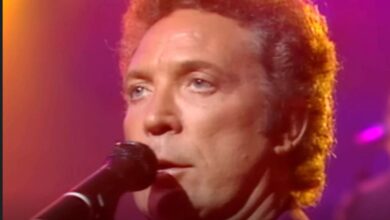
Alan Jackson’s Final Nashville Show Marks the Closing Chapter of a Country Legend
Some concert tours are built around celebration, while others feel like a long victory lap after decades of success. Every once in a while, however, a moment arrives in music that carries a deeper weight — the kind you can feel in the quiet before the first chord. For fans of traditional country music, the upcoming final Nashville performance by Alan Jackson in 2026 represents exactly that kind of moment. It is not simply another stop on a tour schedule. It marks the closing chapter of one of the most influential careers country music has seen in the last forty years.
Alan Jackson has spent more than three decades defining what modern country storytelling sounds like. Since emerging in the late 1980s, the singer from Newnan, Georgia built a catalog of songs that blended traditional country roots with contemporary appeal. His voice carried the tone of small-town America — reflective, plainspoken, and deeply personal. Through songs like “Chattahoochee,” “Remember When,” and “Where Were You (When the World Stopped Turning),” Jackson created music that connected everyday life with national moments, turning ordinary stories into songs that resonated far beyond country radio.
By the numbers alone, his impact is enormous. Over the course of his career, Alan Jackson has recorded dozens of studio albums, earned more than thirty-five number-one singles on the country charts, and sold tens of millions of records worldwide. His songwriting helped keep traditional country values alive during an era when the genre was rapidly evolving. While other artists leaned toward pop crossover success, Jackson consistently returned to the roots of honky-tonk storytelling, steel guitars, and straightforward lyrics.
In 2021, Jackson publicly revealed something that added new context to his performances. He shared that he had been living with Charcot-Marie-Tooth disease, a hereditary neurological condition that affects the nerves and can gradually impact balance and mobility. The disorder is not life-threatening, but it does slowly affect muscle control over time. For someone whose career has been built on standing under stage lights for thousands of shows, the condition presents obvious challenges.
When Jackson first spoke openly about the diagnosis, he did so in a way that reflected his usual humility. He explained that fans might notice changes in the way he moves onstage, particularly his balance. Rather than hiding the issue, he chose transparency. His comment about not wanting fans to think he appeared unsteady for the wrong reasons quickly resonated with listeners who appreciated the honesty.
Despite the challenges, Jackson continued performing through much of the early 2020s. His “Last Call: One More for the Road Tour” was announced as a gradual farewell run that would allow him to continue performing while he still felt capable. The tour became both a celebration of his music and a chance for longtime fans to see him live one more time before he stepped away from major touring schedules.
The announcement that the final show would take place in Nashville added symbolic meaning to the moment. Nashville has long been the center of the country music industry, and it played a crucial role in shaping Jackson’s career from the very beginning. When he first arrived in the city as a young songwriter and singer in the 1980s, few could have predicted that he would go on to become one of the defining voices of the genre.
Over the decades, Jackson’s relationship with Nashville evolved alongside the industry itself. He remained one of the artists most closely associated with preserving traditional country sounds during a period when the genre frequently leaned toward more commercial influences. His music served as a reminder that storytelling and authenticity could still drive major success.
The planned Nashville performance scheduled for June 27, 2026, now carries the feeling of a milestone not only for Jackson but for an entire generation of country fans. For many listeners who grew up in the 1990s, his songs formed part of the soundtrack of everyday life — road trips, weddings, heartbreaks, and quiet evenings at home. Hearing those songs performed live again in Nashville will likely feel like revisiting a shared musical history.
Jackson’s influence extends beyond chart success or album sales. Younger artists often cite him as one of the figures who proved that traditional country music could remain relevant even during periods of major industry change. His writing style, built around vivid storytelling and emotional clarity, helped shape the expectations for what a country song could accomplish.
One reason his music has endured is its emotional accessibility. Many of Jackson’s most beloved songs are rooted in personal memory — family, hometown life, and moments that feel universally recognizable. Tracks like “Remember When” capture the quiet passage of time in a way that feels intimate rather than grand. Others, like “Where Were You,” reflect national grief and resilience with understated sincerity.
For fans, the idea of a final concert naturally brings mixed emotions. There is celebration in recognizing the remarkable career Jackson built, but also a sense of farewell to a voice that has been present for decades. Few artists manage to maintain both commercial success and deep emotional connection with listeners across multiple generations.
At the same time, Jackson himself has always approached his career with a grounded perspective. Even during the peak of his fame, he often spoke about music as something that belonged as much to the audience as to the artist. That attitude may be part of the reason his farewell feels less like a dramatic exit and more like a respectful closing of a long chapter.
The upcoming Nashville performance will likely draw fans from across the country who want to witness that final moment. For many, it will not simply be a concert but a chance to say goodbye to an era of country music that Jackson helped define. Standing on a Nashville stage one last time, the singer who once arrived as an unknown songwriter will close a career that changed the sound of modern country.
When the final note fades on that June night in 2026, it will mark more than the end of a show. It will signal the conclusion of one of the most influential journeys in country music history — a career built on honesty, tradition, and songs that will continue to echo long after the stage lights dim.