Courage Knows No Age: Teen Rescues Three Girls and a Police Officer from a Mississippi River
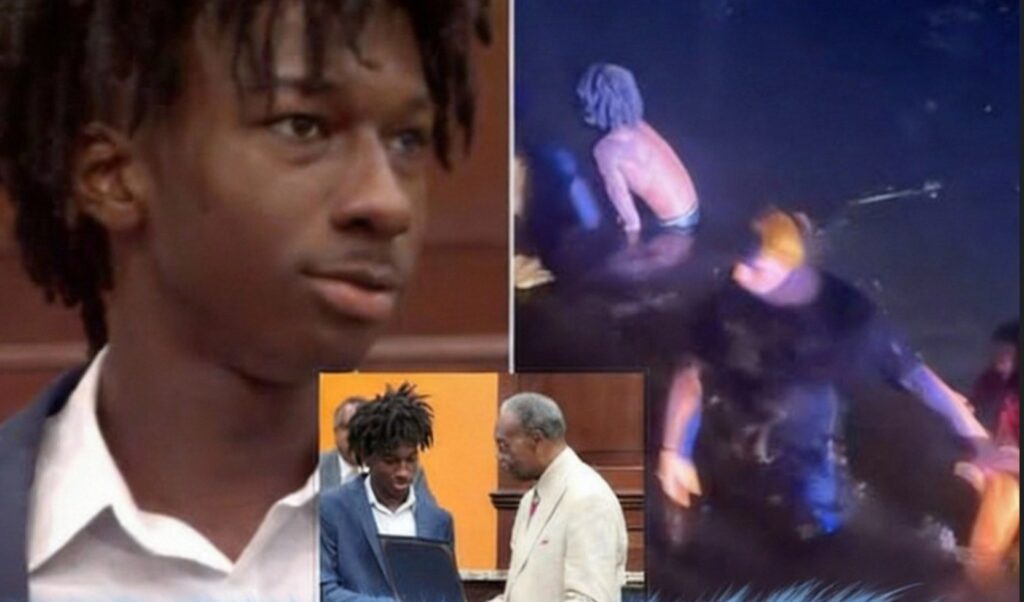
It started the way too many tragedies start: a dark early-morning moment when routine turns into panic before anyone has time to process it. Around 2:30 a.m. on July 3, 2022, at the Interstate 10 boat launch in Moss Point, Mississippi, a car carrying three teenage girls rolled off the end of the launch and into the Pascagoula River. In the span of seconds, water swallowed the tires, then the doors, then the safety everyone assumes they have when they’re still on land. Witnesses later described the vehicle drifting roughly 20 feet from shore as it began to sink, the kind of distance that looks small until you’re staring at it in cold, moving water and realizing you might not make it back.
Corion Evans was 16 years old, and he was close enough to see the entire nightmare unfold. He wasn’t on duty, wasn’t trained, wasn’t wearing a uniform, and wasn’t waiting for instructions. He just reacted like somebody who couldn’t live with himself if he stood there and watched. In interviews afterward, he described the scene with the blunt clarity of someone still replaying it frame by frame: the car going down, the screams, the immediate realization that time was the enemy. He kicked off his shoes, pulled off his shirt, and ran toward the water with the kind of decision-making that doesn’t feel heroic while you’re doing it—only inevitable.
The river at night isn’t a swimming pool. Visibility is low, footing is uncertain, and the current doesn’t care how brave you are. When Corion hit the water, the girls were fighting for survival, and that fight can turn chaotic fast. People who can swim still drown when panic hijacks their bodies. People who can’t swim don’t even have that chance. Corion’s job in those first moments wasn’t just pulling someone out; it was keeping heads above water long enough for anyone to get a grip on reality. He later said he was trying to keep them afloat and move with them at the same time—doing two exhausting things at once while adrenaline masked the danger.
Another layer of the story that often gets lost in social media versions is that Corion wasn’t completely alone. Reports indicate a friend also jumped in and helped get the girls onto the top of the vehicle. That detail matters because it shows how fast human beings can become a rescue team when no official team has arrived yet. In those minutes, there wasn’t a “scene command.” There was just a river, a sinking car, and a handful of teenagers making split-second choices. The kind of choices that either haunt you forever or save someone from being a headline.
Then the first responders arrived, and the situation didn’t instantly become safer—because rescue attempts in water can be as dangerous as the accident itself. Moss Point Police Officer Garry Mercer responded to the call and entered the water to help. By the time he got there, Corion was already in the river, already engaged, already doing the work. Mercer swam out toward the victims, and the rescue shifted into that delicate phase where the line between saving someone and being pulled under yourself becomes paper-thin. It’s one thing to swim out. It’s another thing to get back while supporting someone who’s terrified and thrashing.
One of the girls, according to accounts from police and reporting afterward, couldn’t swim. Mercer tried to bring her in by carrying her on his back. That’s a classic lifesaving technique on paper, but real life adds panic—especially in darkness, in deep water, with fear taking over. The girl panicked, and the struggle caused Mercer to go under. He swallowed water and began fighting for breath, the kind of fight that can turn a rescuer into a victim in seconds. And suddenly, the story wasn’t just about three girls. It became about an officer drowning while trying to do his job.
Corion saw it happening. That’s the moment most people freeze, because the mind can’t stack emergencies that fast. But he didn’t freeze. He turned around and noticed Mercer going under, calling for help, losing control of the situation. Corion swam over and grabbed the officer, then worked him back toward where he could stand. The image is almost surreal: a teenager towing a grown man in full crisis, in river water, at night, while still trying to keep victims safe. But this is why people started calling it “two rescues,” because the second one wasn’t optional—it was the difference between the officer surviving or disappearing.
In the retelling, it’s easy to make the hero sound superhuman. What makes this story hit harder is how human Corion sounded afterward. He didn’t talk like someone seeking applause. He talked like someone explaining what any decent person should do, even though most people wouldn’t. He described seeing the officer struggle, getting to him, and swimming him back until he felt the ground under his feet. That detail—waiting until you can walk—tells you how close it was. In water rescues, you don’t “win.” You just survive long enough to reach the next safe inch.
By the time the chaos eased, the headline numbers became clear: three teenage girls and one police officer were rescued. Reports said the officer and the girls were taken to the hospital and were recovering. That’s the part people skim past, but it’s the quiet miracle inside the story. Not everyone walks away from a river accident. Not everyone gets a second chance after a submerged vehicle. The fact that all four survived is the type of outcome communities remember for years, because everyone knows how easily it could have gone the other way.
Local officials didn’t treat it like a fleeting viral moment. The Moss Point Police Department publicly credited Corion’s actions, and the police chief praised his bravery and selflessness, stressing that his help changed the outcome. In a world where hero stories can feel packaged, this one carried the official weight of people who understand risk. They weren’t applauding a dramatic video clip. They were acknowledging the reality: when you go into dark water during a rescue, you’re gambling with your own life. Corion took that gamble twice in the same night.
As the story spread, national outlets picked it up, and that’s when the internet did what it always does: it turned a real human moment into a symbol. Some people saw Corion as proof that courage isn’t a matter of age. Others saw him as a reminder that everyday heroes exist outside of uniforms and titles. And some people saw something even more personal: the way young people can rise instantly, without planning, when someone else is in danger. That kind of spontaneous moral clarity is rare, and it hit a nerve because so many people wonder what they would do—then realize they don’t actually know.
The coverage also revealed a small but telling detail about how the crash happened. Reports quoted officials saying the driver later explained she had been following GPS navigation and didn’t realize she was heading into the river. That detail feels almost too modern to believe, yet it’s terrifyingly plausible. It also shows how thin the line is between a normal night and disaster—one wrong turn, one misread path, and suddenly you’re driving into water. For a community, it becomes a warning and a story at the same time: technology helps, but it can’t replace awareness.
Recognition kept coming. Corion received formal commendations from city leadership, including a Certificate of Commendation, and the story continued beyond the initial headlines. That matters because heroism doesn’t pay rent, doesn’t automatically create opportunities, and doesn’t guarantee support once the news cycle moves on. In some versions of the story, people rallied around him in hopes of helping with future goals like college. Whether or not every effort succeeds, the impulse says something important: when communities witness real courage, they want to return it somehow.
There’s also a bigger lesson in the way this event unfolded: rescues are rarely clean. The public often imagines a heroic grab and a quick pull to safety. What actually happens is messy—panic, exhaustion, slippery surfaces, swallowed water, near-misses, multiple people in distress at once. Corion’s story highlights the truth that water rescues are among the most dangerous emergencies because the environment itself is the threat. The river doesn’t pause because you’re trying your best. It keeps moving, keeps pulling, keeps turning a rescue into a test of endurance.
What ultimately makes this story stick isn’t just that a teenager saved lives. It’s the sequence: he saved three girls from a sinking-car situation, then noticed the officer drowning and intervened again. That second choice is the one that elevates the entire narrative from bravery to uncommon selflessness. Many people might have been spent after the first rescue, physically and mentally. Corion wasn’t. He kept scanning the water and responded to the next crisis without hesitation. That’s why the phrase “courage knows no age” doesn’t feel like a slogan here—it feels like an accurate summary of what happened in that river.