Dolly Parton’s “Coat Of Many Colors”: The Patchwork Story That Stitched Love, Poverty, And Pride Into American Music
“Coat of Many Colors” sits in that rare category of songs that feel like folklore even when the details are painfully specific. Dolly Parton didn’t write it as a showpiece for vocal fireworks or a clever twist ending. She wrote it like a camera pointed straight at her childhood: a small girl in the Smoky Mountains, a family stretching every dollar, and a mother turning scraps into something that could pass as warmth, dignity, and love. The hook isn’t an earworm in the modern sense—it’s a sentence a kid would repeat to herself like armor. That’s why the song travels so far beyond country radio and why people who don’t share Dolly’s background still recognize themselves in it.
The story inside the lyrics is famously simple and devastating: her mother makes her a patchwork coat from rags, and Dolly wears it proudly because it’s loaded with care and imagination. Then the outside world gets its turn. At school, other kids mock the coat and, by extension, the poverty it represents. The cruelty isn’t cartoonish; it’s casual, thoughtless, and realistic, the kind that sticks to a person for decades because it arrived so early. Dolly’s brilliance is that she doesn’t write revenge. She writes translation—she takes something the world labels as “less than” and reframes it as proof of being loved. That move is the backbone of her entire public persona: sparkle that never denies hardship, humor that never cancels tenderness.
Parton has said, more than once, that this is the song she’s most proud of—not because it charted the highest, but because it’s the most personal and carries the clearest moral center. That matters coming from an artist whose catalog includes enough classics to fill several lifetimes of setlists. “Coat of Many Colors” isn’t just autobiographical; it’s an origin statement. It explains why Dolly’s generosity doesn’t feel like a branding campaign and why her optimism doesn’t read as denial. The song tells you she learned early how to turn scarcity into narrative power, and how to survive being underestimated without becoming bitter.
There’s also a little bit of songwriter mythology around how it arrived on paper—one of those details fans love because it sounds exactly like Dolly: inspiration strikes on the road, and she grabs whatever she can to write it down. Accounts describe her scribbling the lyrics on the back of a dry-cleaning receipt while she was out touring, a tiny, ordinary object that suddenly becomes a vessel for something that will outlive all of us. It’s the perfect symbolic detail: a receipt is proof of transactions and survival math, and she turns it into a hymn about value that can’t be purchased.
The studio recording is famously restrained. No bloated production, no winking irony, no attempt to “upgrade” the story for radio. Dolly sings it as if she’s sitting at the edge of a bed telling a kid, “This is what happened, and this is what it meant.” The melody carries a gentle, almost nursery-rhyme steadiness, which makes the bullying lines hit harder because the music refuses to dramatize them. That contrast—soft delivery, sharp reality—is part of the song’s durability. You can play it for children as a bedtime story, and you can play it for adults as a confrontation with the ways we learn shame from strangers.
But the song really reveals its full power in performance, because Dolly the singer becomes Dolly the narrator in real time. In live versions, she often lets the lyric breathe with small pauses, little spoken-intention moments inside the singing that feel like memory catching in the throat. The camera doesn’t need fancy angles; the tension is in her face when she lands on the word “ragged,” or the way she brightens when she returns to her mother’s love. “Coat of Many Colors” is one of those songs where you can watch the singer relive the scene rather than simply reproduce it.
What makes certain live takes feel different is how they hold the room. A crowd might arrive expecting the big sing-alongs—“Jolene,” “9 to 5,” the fireworks. Then “Coat of Many Colors” drops the temperature, not by getting gloomy, but by pulling everyone into a quiet attention that’s almost physical. It’s a storytelling song, so the performance lives or dies on conviction. Dolly’s gift is that she doesn’t “act” conviction. She’s lived the premise, so her phrasing carries an authority that can’t be imitated, even by excellent singers.
There’s also a subtle technical difference in many live versions: Dolly often sings with a more conversational edge, letting consonants pop a little more, letting the narrative outrank the prettiness. That choice turns the song into a communal memory rather than a museum piece. The best performances feel like a public service—an adult reminding the room that dignity can come from love, not from wealth, and that cruelty at school is not “kids being kids,” it’s training for how society treats poverty. That’s why the song keeps resurfacing in tributes, documentaries, and cross-genre covers: it’s moral clarity disguised as a simple story.
By the time you reach the end, the lyric has done something sneaky. The coat starts as an object, becomes a symbol, and ends as a worldview. Dolly doesn’t pretend the mocking never happened; she shows how a child can absorb cruelty and still walk away with pride intact, as long as love is strong enough at home. That is an enormous statement to make in under four minutes. It’s also why “Coat of Many Colors” has been treated as culturally significant far beyond its original release era, including formal recognition that frames it as a lasting recording, not just a nostalgic favorite.
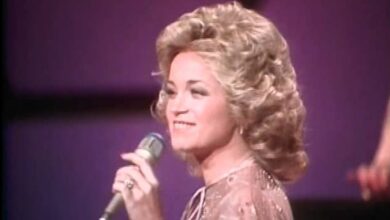
In this live performance, the first thing that stands out is how little Dolly needs to “sell” the emotion. She’s not chasing volume or dramatic emphasis; she’s letting the lyric carry its own weight. The phrasing feels like someone reading a beloved letter out loud—careful with the details, gentle with the vulnerable parts, firm when the message matters. Even when the setting looks like classic TV-era production, the performance itself feels intimate, because Dolly’s delivery keeps pulling the story closer instead of projecting it outward. The emotional arc is patient: pride, hurt, pride again—like a memory replayed until it finally stops stinging.
Another difference in this version is how it frames Dolly’s persona. The world knows the rhinestones and punchlines, but “Coat of Many Colors” reminds you that the humor is built on top of steel. When she moves through the bullying lines, she doesn’t sharpen her tone into anger; she lets the sadness sit there plainly, which is often more devastating. And when she returns to the mother’s love, it’s not sentimental in a sugary way—it’s specific, grounded, grateful. That specificity is why the performance lands: it isn’t “inspirational,” it’s real, and the room can’t help but follow her into it.
The original studio version is the blueprint: clean, direct, and almost disarmingly calm. Listening after a live performance can feel like looking at the photograph that existed before all the retellings—same story, but with the quietness of something set down permanently. Dolly’s voice is luminous without being showy, and the arrangement stays out of the way like respectful silence. The brilliance is how the song refuses to inflate itself. That restraint makes the message feel more trustworthy, like she’s telling the truth even if the truth doesn’t “entertain” in the usual sense.
It’s also worth noticing how the studio take balances innocence and wisdom. The narrator is clearly remembering childhood, but the framing is adult: she understands now what her mother was doing, not just materially but spiritually. That’s why the song hits across generations. A child can hear it as a story about a coat and mean kids. An adult hears it as a story about how parents try to protect their children from the world’s contempt, and how sometimes the only protection available is love stitched into something tangible. The studio recording captures that dual perspective with a steadiness that’s hard to duplicate.
This performance carries a different kind of electricity: the sense of Dolly bringing her Tennessee story into a wider world and watching it translate instantly. The phrasing feels slightly more expansive here—still intimate, but with an extra layer of stagecraft in how she lands the key lines, as if she knows the room includes people who didn’t grow up with this kind of poverty in their family mythology. That’s where Dolly’s songwriting becomes almost anthropological: she gives you just enough detail to make the scene concrete, then she delivers the universal emotion with a clarity that doesn’t require shared geography.
What stands out in this version is the way the song becomes less about a single child and more about a collective memory—anyone who’s been laughed at for what they wore, where they came from, how little they had. Dolly doesn’t perform the audience into tears with big crescendos; she invites them into empathy by staying sincere. The result is that the song feels simultaneously smaller and bigger: small enough to be a personal confession, big enough to fill a room across an ocean. That is the signature move of “Coat of Many Colors,” and it’s why it has remained a reference point for what storytelling in music can accomplish.
A duet setting changes the emotional geometry of the song. When Dolly shares it with another star, the story stops being only “Dolly’s childhood” and becomes a kind of American songbook moment—one artist offering a personal chapter, another artist reacting in real time, like an onstage witness. The contrast between voices highlights how unusual Dolly’s writing is: it’s plainspoken but poetic, sentimental but not fake, moral without being preachy. In collaborative versions, you can often feel the guest singer leaning into that clarity, trying to match Dolly’s tone rather than overpower it.
This kind of performance also underscores what makes Dolly’s own delivery unique: she has total control over the emotional temperature. A guest can sing it beautifully, but Dolly can sing it like she’s still holding the fabric in her hands. The duet becomes a comparison without needing to announce itself—one singer interpreting, one singer remembering. And because the song is about a mother’s love, the presence of another voice can make the message feel like it’s being passed along, almost like a family story told at a table where more than one generation is listening.
Tribute performances show how “Coat of Many Colors” has quietly become a standard, but they also reveal a trap: it’s easy to over-sing. Big voices, big harmonies, big emotional signals can accidentally sand off the song’s sharpest edges, because the power isn’t in grandness—it’s in humility. When a tribute gets it right, the singers keep returning to Dolly’s original emotional posture: proud but gentle, wounded but not broken, grateful without begging for sympathy. The best tributes treat the lyric like something sacred and plain, the way a family heirloom is sacred precisely because it’s worn.
What all these versions circle back to is the same reason the song endures: it gives dignity to the poor without romanticizing poverty, and it condemns cruelty without turning the narrator into a saint. Dolly’s genius is that she lets love be complicated work—sewing, saving, trying, hoping—rather than a vague feeling. “Coat of Many Colors” doesn’t just describe a childhood; it explains a philosophy. And every time Dolly performs it well, it feels less like nostalgia and more like a reminder that the worth of a person was never supposed to be decided by what they can afford.